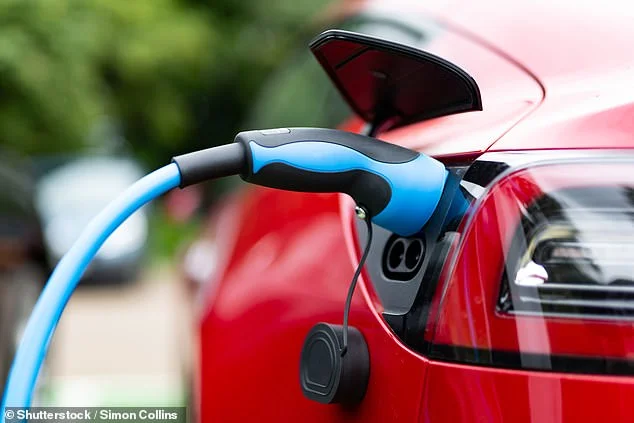
Prime Minister Mark Carney has unveiled a bold new auto strategy, promising a revitalized Canadian automotive sector and a surge in electric vehicle (EV) production. But while Carney hails the plan as a pathway to global leadership and job creation, a growing chorus of climate experts and critics are sounding the alarm, questioning whether these promises align with Canada's climate commitments and will truly put more EVs on our roads. The shift away from a mandatory EV sales target towards incentives and fuel efficiency standards has become a flashpoint, igniting a debate about the nation's environmental future and the effectiveness of its industrial policy.
The Carney Playbook: Incentives Over Mandates
On Thursday, Prime Minister Mark Carney announced a sweeping new strategy for Canada's auto industry. The core of this plan involves a significant pivot from previous government policy, most notably the repeal of the electric vehicle (EV) sales mandate.
Read More: Trump Disagrees with Federalist Society, Judge Stops His Courtroom Talk

Key Pillars of the New Strategy:
EV Mandate Scrapped: The previous requirement for a certain percentage of vehicle sales to be electric has been eliminated.
Consumer Rebates Resumed: A substantial $2.3 billion in consumer rebates will be reintroduced to make EVs more affordable.
Higher Fuel Efficiency Standards: New, stronger standards for vehicle fuel efficiency are set to be implemented.
Investment Incentives: The strategy aims to attract investment through measures like a "productivity super deduction" to lower the marginal effective tax rate on investment, reportedly making it more attractive than in the United States.
Focus on Canadian Production: The plan emphasizes rewarding the production of "made-in-Canada" vehicles and leveraging Canadian expertise in AI and technology.
Trade Partnerships: New and existing trade agreements, including a "strategic partnership with China," are cited as tools to catalyze investment and diversify export markets.
Read More: Plan to Build Big Ice Wall to Save Doomsday Glacier
Prime Minister Carney stated that these new measures will "effectively replace the previous EV mandate," focusing on "results that matter to Canadians, while avoiding placing undue burdens on the Canadian auto industry." He also expressed a strong conviction that "Canada is a leader on climate change and on focusing on climate change results and solutions." However, these assertions are being met with significant skepticism.
Past Pledges vs. Present Policies: A Troubling Pattern?
This isn't the first time Canada has grappled with its automotive future and climate goals. Previous governments have set targets and implemented policies aimed at accelerating EV adoption, often facing industry pushback and shifting political winds.

The EV Mandate's Genesis: The now-repealed EV sales mandate was a cornerstone of Canada's previous climate action plan, designed to force automakers to sell a specific percentage of zero-emission vehicles over time. This was seen by many as a crucial mechanism to drive market transformation.
Previous Incentives: Consumer rebates for EV purchases have been a recurring tool, aiming to bridge the price gap between EVs and conventional vehicles. However, their availability has sometimes been inconsistent.
The "Divisive" Tax: Prime Minister Carney, on his first day in office, reportedly eliminated a tax that he "said had become too divisive." While not explicitly detailed in the provided documents as a carbon tax or similar measure, this suggests a willingness to remove policies perceived as politically unpopular, even if they have climate implications.
Global Shocks: The Canadian auto industry has faced external pressures, including tariffs and policy shifts in other countries. The mention of Trump's tariffs in one report highlights how international factors can influence domestic strategies.
Read More: Lawmakers Question Attorney General Bondi on Epstein Files
The abrupt shift away from a mandated sales target raises questions about the government's commitment to a rapid transition. If the previous mandate was a "divisive" policy that needed to be removed, what does that say about the political will to enforce ambitious climate measures?
Doubts Emerge: Experts Question Climate Impact
The new auto strategy has been met with considerable concern from climate change experts and environmental advocates, who argue that it risks undermining Canada's climate targets and slowing down the transition to electric vehicles.

Undermining Climate Goals: Several experts "not only doubt" the effectiveness of the new strategy but explicitly state that it "undermines Canada's climate goals." This is a stark accusation, suggesting a direct conflict between the government's stated objectives and the practical outcomes of its policy.
Lack of Carbon Pollution Calculation: A crucial point of concern is that government officials have admitted they "haven't precisely calculated how much carbon pollution the new system will eliminate." This lack of concrete data makes it difficult to assess the environmental impact and compare it to the previous mandate.
Predictability for Investment: As noted by Joanna Kyriazis, director of policy and strategy at Clean Energy Canada, a "predictable trajectory" for the EV market is "critical for enabling private sector charging investments." By removing the sales mandate, has the government created uncertainty that could hinder crucial infrastructure development?
The "Results That Matter": While Carney claims the new standards focus on "results that matter to Canadians," the lack of a quantifiable carbon reduction target and the removal of a direct sales mechanism raise questions about what those "results" actually are and how they will be measured.
Read More: Cartoonist Rohan Chakravarty Uses Funny Pictures to Teach About Nature
"Making electric vehicles more affordable and reliable for Canadians" is the stated goal, but without a clear pathway or enforceable targets, how can we be sure this will translate into a significant reduction in emissions from the transportation sector?
The China Gambit: Diversification or Dependence?
A notable aspect of the new strategy is the emphasis on leveraging international partnerships, including a "strategic partnership with China" to "catalyze massive new investment" and "diversify Canada's auto export markets." This move is complex and warrants closer examination.
China's EV Dominance: China is acknowledged as a "global leader in EV manufacturing." Collaborating with them could indeed bring investment and technological know-how to Canada.
Economic Diversification vs. Strategic Risk: While diversifying trade partners is a valid economic objective, entering into a "strategic partnership" with China in the critical automotive sector, particularly for EVs, carries significant geopolitical and economic risks. What are the terms of this partnership? What guarantees are in place to protect Canadian interests and jobs?
CUSMA Review Context: The strategy is being launched alongside a review of the Canada–United States–Mexico Agreement (CUSMA). How does the partnership with China align with or potentially complicate Canada's crucial trade relationship with the United States, its largest automotive trading partner?
Intellectual Property and Security Concerns: Given China's history with intellectual property disputes and broader geopolitical tensions, what safeguards are being put in place to protect Canadian innovation and national security within this automotive partnership?
Read More: Congress Leader Accuses Finance Minister of Lying to Parliament About WTO Deal
The government claims it will "always stand up for Canada's interests," but how will this play out in practice when partnering with a global manufacturing powerhouse like China in a sector as vital as automotive?
Industry Reaction and the Road Ahead
The automotive industry's perspective on this strategy is multifaceted. While the repeal of the EV mandate was reportedly a "biggest ask on the industry side," the new incentives and tax measures are intended to bolster Canadian production.

Balancing Burdens and Results: Carney argues that the new measures avoid "placing undue burdens on the Canadian auto industry." However, some sources indicate that industry players have differing views.
Focus on Domestic Production: The strategy aims to "reward companies that maintain or expand Canadian production" and "attract new investments" through measures like a redesigned automotive duty remission framework and a "tradeable import credit system."
The Charging Gap: Despite the push for EVs, there's a persistent issue of inadequate charging infrastructure. One report notes a current "gap of about 60,000 charging stations for the needs across the country." Will the new strategy adequately address this critical bottleneck?
Diversifying Models: Joanna Kyriazis also highlights the need for "Canadians [to] get access to a variety of well-priced EV models." Will the new incentives and partnerships ensure a diverse and affordable range of EVs are available to consumers?
Read More: UK Winters Are Getting Wetter, Scientists Say
| Policy Element | Previous Approach | New Strategy | Potential Impact |
|---|---|---|---|
| EV Sales Target | Mandated percentage of sales | Repealed | Could slow EV adoption rate; relies on market forces and incentives. |
| Consumer Incentives | Varied (e.g., rebates) | Resumed ($2.3B in rebates) | Increases EV affordability for consumers. |
| Emissions Standards | Implied through EV mandate | New, stronger fuel efficiency standards | Aims for broader emissions reduction across all vehicles. |
| Industry Investment | Various measures | Productivity super deduction, duty remission framework | Aims to make Canada more competitive for auto manufacturing investment. |
| International Trade | Focus on existing agreements | Strategic partnership with China, leveraging agreements | Seeks new investment and market diversification, raises geopolitical questions. |
| Infrastructure | Implicitly supported | Not explicitly detailed in provided summaries | Potential gap remains in charging stations, hindering widespread EV adoption. |
| Carbon Reduction Goal | Implied by EV mandate | Not precisely calculated for the new system | Lack of clear, quantifiable environmental targets raises concerns about climate goals. |
Conclusion: A Gamble on Incentives?
Prime Minister Carney's new auto strategy represents a significant departure from previous policies, trading the certainty of an EV sales mandate for the promise of broader incentives and a more attractive investment climate. While the intent is to invigorate Canada's auto sector and foster innovation, the decision to abandon a direct sales target has ignited fierce debate.
Read More: Keir Starmer Faces Questions After Top Civil Servant Leaves and Controversial Appointments
The critical questions remain: Will these incentives be sufficient to drive the rapid, large-scale adoption of EVs necessary to meet Canada's climate commitments? Is the reliance on market forces and new fuel efficiency standards a robust enough replacement for a mandated sales pathway? And what are the long-term implications of forging new "strategic partnerships" in a globally competitive and geopolitically sensitive industry?
The lack of precise calculations regarding carbon emission reductions under the new strategy is particularly troubling. While Carney asserts Canada's leadership on climate, the absence of clear, quantifiable targets in this pivotal sector raises doubts. The coming months will be crucial in observing whether this gamble on incentives and broader standards pays off, or if Canada risks falling further behind on its journey to a sustainable automotive future. The success of this strategy hinges on more than just government pronouncements; it requires transparent data, demonstrable environmental progress, and a clear understanding of its impact on Canadians and the planet.
Read More: Study Says UK Electric Cars and Heat Pumps Don't Save Carbon Yet
Sources:
CBC News: https://www.cbc.ca/news/politics/electric-vehicles-climate-change-mark-carney-9.7078401
Prime Minister's Office (PMO) News Release: https://www.pm.gc.ca/en/news/news-releases/2026/02/05/prime-minister-carney-launches-new-strategy-transform-canadas-auto
Canada.ca (Innovation, Science and Economic Development): https://www.canada.ca/en/innovation-science-economic-development/news/2026/02/prime-minister-carney-unveils-canadas-new-automotive-strategy-to-protect-jobs-and-position-our-country-as-a-global-leader-in-next-generation-vehicl.html
Globalnews.ca: https://globalnews.ca/news/11653721/canada-auto-sector-strategy-2026/
RCI (Radio Canada International): https://ici.radio-canada.ca/rci/en/news/2226061/goodbye-ev-sales-mandate-hello-purchase-rebates-carney-shakes-up-canadas-auto-industry
Clean Energy Canada: https://cleanenergycanada.org/new-auto-strategy-could-be-a-serious-solution-to-canadas-stalled-ev-market-and-auto-future/
The Star: https://www.thestar.com/politics/carney-government-to-replace-ev-sales-targets-with-rebates-incentives-and-new-fuel-efficiency-standards/article92564551-0881-442a-8751-44f10904efda.html
BLG (Barrister & Solicitor): https://www.blg.com/en/insights/2026/02/canadas-new-automotive-strategy