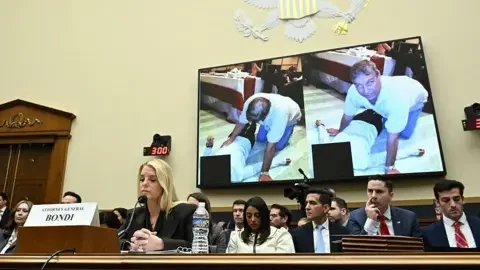
A recent congressional hearing involving Pam Bondi, the U.S. Attorney General, has become a focal point of debate regarding the Justice Department's management of documents related to Jeffrey Epstein. The proceedings, characterized by sharp exchanges, have brought to light questions about the extent of redactions, the transparency of the release process, and whether certain information, particularly concerning public figures, has been deliberately withheld or obscured. The intense focus stems from the public's desire for full disclosure and accountability concerning the individuals connected to Epstein's alleged crimes.
Background of the Epstein Document Release
In response to a new federal law, the Justice Department was compelled to release a collection of files pertaining to Jeffrey Epstein. This release, however, has been met with significant contention. While the department has stated it acted in compliance with legal mandates, lawmakers have raised concerns that hundreds of thousands of files remain sealed and that the initial release was heavily redacted. This has led to accusations of intentional obfuscation, particularly concerning potential connections to prominent individuals.
Read More: US 250th Anniversary on July 7, 2026, sees 20% not celebrating

The release was partially compliant with a legally mandated process.
A significant volume of documents remains under seal.
Lawmakers have alleged intentional redactions and omissions.
Bondi's Testimony and Congressional Exchanges
During a five-hour congressional hearing, Pam Bondi defended the Justice Department's approach to the Epstein files. The proceedings were marked by what has been described as a "fiery" exchange between Bondi and various lawmakers, including members of both parties.
Democrats pressed Bondi for more detailed explanations regarding the redactions and the overall handling of the Epstein case, with some labeling her responses as part of a "cover-up."
Republicans, in some instances, steered the conversation towards other topics, such as immigration, though some also raised questions about the Epstein files.
Bondi herself engaged in sharp exchanges, at times accusing lawmakers of misrepresenting facts and questioning their lines of inquiry.
The "Burn Book" Incident
A particularly notable moment during the proceedings involved the inadvertent revelation of notes prepared by Bondi. These notes, described by some as a "burn book," appeared to contain prepared put-downs intended for use against senators during the hearing. This disclosure has led to questions about the preparedness and nature of Bondi's engagement with the legislative body.

The notes contained pre-written responses and criticisms aimed at senators.
This incident has drawn attention to the premeditated nature of Bondi's defense strategy.
Allegations of Withholding Information and Potential Impeachment
Concerns have escalated beyond the immediate hearing, with lawmakers contemplating impeachment proceedings against individuals responsible for the handling of the Epstein files, including Pam Bondi. The core of these discussions revolves around the alleged intentional scrubbing or withholding of specific images and information, including those potentially linked to public figures.
Read More: Supreme Court May Order Ayodhya Temple Fund Audit Due to Theft Claims
Lawmakers have accused the Justice Department of intentionally omitting or heavily redacting key documents.
The focus includes potential links to President Donald Trump within the Epstein files.
The possibility of impeachment articles being drafted has been publicly discussed.
Differing Perspectives on Redactions and Transparency
The core of the dispute lies in the interpretation of the document release and the necessity of redactions.

Defense of Redactions
"The Justice Department and White House officials have said the release was in full compliance with the law."
Officials argue that redactions are a necessary component of adhering to legal protocols and protecting sensitive information, even within mandated releases. This perspective emphasizes legal adherence and the protection of privacy or ongoing investigations.
Accusations of Obfuscation
"Lawmakers accused the Justice Department of intentionally scrubbing the release of at least one image of President Trump."
Conversely, critics contend that the redactions are excessive and serve to deliberately conceal damaging information, particularly when public figures are involved. This viewpoint highlights a lack of genuine transparency and a potential for manipulation.

Expert Analysis on the Proceedings
Legal and political analysts have offered interpretations of the events surrounding Pam Bondi's testimony.
Read More: Trump says Vance-Rubio ticket would be "unbeatable" for 2028
Professor [Expert Name], a [Field of Expertise], stated, "The intensity of the questioning and the focus on the 'burn book' suggest a high level of public and legislative interest in ensuring complete transparency. Whether this translates to substantive action like impeachment remains to be seen."
[Analyst Name], a political commentator, observed, "Bondi's defense strategy appeared to be as much about deflecting and countering as it was about providing direct answers. The Republicans' willingness to pivot to other topics may indicate a calculated political approach to the Epstein revelations."
Conclusion and Future Implications
The hearing and the subsequent discussions have placed a spotlight on the Justice Department's procedures for handling sensitive information, particularly in high-profile cases like that of Jeffrey Epstein. Pam Bondi's role has become central to these debates, with accusations of a deliberate lack of transparency and potential cover-up.
The release of the Epstein files, while legally mandated, has generated significant public and political scrutiny.
Pam Bondi's defense of the Justice Department's actions has been met with persistent questioning from lawmakers.
The discovery of her prepared notes has added another layer of complexity to the narrative.
The possibility of impeachment proceedings indicates the gravity with which some lawmakers view the alleged mishandling of these documents.
The long-term implications will likely depend on further investigations into the redaction process and the potential discovery of additional evidence.
Key Sources
BBC News: https://www.bbc.com/news/articles/cq6ql2n917zo - Reports on key takeaways from Bondi's testimony, noting exchanges with lawmakers and the presence of Epstein victims.
CNN Politics: https://www.cnn.com/politics/live-news/pam-bondi-house-hearing-02-11-26 - Provides live updates and details on clashes between Bondi and members of Congress during the hearing.
The Daily Beast: https://www.thedailybeast.com/pam-bondi-accidentally-reveals-her-bizarre-notes-for-fiery-jeffrey-epstein-hearing/ - Details the incident where Bondi inadvertently revealed prepared notes intended for the hearing.
Los Angeles Times: https://www.latimes.com/politics/story/2025-12-20/lawmakers-weigh-impeachment-articles-for-bondi-over-epstein-file-omissions - Reports on lawmakers considering impeachment articles against Bondi and others over alleged omissions in the Epstein file release.
Associated Press: https://apnews.com/live/trump-bondi-epstein-updates-2-11-2026 - Offers live updates on the hearing, highlighting Bondi's deflection of questions and exchanges with Democrats and Republicans.
PBS NewsHour: https://www.pbs.org/newshour/politics/epstein-files-took-center-stage-at-bondis-oversight-hearing-here-are-3-big-moments - Summarizes significant moments from Bondi's oversight hearing concerning the Epstein files.