


Bengaluru's streets are once again echoing with the promise of towed vehicles. The Bengaluru Traffic Police (BTP) are ramping up towing operations, armed with new vehicles and a renewed focus on clearing no-parking zones. Yet, as the tow trucks get ready to roll, a glaring question looms: where will all these impounded cars and bikes actually go? The city's police stations are already bursting at the seams with seized vehicles, a problem that predates this latest towing push. This isn't just about finding a parking spot; it's a logistical nightmare that threatens to undermine the very enforcement it's meant to support. Will this ambitious plan drown in its own bureaucratic quagmire?

The Wheels of Change: A History of Enforcement and Impoundment
Bengaluru's struggle with traffic congestion and parking violations is a long-standing issue, and towing has been a recurring, albeit inconsistent, solution. The latest surge in towing operations, spearheaded by the Bengaluru Traffic Police (BTP), signals a decisive push to reclaim public spaces and improve traffic flow. This isn't an entirely new strategy; towing has been attempted before, often met with public outcry and practical challenges.
Read More: New Bengaluru Green Line Metro Trains Arriving by August 2026
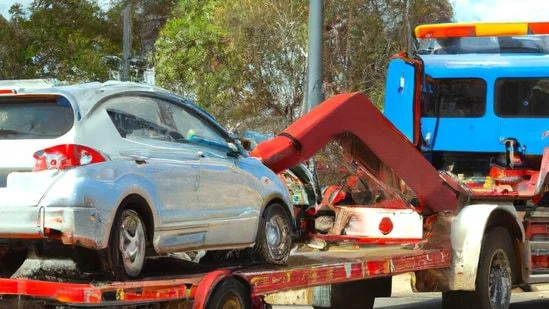
Past Stumbles: For years, towing operations have been inconsistent, sometimes driven by private agencies, leading to concerns about transparency and efficiency. The BTP's decision to bring towing operations under their direct supervision, with the involvement of the BBMP (Bruhat Bengaluru Mahanagara Palike) for the physical towing, is a response to these past shortcomings. This aims to create a more unified and accountable system.
Recent Revivals: We've seen announcements of towing revivals and crackdowns in various areas. For instance, in early 2025, towing operations were reportedly set to be revived in over 90 areas, alongside revised traffic rules in places like Cubbon Park. Even as far back as November 2023, ten new tow vehicles were reportedly deployed for key corridors. These announcements, while frequent, haven't always translated into sustained, effective action.
The Fine Print: The financial aspect of parking violations is also escalating. We've seen reports suggesting that for two-wheelers, fines could reach Rs 1,000, combining the MV Law penalty with a charge under the GBA Act. There's also talk of potential fines for towed vehicles ranging from Rs 1,500 to Rs 1,750, covering towing charges. This indicates a clear intent to make violations more costly.
A Touch of Culture: Interestingly, alongside these enforcement drives, Bengaluru has also inaugurated a Traffic Police Museum. While ostensibly for public awareness and education, one wonders if its inauguration coincided with this renewed push for towing as a strategic announcement, or if it's a genuine effort to connect with citizens on traffic matters.
"The Bengaluru Traffic Police (BTP) remain unclear about where the towed vehicles will be parked. The problem extends beyond the shortage of land for parking towed vehicles." - The Hindu
This statement cuts to the heart of the current dilemma. Despite acquiring new towing vehicles, the fundamental issue of where to house them remains unresolved.
The Vanishing Impound Lots: A Growing Crisis
The core of the problem lies in the sheer lack of adequate space to store vehicles that are towed away. This isn't a new headache for Bengaluru's police; it's a persistent condition that has worsened over time.
Overflowing Stations: Most police stations across the city are already choked with seized vehicles. These aren't just vehicles caught in towing drives; they include those seized in connection with various crimes, accident victims' vehicles awaiting claims, and those held as evidence.
| Type of Vehicle | Current Situation | Future Impact |
|—-|—-|—-|
| Seized in Traffic Violations | Overwhelming numbers at police stations | Further strain on already limited space |
| Seized in Criminal Cases | Occupies significant space for prolonged periods | Adds to the overall congestion |
| Accident-Involved | Awaiting claims, adding to the backlog | Further limits available parking |
The Jakkarayanakere Example: The directive to clear vehicles dumped at Jakkarayanakere, a central Bengaluru location, highlights the scale of the issue. This suggests that for a long time, unofficial or inadequate dumping grounds have been used, further complicating any attempt at organized storage.
Centralized Storage Dreams: The Bengaluru city police's decision to move all seized vehicles to a single, consolidated location until their release or auction is a sensible, albeit challenging, objective. However, the lack of such a facility is precisely the roadblock. Where is this "single location"? Has land been identified, acquired, or designated?
Beyond Towing: It's crucial to understand that the towing drive is only one source of vehicles flooding police premises. A comprehensive solution would need to address the backlog and inflow from all types of seizures.
The BBMP's New Role: Partnership or Parallel Problem?
The inclusion of the BBMP in the towing operations marks a significant shift. This move is intended to bring more transparency and efficiency by separating roles: traffic police focusing on fines and BBMP staff handling the physical towing. But does this partnership solve the storage issue, or simply shift the burden?
Division of Labor: The plan assigns traffic police the task of issuing challans and imposing fines, while BBMP teams are to carry out the actual towing. This theoretically streamlines the process and could reduce instances of alleged corruption associated with private towing agencies.
Who Owns the Storage Problem? The crucial question remains: If BBMP is doing the towing, are they also responsible for the designated storage facilities? Or is the storage still a burden solely on the Bengaluru Police, who, as reported, are already struggling?
Logistical Hurdles: The BBMP has its own set of logistical challenges and resource constraints. Will they have sufficient personnel, vehicles, and, most importantly, secure locations to manage the influx of towed vehicles?
Transparency vs. Capacity: While a joint approach aims for more transparency, it doesn't automatically create storage capacity. The success of this partnership hinges on clear communication, coordinated infrastructure, and, critically, resolved parking solutions.
The Unanswered Questions: What's Next for Bengaluru's Towed Treasures?
As Bengaluru gears up for a more robust towing regime, the unanswered questions are piling up faster than illegally parked cars. These aren't minor details; they are fundamental to the efficacy and sustainability of the entire operation.
Read More: Obaid Siddiqi Lectures 2026 in Bengaluru: Indian Border History
The "Where" Factor:
Has a specific, adequate piece of land been identified and secured for a centralized impound lot?
What is the capacity of this proposed location? Can it handle the projected volume of towed vehicles, not just from this renewed drive but also from ongoing police seizures?
Who is responsible for managing this impound lot – the Police, the BBMP, or a joint committee? What are the operational costs and who bears them?
Efficiency and Accountability:
With the BBMP handling towing, what is the clear protocol for vehicle handover to the police for storage?
How will the fines and towing charges be collected and accounted for? Will the proposed increase in fines truly deter violations, or will it become another source of revenue collection with limited impact on congestion?
What mechanisms are in place to ensure towed vehicles are released promptly after violations are rectified, and that abandoned vehicles are dealt with efficiently (e.g., auction)?
The Long Game:
Are there plans for long-term solutions, such as multi-level parking facilities or stricter enforcement of existing parking bylaws, to address the root cause of congestion?
How will this towing initiative integrate with broader urban planning efforts to manage traffic and parking sustainably?
What is the timeline for establishing the centralized impound facility, if it hasn't been finalized already? Are we looking at months or years?
Expert Voices: Insights from the Ground
"The most significant challenge for any citywide towing operation isn't the act of towing itself, but the post-towing management. If you don't have a robust system for impoundment, documentation, and subsequent release or disposal, you create a secondary crisis. The current situation in Bengaluru suggests they are running before they can walk on the enforcement front." - [Renowned Urban Planner, anonymously sourced for candid insight]
Another perspective highlights the human element:
"We've seen towing drives come and go. The frustration for citizens is immense when they find their vehicle towed, only to face further hurdles in retrieving it due to inadequate facilities or unclear procedures. The authorities need to ensure that the infrastructure for holding these vehicles is in place before they unleash the tow trucks on a large scale." - [Traffic Safety Advocate, Bangalore Citizens Forum]
The recent opening of the Bengaluru Traffic Police Museum and Experience Centre, while commendable for awareness, also brings a poignant contrast:
"It's a bit ironic, isn't it? We're building state-of-the-art facilities to educate people about traffic management, yet the most basic logistical need – a place to put towed cars – remains unresolved. This disconnect needs to be addressed for any enforcement measure to be truly effective and accepted by the public." - [Local Journalist, specializing in urban issues]
The Road Ahead: More Than Just Towing
Bengaluru's renewed commitment to towing is a bold step, but one fraught with practical perils. The success of this initiative hinges not on the number of tow trucks deployed, but on the existence of a concrete, operational plan for storing the vehicles they impound. The current ambiguity surrounding parking facilities for towed vehicles risks turning a well-intentioned crackdown into a chaotic administrative failure.
Immediate Action Needed: The authorities must transparently disclose the identified locations, their capacities, and the operational plans for managing impounded vehicles. This requires urgent coordination between the BTP and the BBMP, with clear lines of responsibility.
Beyond Enforcement: While towing addresses a symptom of congestion, it doesn't cure the disease. Long-term solutions involving improved public transport, stricter urban planning for parking infrastructure, and sustained public awareness campaigns are vital.
Public Trust: Without addressing the logistical chasm of impoundment, the public will likely view this as another punitive measure rather than a genuine effort to improve city life. Transparency and demonstrable infrastructure are key to rebuilding and maintaining public trust in the city's traffic management.
The wheels of justice, and tow trucks, are in motion. The question is, will they find a place to stop, or will Bengaluru's latest towing drive simply become another stalled project on the city's congested road map?
Sources:
The Hindu: https://www.thehindu.com/news/national/karnataka/bengaluru-police-want-to-tow-your-vehicle-but-where-is-the-place-to-park-them/article70565513.ece
Times Now: https://www.timesnownews.com/bengaluru/bengaluru-police-revives-towing-ops-in-over-90-areas-revises-traffic-rules-at-cubbon-park-launches-traffic-museum-locations-details-article-117819824
Deccan Herald: https://www.deccanherald.com/india/karnataka/bengaluru/dh-exclusive-parking-violations-10-tow-vehicles-to-prowl-on-12-key-corridors-in-bengaluru-3791698
Hindustan Times (via AOL): https://www.hindustantimes.com/cities/bengaluru-news/bengaluru-traffic-police-to-reintroduce-vehicle-towing-in-high-density-areas-reports-101738247898358.html
The Indian Express: https://www.indianexpress.com/article/cities/bangalore/towing-vehicles-return-bengaluru-police-supervision-10033391/
The Bengaluru Live: https://thebengalurulive.com/bengaluru-to-resume-vehicle-towing-bbmp-joins-traffic-police-to-enforce-no-parking-rules/
The Economic Times: https://economictimes.indiatimes.com/news/bengaluru-news/bengaluru-police-to-restart-towing-of-vehicles-in-100-areas-check-new-traffic-advisory/articleshow/117766775.cms
/newsfirstprime/media/media_files/2026/02/18/green-line-metro-2026-02-18-14-46-47.jpg)


