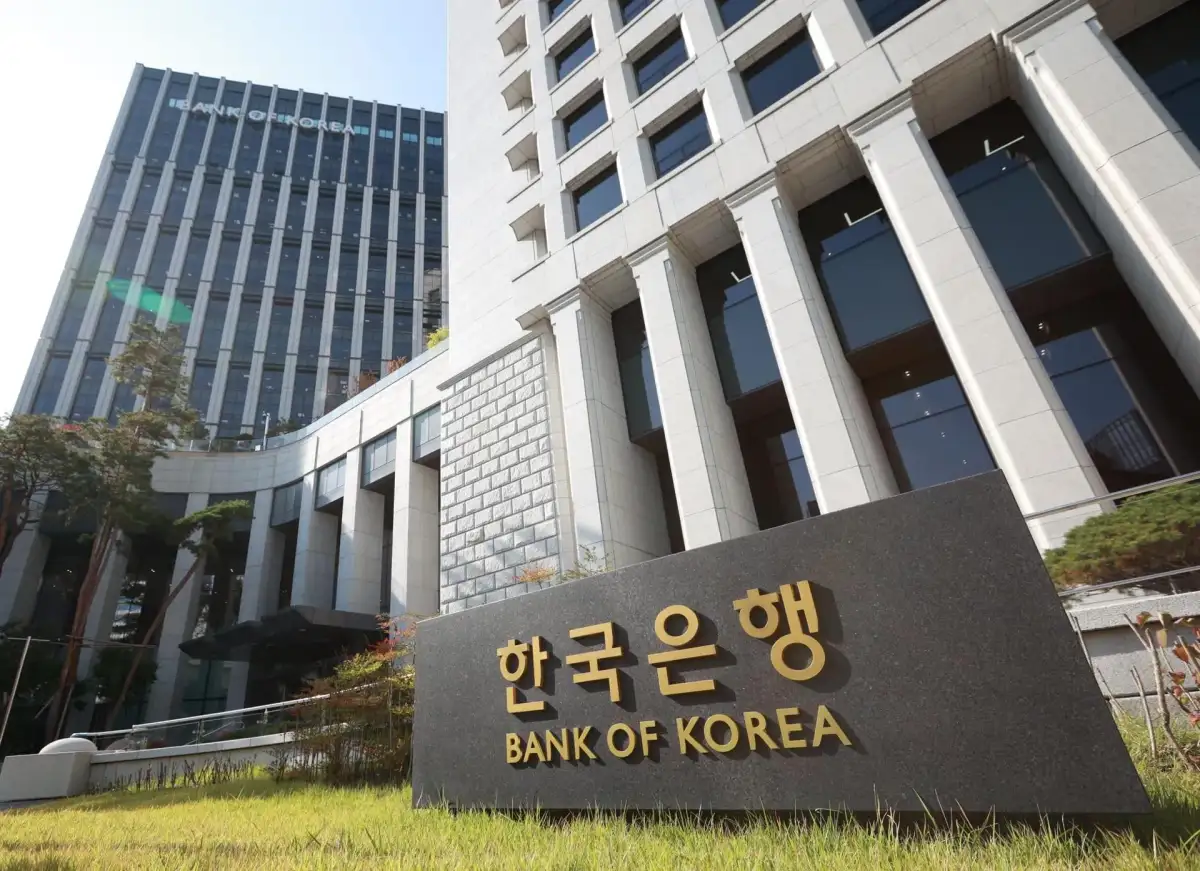
The Bank of Korea (BOK) has revised its 2026 growth projection to 2%, an uptick from the previous 1.8%, banking entirely on the volume of chip exports. This adjustment arrives alongside a sixth consecutive decision to hold interest rates at 2.5%. While the state focuses on the mechanical movement of hardware across borders, the domestic reality is defined by a stagnant housing market and a push for de-Seoulization to curb escalating property costs.
"The Korean economy will grapple with widening polarization." — Rhee Chang-yong, Governor of the Bank of Korea.
Behind these macro-economic shifts, the legal architecture of personal finance remains tilted toward institutional control. Federal law and standard deposit agreements now ensure that banks can freeze accounts without notice. This creates a friction between the state’s pursuit of growth and the individual’s lack of liquidity during compliance checks or fraud investigations.
The Macro Calculation: Debt and Silicon
The BOK’s strategy rests on a belief that external demand for semiconductors can mask internal structural flaws. The Governor has linked the survival of the current price floor to a radical reduction in mortgage lending and a physical decentralization of the population away from the capital.
Read More: Goldman Sachs predicts 15 million US jobs lost to AI by 2036
Growth Forecast: Shifted from 1.8% to 2.0% for the 2026 window.
Interest Rate: Fixed at 2.5%, seeking a balance between inflation and debt.
Housing: Targeted tax reform and 'de-Seoulization' are framed as the only viable paths to price stability.
| Metric | Previous Forecast | Revised Forecast | Primary Driver |
|---|---|---|---|
| GDP Growth | 1.8% | 2.0% | Chip Exports |
| Base Rate | 2.5% (Steady) | 2.5% (Freeze) | Household Debt |
The Micro Friction: Liquidity as a Privilege
While the state tracks chip exports, the individual user faces a banking system designed for asymmetric silence. When a bank’s compliance team flags a transaction, the law explicitly prohibits the bank from notifying the account holder. This "no-tip-off" rule is built into the fine print of every signed agreement, turning personal funds into conditional access points.
Authority: Deposit agreements grant banks broad powers to restrict funds.
Triggers: Creditor garnishments, fraud suspicion, or regulatory compliance.
Notice: Non-existent; federal mandates prioritize the investigation over the user's access to cash.
Investigative Context: The Disconnect
The current economic trajectory is a study in imbalance. On one side, there is a push for a 'highly functional' export machine intended to lift the national average. On the other, the domestic landscape is one of debt-laden households and a legal framework that treats private accounts as secondary to state and institutional oversight. The growth reported in Seoul’s boardrooms rarely translates to the ledger of a citizen whose account has been silenced by an algorithm.
Read More: Why K-drama The Heirs remains popular in South Korea in 2026
The move toward tax reform and housing shifts suggests a realization that the current centralist model is breaking. However, the reliance on hardware exports to solve social polarization remains an unproven gamble. The "growth" mentioned by the BOK is a figure derived from silicon, not from the eased financial mobility of the people.