Australia enters the Women's T20 World Cup final tomorrow at Lord’s as the undefeated favorite, holding a spotless record of six wins from six matches. Facing them is England, a side seeking to overturn a historical deficit in major finals. The match, scheduled for a 3:30 PM first ball, represents the culmination of a tournament defined by Australian tactical precision and physical superiority.
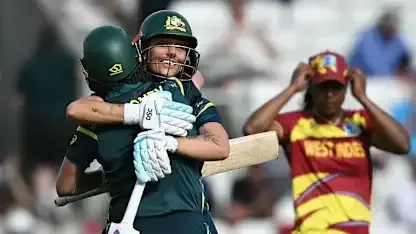
Core Signal: Australia has reached its seventh World Cup final in nine attempts by maintaining a level of clinical, systematic control that has rendered previous opponents, including the West Indies in the semi-final, statistically non-competitive.

The Mechanics of Superiority
The Australian roster has functioned as a closed loop, where depth in both bowling and batting departments creates relentless pressure.

Clinical Execution: In their eight-wicket semi-final win, the Australian attack restricted the West Indies to 125/7, neutralizing top-order threats like Hayley Matthews through early-movement bowling from Kim Garth and accurate spells from Georgia Wareham.
Batting Stability: Beth Mooney leads the charge with 61 from 36 balls, showcasing an ability to dictate terms on any surface.
Resource Disparity: Observations from the field highlight that Australia’s success is intrinsically tied to infrastructure. West Indies captain Hayley Matthews recently issued a call for increased investment in emerging programs to bridge the gap between "rich" cricketing nations and the rest of the field.
Historical Context and The England Factor
While the media often discusses a "mental edge," the upcoming fixture carries the weight of repeated failure for England in this specific format.
Read More: FIFA World Cup 2026 Revenue Reaches $15 Billion With New Ticket Prices

The Record: England has faced Australia in six previous World Cup finals across white-ball formats, losing all of them.
England’s Buoyancy: Despite the lopsided history, England enters the final buoyed by their own performance against South Africa. Players like Nat Sciver-Brunt maintain that previous encounters will not dictate the conditions of play at Lord’s.
Physical Fitness: Concerns remain regarding the health of Ellyse Perry, who retired hurt in the semi-final as a precaution, though internal reports suggest this was a preventative measure rather than a tournament-ending injury.
| Team | Status | Form |
|---|---|---|
| Australia | Finalist | 6 Wins, 0 Losses |
| England | Finalist | Confirmed after SF victory |
Reflective Perspective: The Sustainability of the Gap
The current structure of the tournament—where Australia cruises past most opponents—invites scrutiny regarding the health of the global game. When one team demonstrates a level of performance that others describe as "a bit unfair," the narrative shifts from simple sport to a broader inquiry into how different national programs utilize their capital. Australia’s strength is not merely in the eleven players on the pitch, but in the institutional weight that ensures their success remains consistent regardless of the specific opponent or venue. Tomorrow’s match is, for England, not just a game, but a challenge to the established hierarchy.