Critical Maneuver Puts Crew on Trajectory for Moon
NASA's Artemis II mission has successfully exited Earth's orbit, sending its four-person crew on a direct path toward the Moon. This pivotal moment, marked by a sustained firing of the Orion spacecraft's main engine – a maneuver termed the 'translunar injection burn' – signifies the first time in over five decades that humans have embarked on a journey beyond Earth's immediate gravitational influence.

The approximately six-minute engine burn, executed on Thursday, precisely altered the spacecraft's velocity, enabling it to break free from Earth's orbit. The crew, comprising NASA astronauts Reid Wiseman, Victor Glover, and Christina Koch, alongside Canadian Space Agency astronaut Jeremy Hansen, are now on a carefully calculated trajectory for their lunar flyby.

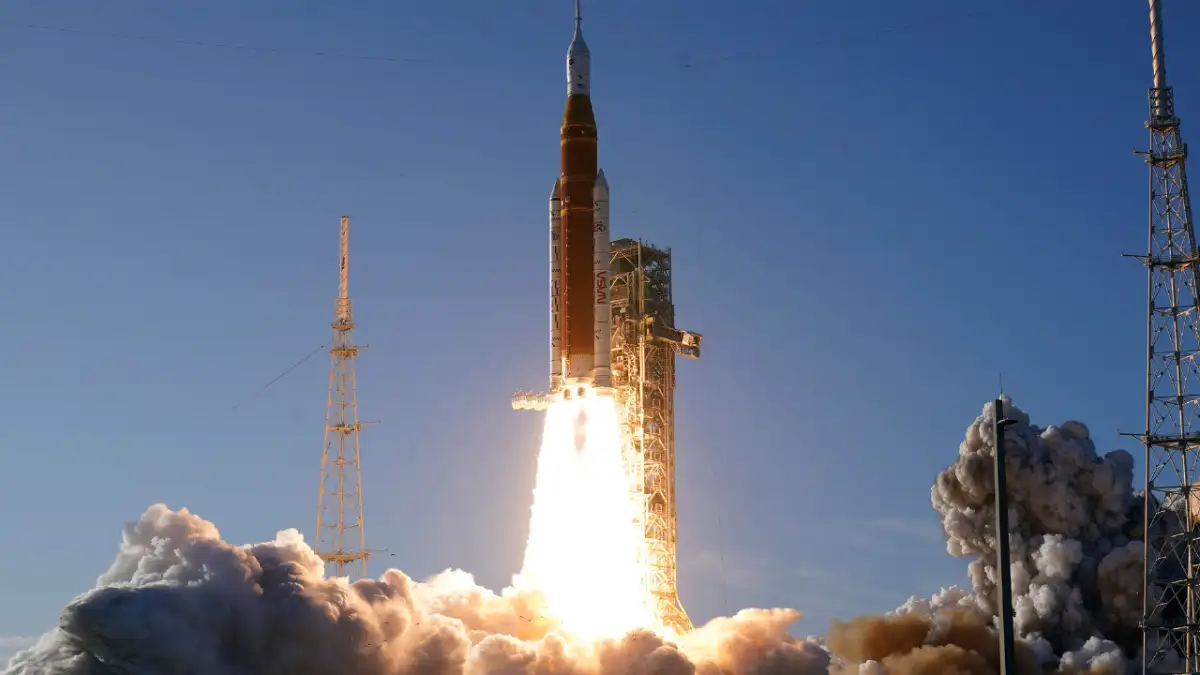
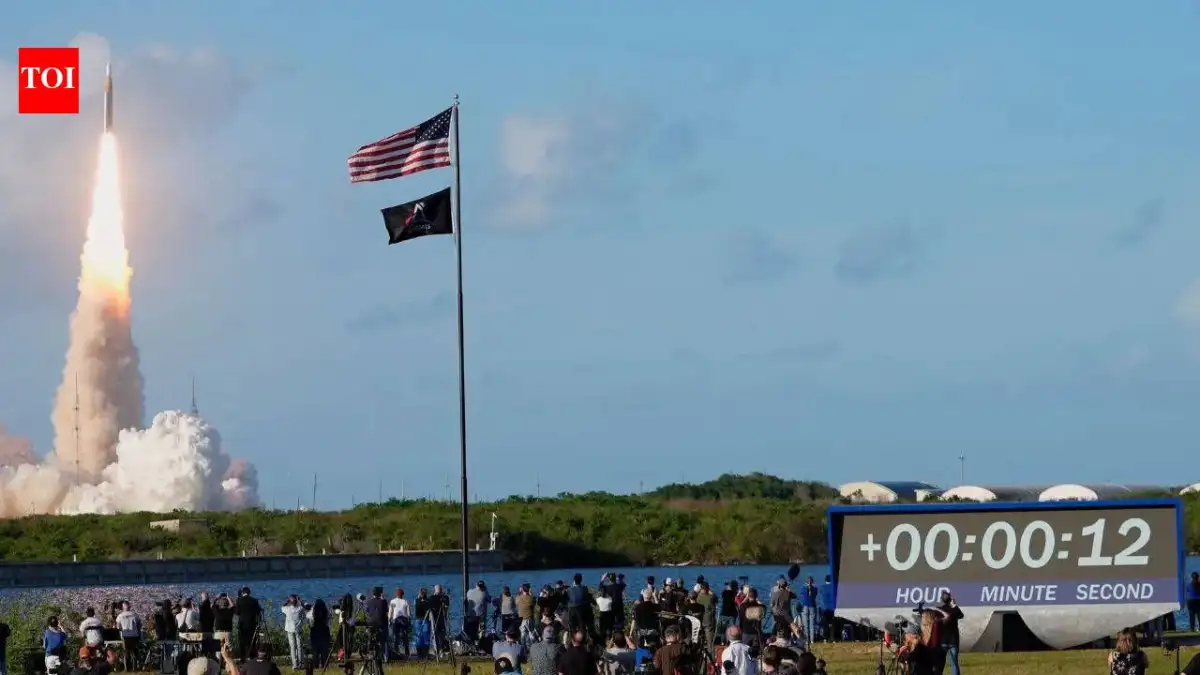
The Orion spacecraft, officially named 'Integrity' for this mission, launched atop NASA's Space Launch System (SLS) rocket from Kennedy Space Center on April 1st. Following its departure from Earth's orbit, the spacecraft's solar array wings were deployed to ensure a continuous energy supply. Ground control has been actively monitoring and checking the spacecraft's various systems, transitioning from launch to flight operations.
Read More: NASA Robot Mission Launched to Raise Swift Telescope Orbit, Add 10 Years
"With the approximately six-minute firing of the spacecraft’s service module engine on Thursday, known as the translunar injection burn, Orion and its crew of NASA astronauts Reid Wiseman, Victor Glover, Christina Koch, and CSA (Canadian Space Agency) astronaut Jeremy Hansen accelerated to break free of Earth’s orbit and began the outbound trajectory toward Earth’s nearest neighbor." - NASA
Journey Details and Objectives
The Artemis II mission is slated as a 10-day test flight designed to evaluate critical systems for future deep space exploration. The astronauts are expected to loop around the Moon, experiencing a "free-return trajectory" that will naturally guide them back towards Earth without further major engine firings. This flight plan includes seeing the far side of the Moon, an area not directly observed by humans since the Apollo era.
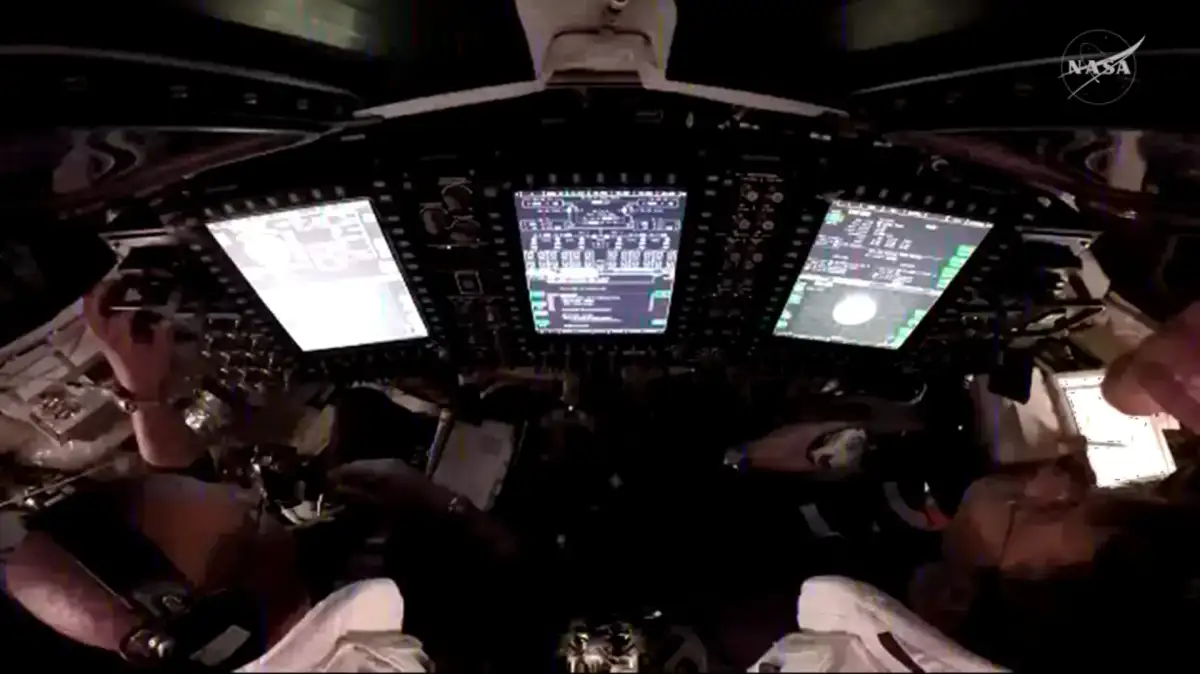
While the crew has reported the journey as being "nothing normal" and experienced moments of profound visual spectacle, including a view of Earth from pole to pole, the mission has also encountered minor alerts. A cabin pressurization leak warning was reportedly noted by the crew before the critical engine burn. However, ground controllers confirmed that the capsule's pressure and temperature remained stable, and the alarm did not impede the mission's progression.
Read More: New York Mets vs Atlanta Braves 7 April 2026 NL East game preview
"Reid says he just can't take it anymore." - referring to the overwhelming beauty of Earth seen from space.
Context and Future Implications
This mission marks a significant step in NASA's broader 'Artemis program,' which aims to establish a sustained human presence on the lunar surface and serves as a prelude to potential human missions to Mars. The Artemis II flight is a crucial validation of the technologies and procedures required for these ambitious future endeavors. NASA leadership has expressed optimism, with some indicating a desire to make lunar flights a more frequent occurrence.
"Humanity has once again shown what we are capable of, and it's your hopes for the future that carry us now on this journey around the moon." - statement from the mission control.
The successful translunar injection burn is the most critical engine firing of the mission. Its success is vital for setting the stage for future lunar landings, including a planned crewed mission to the Moon later this decade, potentially ushering in a new era of human exploration beyond Earth. The program also occurs against a backdrop of increasing international competition in space, with mentions of a "new space race" and challenges posed by other nations.
Read More: ISS Crew Moves to Dragon Spacecraft Due to Air Leaks
Mission Duration: Approximately 10 days
Crew: Reid Wiseman (Commander), Victor Glover (Pilot), Christina Koch (Mission Specialist), Jeremy Hansen (CSA Astronaut)
Spacecraft: Orion (named 'Integrity')
Launch Vehicle: Space Launch System (SLS) rocket
Key Maneuver: Translunar Injection Burn
Historic Significance: First crewed flight around the Moon since 1972