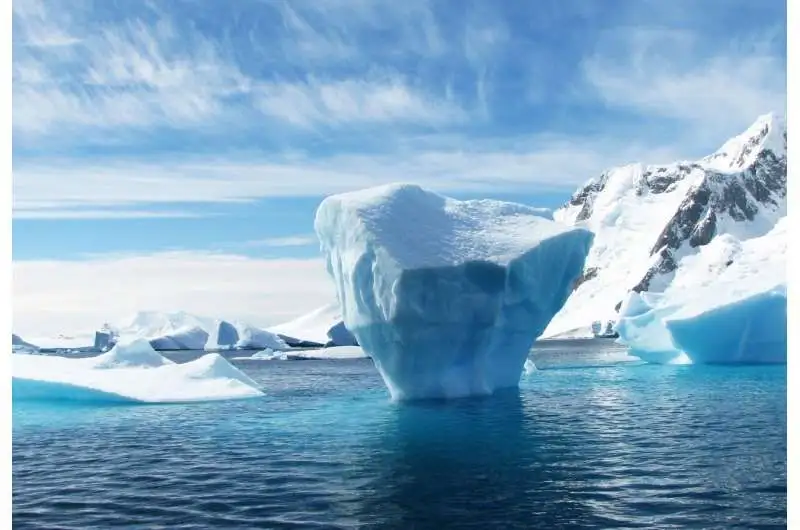
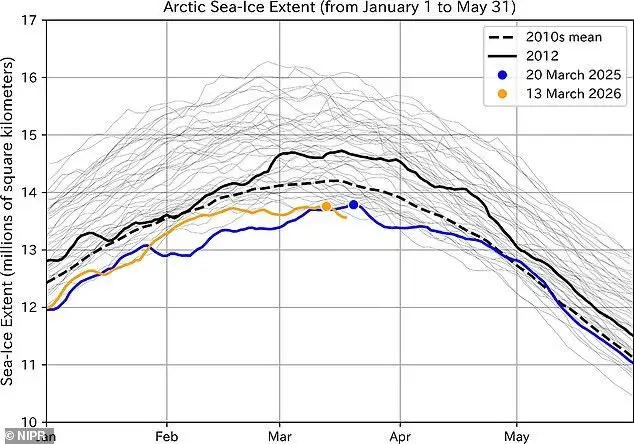
The Arctic sea ice maximum for 2026 has reached its lowest point since satellite monitoring began 48 years ago, tying the record established in 2025. Data from the National Snow and Ice Data Center confirms that the ice reached its annual peak on March 13, covering 13.76 million square kilometers—a marginal decrease from previous low benchmarks.
| Metric | Status |
|---|---|
| Observation Period | 1978–2026 |
| Current Maximum | 13.76 Million km² |
| Trend | Consecutive record-low winter peaks |
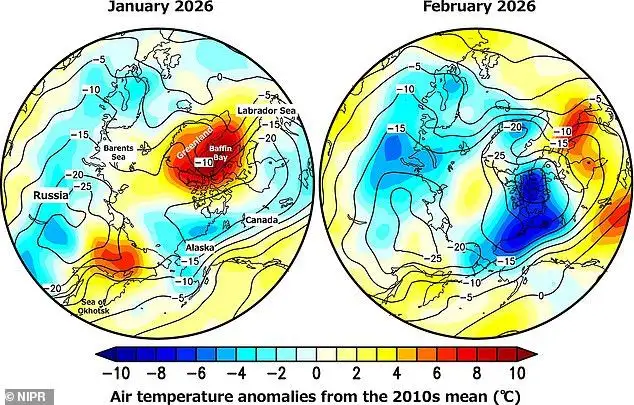
The failure of the ice to expand during the traditional growth season is attributed to persistent unusually warm conditions specifically localized in Baffin Bay and the Sea of Okhotsk. Researchers at the National Institute of Polar Research note that the lack of winter ice formation prevents the accumulation of stable, multi-year ice, leaving the region increasingly vulnerable to summer melt cycles.
Mechanics of the Feedback Loop
The reduction in ice cover triggers a distinct geophysical reaction:
Albedo Loss: Ice surfaces reflect solar radiation. As ice recedes, the exposed, dark ocean water absorbs more heat, creating a thermal cycle that hinders subsequent freezing.
Habitat Instability: Persistent low ice levels disrupt the migratory and reproductive patterns of native species such as polar bears and seals.
Predictive Impact: A low winter maximum serves as a primary indicator for summer sea ice conditions. When the melt season begins with a reduced baseline, the subsequent September minimum is statistically likely to face further decline.
Background and Context
For decades, the Arctic functioned as a thermal regulator, growing an expansive shell of ice throughout the dark winter months. This cycle has fundamentally altered. Satellite data spanning nearly half a century illustrates a clear, long-term trajectory toward reduced winter growth. Scientists currently evaluate these repetitive record-lows as evidence of the system nearing a ‘point of no return,’ wherein the climatic shifts in the region may become self-sustaining and irreversible under current global temperature trends. The observational data is preliminary and subject to seasonal weather fluctuations, yet the alignment of the 2025 and 2026 winter maximums highlights a tightening convergence of environmental factors.
Read More: Amazon Land Use Changes Cause Disease Clusters in Brazil