Ancient carbon, estimated to be millions of years old, is being assimilated into the food web around hydrothermal vents off the coast of Taiwan. This carbon, released from the Earth's interior, fuels microbes which, in turn, are consumed by crabs, thereby entering higher levels of the ecosystem.
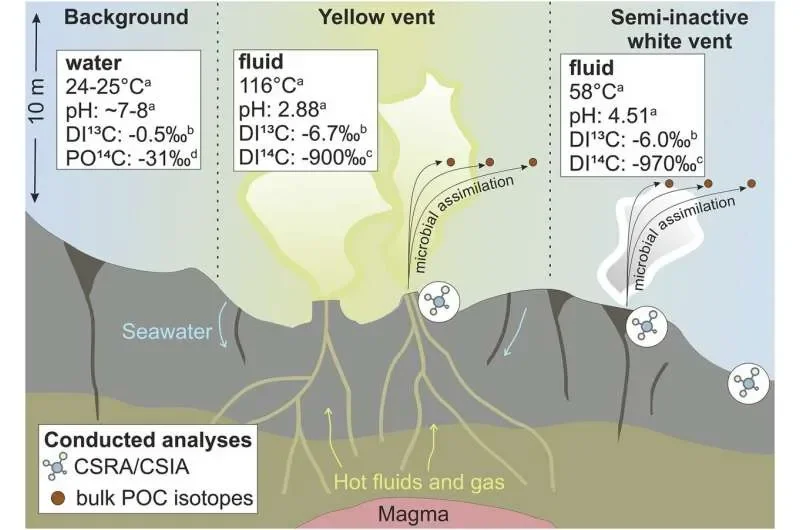
The process involves chemosynthesis, where microorganisms utilize reduced chemicals from Earth's interior to generate energy. Significantly, this ancient carbon is also incorporated into biomass through photosynthesis by these same microorganisms.
Microbes as Primary Consumers
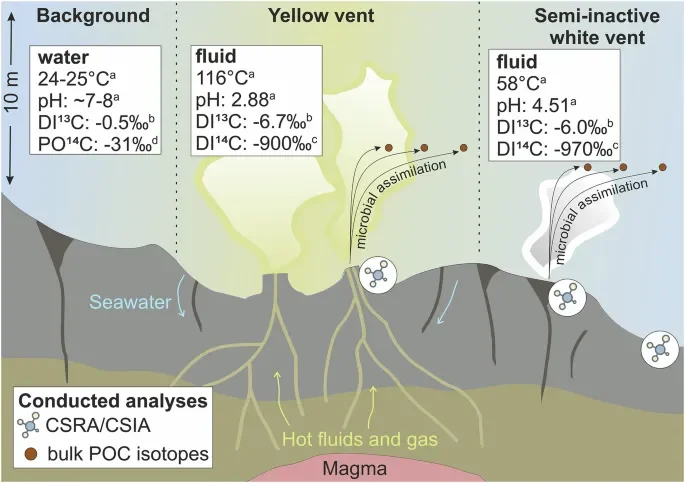
Researchers have observed that microbes at these shallow-water hydrothermal vents actively assimilate this ancient carbon. These microorganisms employ metabolic pathways, including the reductive tricarboxylic acid cycle, to convert carbon dioxide into their own tissues, even under the harsh conditions of the vents.
Crabs Feed on Ancient Carbon
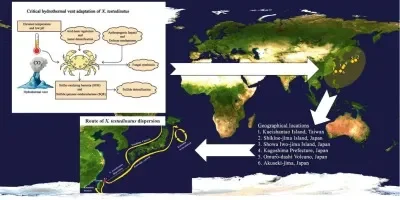
The hydrothermal vent crab, identified as Xenograpsus testudinatus, plays a crucial role in the propagation of this ancient carbon through the food web. These crabs, which reside directly on the vent structures, consume the microbes that have incorporated the ancient carbon. Consequently, their tissues have been found to contain this ancient carbon signature, demonstrating the transfer of matter across trophic levels.
Read More: Tohorā Diet Study Boosted by New Zealand Beach Find
Photosynthesis's Role Identified
While chemosynthesis has long been understood as a driver of life at hydrothermal vents, this research highlights the previously unconfirmed role of photosynthesis in the assimilation of ancient carbon from these systems. This indicates a broader range of biological processes capable of utilizing subterranean carbon sources.
Location and Conditions
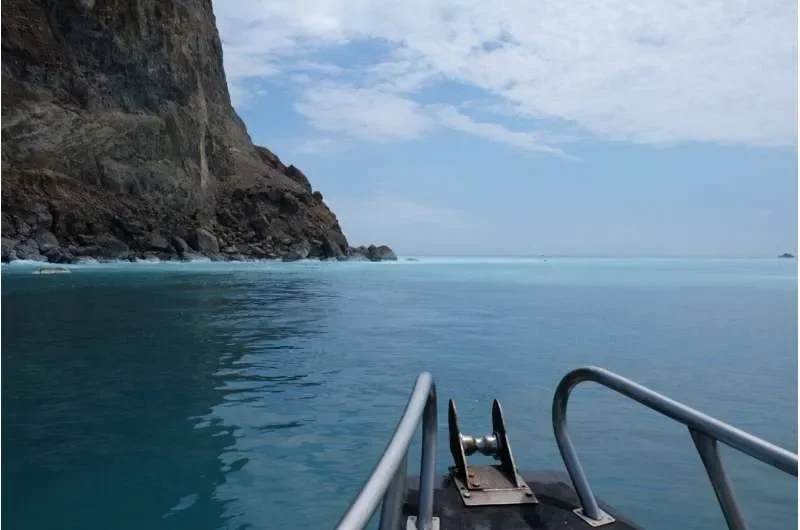
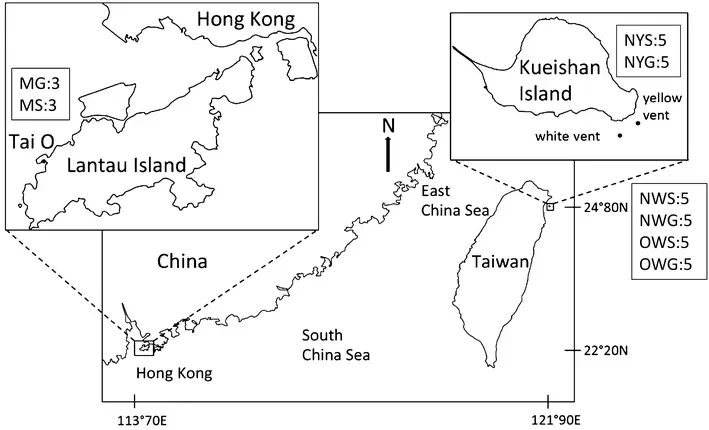
The study focuses on shallow-water hydrothermal systems, specifically noting the acidic conditions of the Kueishantao vent area off Taiwan. The unique geochemistry and biological communities found here are influenced by these specific environmental factors.
Previous Investigations
Prior work has explored various aspects of these vent systems and their inhabitants, including dietary analyses of the Xenograpsus testudinatus crab and the bioaccumulation of trace metals. Studies have also investigated the bacterial communities associated with the crab and the general geochemical characteristics of offshore Taiwan hydrothermal systems. The specific isotopic signatures of carbon, such as Δ14C and δ13C values, have been measured in fatty acids within surface sediments near these vents.
Read More: Sea Squirts' Sticky Secret Could Help Grow Ocean 'Sea Forests'