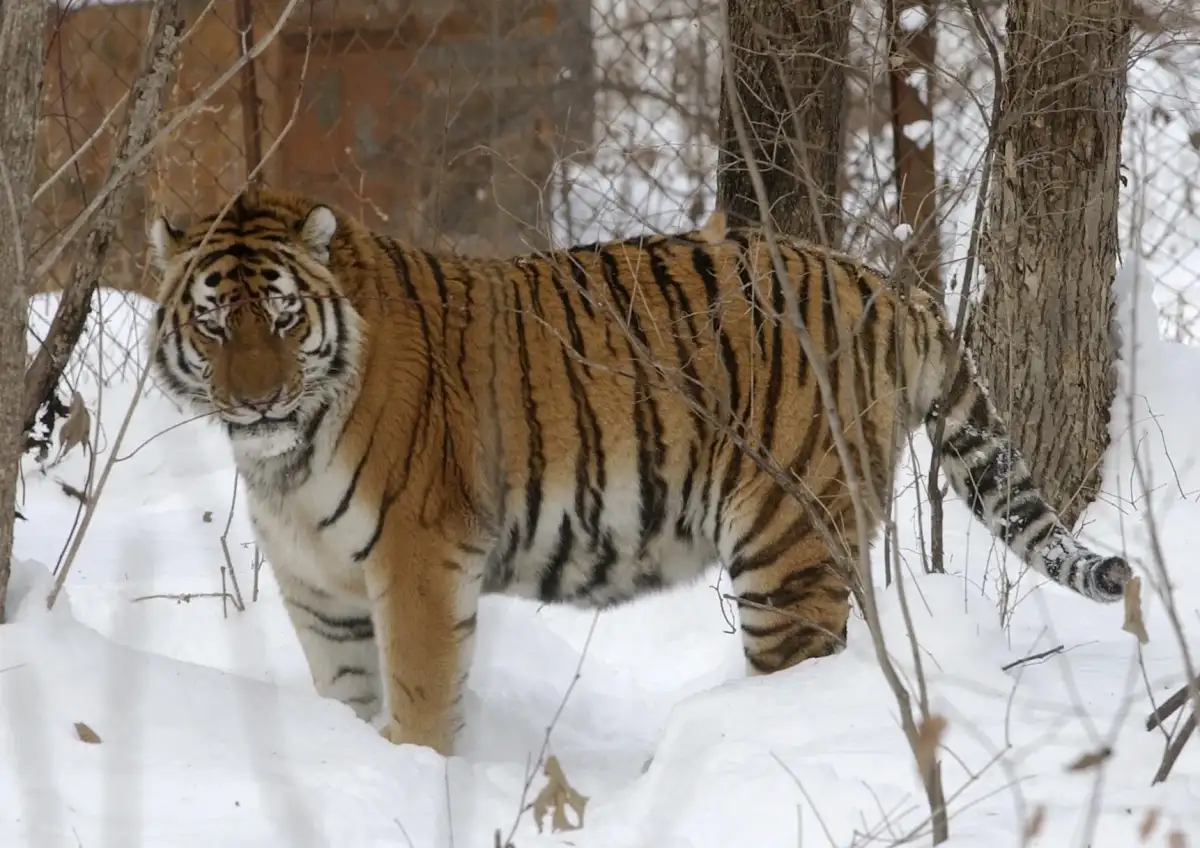
Endangered Amur Tigers Emerge on Russian Roadside
In a moment that blurred the lines between nature's raw power and human voyeurism, a family of Amur tigers, classified as 'Endangered' on the IUCN Red List, casually traversed a mountain road in Russia, drawing startled yet delighted reactions from motorists. The animals displayed no signs of aggression, according to reports from the Amur Tiger Centre, an organization involved in wildlife monitoring and conflict prevention. This infrequent public appearance underscores the precarious existence of the species, with an estimated mere 500 individuals remaining in the wild.
The footage, captured by passengers in a vehicle, shows the large felines walking unperturbed as humans inside the car express overt excitement. The Amur tiger, also known as the Siberian tiger, is a symbol of the wild's persistent struggle against encroaching human landscapes.
Conservation Efforts Under Scrutiny
The Amur Tiger Centre, collaborating with the Russian Ministry of Natural Resources, engages in critical work—monitoring populations, rehabilitating orphaned cubs, and attempting to mitigate inevitable clashes between these apex predators and human settlements. The program's scientific arm involves detailed analysis of captured tigers, collecting biological samples for genetic and hormonal studies. Scientists, driven by the urgent need to bolster tiger numbers, consider successful captures a triumph, often resulting in the fitting of satellite-tracking collars to monitor their movements.
Read More: Orangutan Mothers Plan Playdates for Babies in Borneo
This direct observation of wild tigers interacting with human infrastructure, albeit from the safety of a vehicle, highlights the complex and often fraught relationship between conservation initiatives and the lived reality of these animals sharing their habitat. The broader 'Amur Tiger Programme' extends beyond mere scientific data collection, encompassing public awareness and educational outreach.
A Transnational Tiger Future?
Beyond Russia's borders, efforts are underway to broaden the tiger's genetic pool and secure its future. Kazakhstan, for instance, is poised to receive its first Amur tigers from Russia in 2026 as part of a reintroduction program. This initiative involves habitat restoration and territorial protection, with each reintroduced animal equipped with a satellite tracker. The parent tigers, intended for educational and research purposes, will remain within a controlled enclosure. This move signifies a collaborative, albeit nascent, approach to tiger preservation, aiming to establish a self-sustaining population beyond its current stronghold.
Read More: Putin Promises Stronger Air Defense After St. Petersburg Drone Attacks
Historical Echoes and Ongoing Challenges
The Amur tiger shares a genetic kinship with the now-extinct Caspian tiger, a historical parallel that serves as a stark reminder of what can be lost. The modern range of the Siberian tiger is a shadow of its former expanse, compressed by human development and historical hunting practices. Conservation strategies for the Amur tiger in Russia have seen recent updates, reflecting an ongoing attempt to adapt to the persistent pressures on this iconic species. Despite these formalized strategies and international gestures, reports from early 2024 suggested that ambitious reintroduction plans were facing significant hurdles, indicating the complex and often uneven progress in safeguarding these magnificent creatures.