The infiltration of artificial intelligence into higher education presents a seismic challenge, prompting educators to question the very nature of learning and assessment. Reports from across campuses indicate a profound shift, with AI tools altering the landscape of student work, forcing a reevaluation of traditional pedagogical methods. Institutions are scrambling to adapt, developing policies and detection mechanisms that are, by all accounts, imperfect. The core of the dilemma lies in whether AI is a tool to augment learning or a shortcut that erodes critical thinking.
Students themselves are navigating this new terrain, with some viewing AI use as a "victimless crime" or an efficient means to allocate time to "important tasks," while others express a desire for genuine intellectual engagement. This has led to innovative, albeit disparate, approaches from educators attempting to circumvent AI's capacity to generate passable, yet perhaps hollow, academic output.
Read More: Virginia Tech Design School Teaches Empathy in Interior Design
The Erosion of Authentic Inquiry
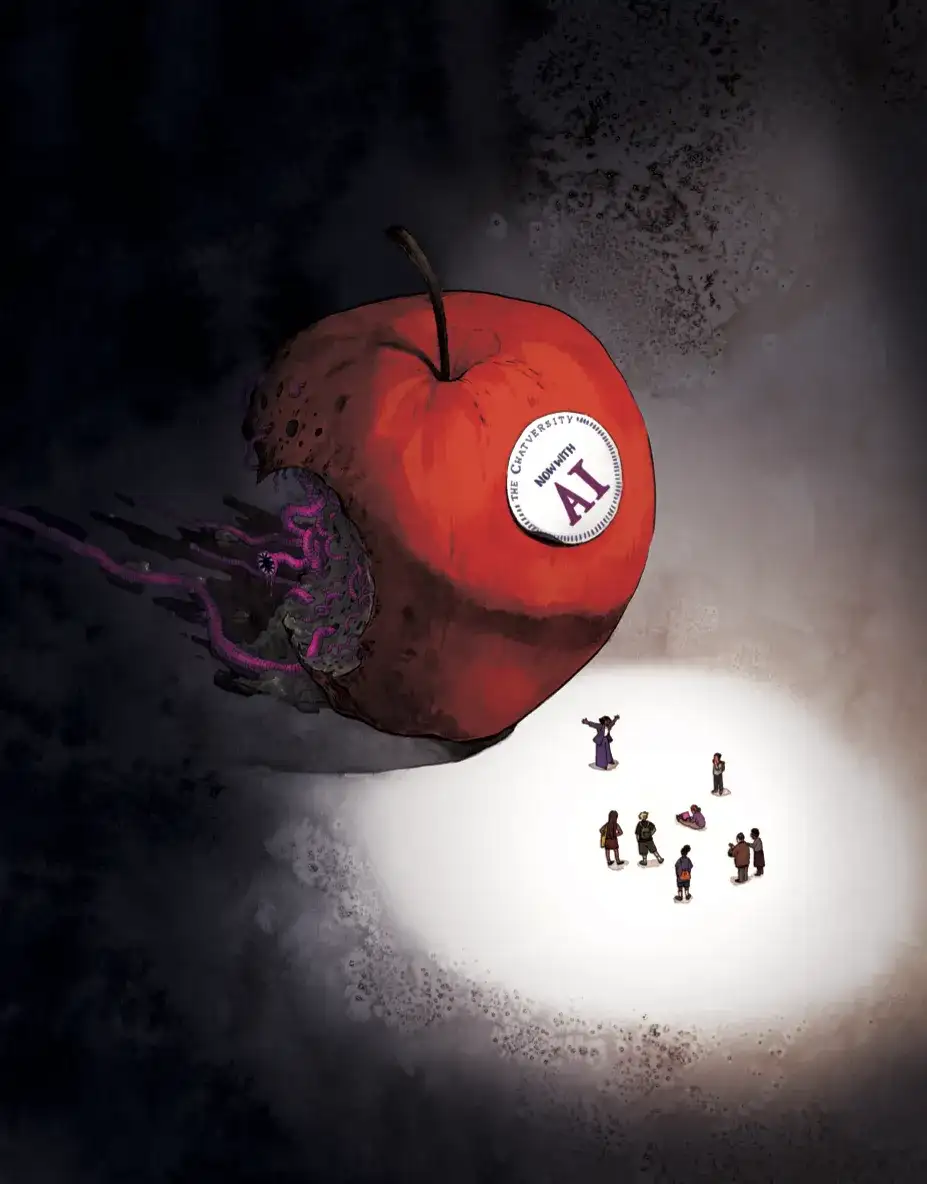
A palpable concern is that AI is not merely assisting students but doing the work for them, a phenomenon some fear is "destroying the university and learning itself." The worry is that reliance on AI-generated content stunts students' ability to form and articulate their own thoughts. This comes at a time when the ability to translate ideas onto the page has long been a cornerstone of academic rigor, particularly within humanities disciplines. The consequence, critics argue, is that students may be "learning not to learn," with degrees becoming increasingly diluted in value.
AI's pervasive presence: Students admit to using AI for various tasks, from generating essays to checking work against rubrics.
Ethical ambiguities: The use of AI in graded assignments is often characterized by students as a pragmatic choice, rather than an act of academic dishonesty.
Faculty response: Educators are experimenting with alternative assessment methods, such as in-class essays, to mitigate AI's influence.
Pedagogical Pockets of Resistance and Adaptation
In the face of this perceived existential threat, some educators are exploring novel pedagogical strategies. One professor, observing AI's impact on philosophy classes, opted for a "collective essay" approach, where students contributed to a single piece and were graded on individual input. The result was a student-reported deeper engagement and a feeling of performing "actual, important philosophy," with a desire to submit the work to academic journals. This suggests a potential pathway where AI, or at least the need to circumvent it, spurs new forms of collaborative and authentic intellectual production.
Read More: Apple CEO Tim Cook steps down, John Ternus takes over September 1

Shifting assessment paradigms: The move from individual, AI-vulnerable assignments to collaborative or in-class formats is gaining traction.
Student perception: When tasked with work that feels "real" and important, students report increased motivation and a sense of genuine learning.
AI as a tool: Some educators are integrating AI into the learning process, albeit with strict guidelines for editing and critical reflection, framing it as an "efficiency tool" that requires human refinement.
The Unsettled Future of Academic Work
The debate surrounding AI in academia is far from settled. While some institutions are implementing stringent AI-detection measures, these are acknowledged as imperfect. The rapid evolution of AI capabilities outpaces the development of robust countermeasures, leaving educators in a state of constant adaptation. This includes struggles with AI-generated citations and sources that may not exist.
The question of what constitutes "important work" in the age of AI remains central. Some are turning to more traditional, or even archaic, methods like timed in-class exams to ensure originality. Others see AI as an inevitable technological progression, likening its future role to that of a sophisticated "spell check." The generational divide in perspectives on AI tools is stark, reflecting a broader societal uncertainty about its integration into daily life and intellectual pursuits.
"Students aren’t just learning less; their brains are learning not to learn."— Article 3, Current Affairs
"Until you have tried to put your ideas on the page, you never really know if you understand them and have them under control."— Article 4, Leiter Reports
"The lesson’s mixed message captures the broader confusion on campuses these days: use AI, but don’t rely on it; resist it, but not too much."— Article 5, The Walrus
"But overall, you lose the ability to think rationally for yourself."— Article 8, Technician Online