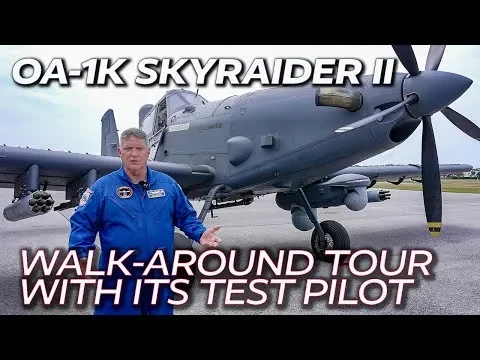
HURLBURT FIELD, FL – The U.S. Air Force Special Operations Command (AFSOC) has formally accepted the first missionized OA-1K Skyraider II aircraft into its operational fleet. Eighteen of these aircraft have been delivered, marking a significant infusion of a platform AFSOC describes as a "Swiss Army knife" of airborne capabilities. The command is now poised to test the aircraft's unique rapid breakdown and reassembly capabilities in an operational setting later this year.
'Swiss Army Knife' Capabilities and Testing
The OA-1K is slated for a variety of roles, including close air support (CAS), armed intelligence, surveillance, and reconnaissance (ISR), and precision strike operations. Its multi-role nature aims to fill a niche currently unmet by other crewed Air Force platforms, potentially freeing up higher-end assets for other tasks. A key aspect of its operational testing will involve demonstrating its rapid deployment capability, which involves transporting the aircraft within larger mobility platforms like the C-17. The logistical challenges of vast geographical distances, particularly in the Indo-Pacific theater, are cited as a primary driver for this feature.
Read More: Air Force Major Detained for Calling for President's Impeachment
Robert Wilson, AFSOC’s Armed Overwatch requirements branch chief, stated that while preliminary work on fleet numbers has occurred, the final determination will stem from operational testing. Combat deployments are anticipated within the next few years, though a definitive timeline remains unstated. Wilson also highlighted the aircraft’s persistent presence at a low cost compared to other platforms.
Background and Context
The OA-1K Skyraider II is named in honor of the Vietnam-era A-1 Skyraider, an aircraft noted for its resilience and versatility. The new platform incorporates modernizations, including a lightweight composite ballistic armored engine compartment and cockpit. Training for the Skyraider II will be conducted at the Will Rogers Air National Guard Base in Oklahoma.
Despite the operational push, AFSOC acknowledged that budget constraints may impact the eventual number of aircraft procured. Some commentary from outside AFSOC has linked the aircraft’s introduction to geopolitical events, while also offering broad praise for the previous administration’s foreign policy.
Read More: Fresno Airport $85 Million Funding Boost Improves Travel in April 2026