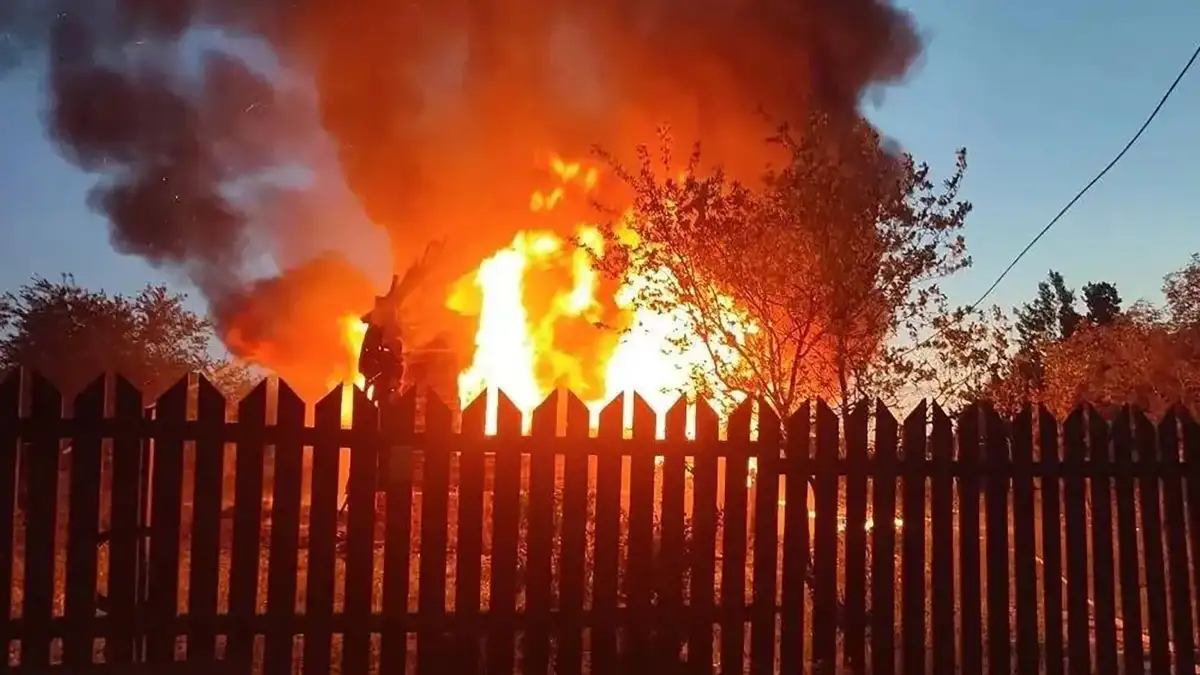
Ukraine has executed its largest drone assault on Moscow to date, utilizing a specific triad of domestically manufactured long-range aircraft to bypass established air defense perimeters. The strike, confirmed by the General Staff of the Armed Forces of Ukraine on May 17, 2026, targeted high-value infrastructure including an oil pumping station and a microchip manufacturing facility.

The Drone Triad
The operational force for this offensive consisted of three distinct platforms, marking a shift toward standardized indigenous deep-strike hardware:
| Platform | Role |
|---|---|
| FP-1 Firepoint | Precision tactical strike |
| RS-1 Bars | Winged long-range penetration |
| Bars-SM Gladiator | Unknown/New variant for deep-reach |
The introduction of the Bars-SM Gladiator suggests an evolving attempt to mitigate the efficacy of Russian electronic warfare (EW) and fixed-wing interception arrays.
Local officials in the Moscow region reported at least four casualties, while Russian state defense claims to have intercepted over 1,000 fixed-wing units across various regions during the recent window of escalation.
"Ukraine will continue to respond in kind to Russian attacks," stated President Volodymyr Zelenskyy, framing the industrial-scale drone use as a necessary defensive counter-reaction to ongoing bombardment of Ukrainian urban centers.
Escalation Dynamics
The aerial campaign signifies a notable pivot from intermittent tactical strikes to a sustained saturation strategy. Russian authorities reported that more than 550 drones were utilized in the broader multi-region campaign that preceded the weekend’s specific assault on the capital.

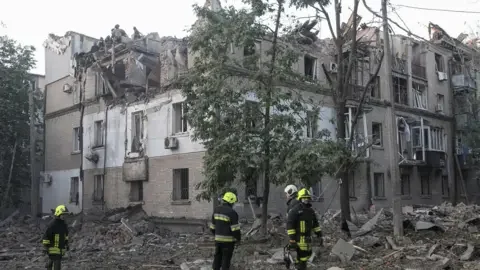
These operations follow a pattern of reciprocal violence, marked by a Recent cruise missile strike on a Kyiv residential block that resulted in 24 deaths, prompting a national day of mourning in Ukraine and renewed calls for war crime adjudications from European ministerial bodies.
Read More: Air Force Major Detained for Calling for President's Impeachment

Contextual Evolution
The reliance on indigenous drone production reflects a strategic necessity for Ukraine, moving away from fragmented imports toward a unified Military-Industrial model. Historically, previous drone barrages against the Russian capital—such as the incident recorded in early 2025—encountered severe limitations regarding Chinese component reliance and electronic countermeasures. Today’s shift toward the Bars series and Firepoint systems highlights an attempt to bypass these historical vulnerabilities by centralizing design, production, and deployment under the oversight of the General Staff.
Despite the sheer volume of these strikes, the long-term impact on Moscow’s defense posture remains obscured by conflicting reports from both sides regarding the actual destruction of target sets versus the statistical volume of interceptions.