
Two ancient skulls from Yunxian, China, previously considered potential ancestors of Denisovans and dated to roughly one million years old, have been re-evaluated. New research suggests these fossils are significantly older, approximately 1.77 million years old, and represent the earliest known Homo erectus in East Asia. This finding implies Homo erectus spread across Asia much earlier and faster than previously understood, challenging existing timelines of early human dispersal.
Context: Unraveling the Age and Identity of Yunxian Fossils
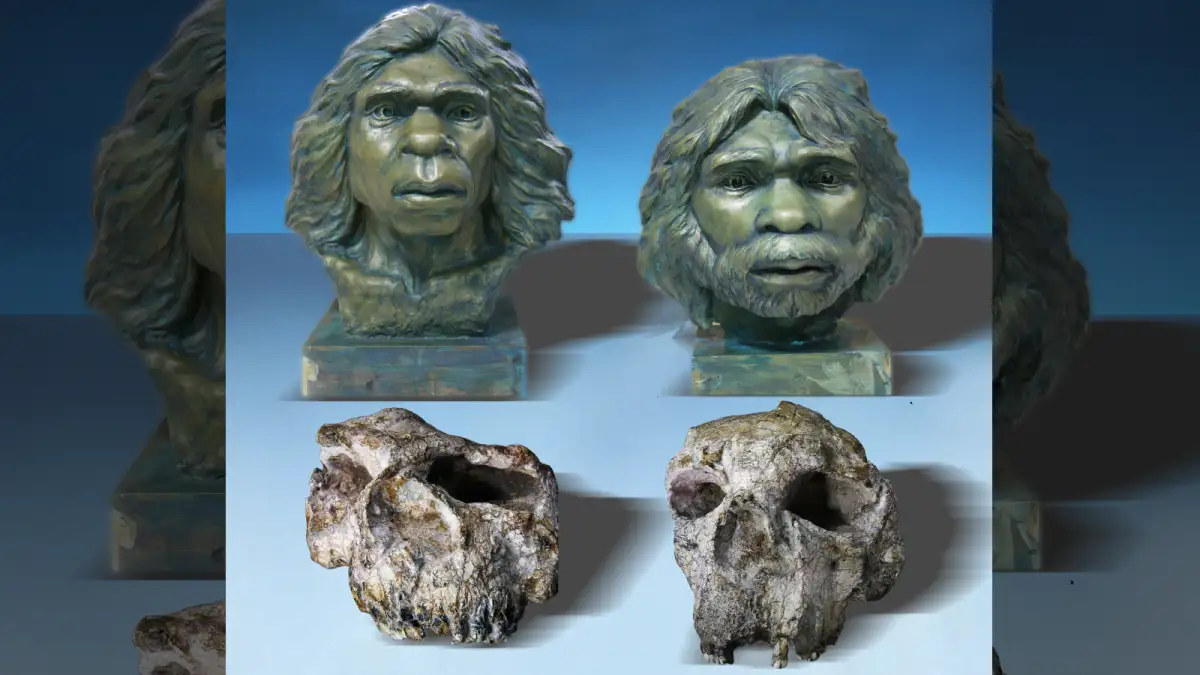
The Yunxian site, located in northern China, has long been a subject of scientific discussion. Two skulls, identified as Yunxian 1 and Yunxian 2, have been central to understanding early human presence in East Asia.
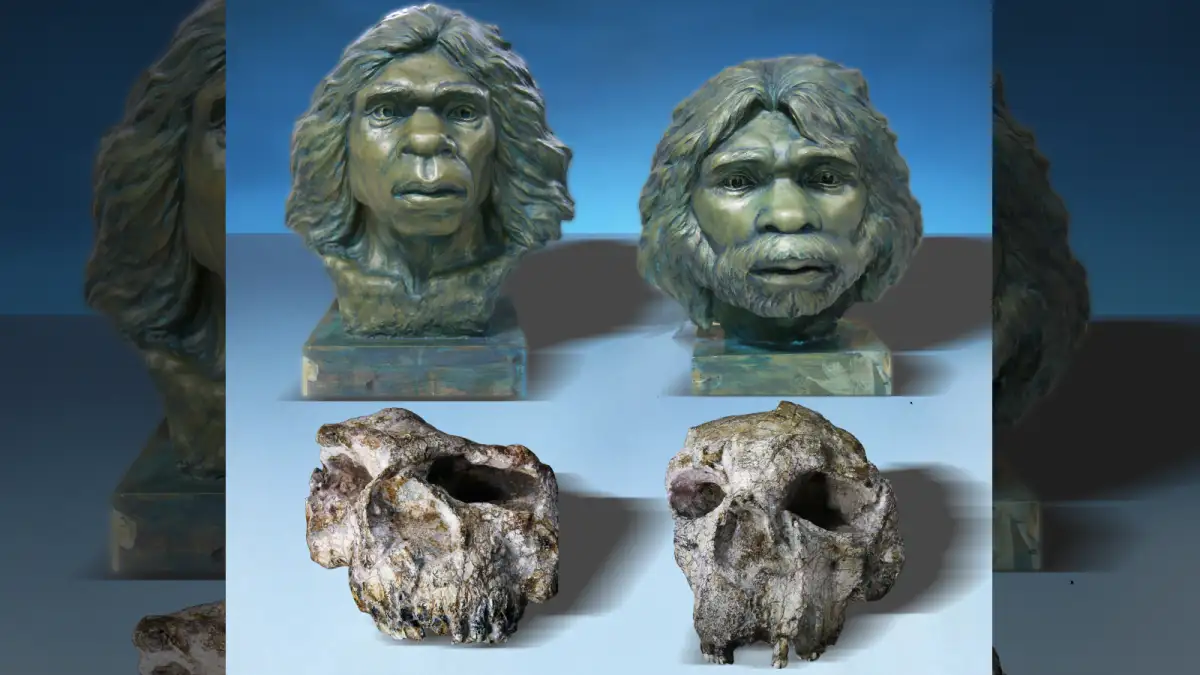
Initial Interpretations: For a period, these fossils were considered to be around one million years old. Their identity was also debated, with some speculation that they might be related to Denisovans, a hominin group known primarily from genetic evidence and a few fossil fragments.
New Dating: Recent studies, employing advanced dating techniques, have placed the age of the Yunxian fossils at approximately 1.77 million years. This revised dating significantly pushes back the known presence of hominins in East Asia.
Reclassification: Based on detailed anatomical analysis, including digital reconstruction of Yunxian 2, researchers have reclassified the skulls. They are now identified as Homo erectus, rather than Denisovans or an ancestral form to them.
Comparison to Global Sites: The revised age of the Yunxian fossils brings them close to the age of the Homo erectus fossils found at Dmanisi, Georgia, which are among the oldest hominin remains found outside of Africa, dated to around 1.77 million years old as well.
Evidence: Dating and Anatomical Features
The re-evaluation of the Yunxian fossils rests on two primary lines of evidence: new dating results and detailed anatomical comparisons.
Age Determination:
Multiple sources cite the age of the Yunxian site and its Homo erectus crania as approximately 1.77 million years old (Ma). This is a key finding published in journals like Science Advances.
This new dating is crucial because it predates earlier estimates by a substantial margin.
Anatomical Analysis:
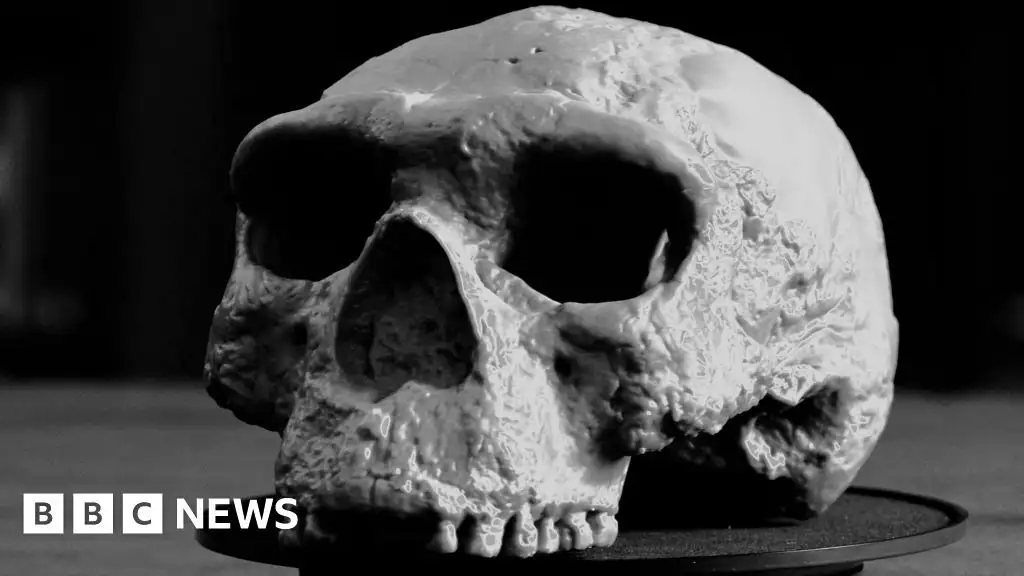
Yunxian 2 Skull: Extensive digital reconstruction of the Yunxian 2 skull was undertaken. This involved using a novel digital protocol to virtually rebuild the skull using anatomical features and geometric morphometric landmarks.
Classification: Initially classified as Homo erectus partly based on its older estimated age, the Yunxian 2 skull's features were found to be closer to Homo longi and Homo sapiens in some aspects, leading to initial confusion and debate. However, the overarching consensus now identifies the crania as Homo erectus.
Brain Capacity: Certain aspects, including an apparently larger brain capacity, are noted to be closer to Homo longi and Homo sapiens, which may have contributed to earlier debates about its precise classification.
Technological Advancement:
Modern reconstruction technologies were used to reveal features not easily discernible from the original fossil material.
The researchers utilized a large comparative sample of hominin fossils for their analysis.
Deep Dives: Dispersal Speed and Evolutionary Branching
The new dating of the Yunxian fossils introduces significant new questions and perspectives regarding early human history.
Read More: 5,900-Year-Old Child Skull Found in Norway Cave

The Pace of Homo erectus Migration
Previous Understanding: The oldest hominin bones found outside Africa, primarily the Dmanisi fossils from Georgia, had suggested that Homo erectus took a comparatively long time, perhaps around 140,000 years, to spread east into Asia.
New Evidence: The 1.77 million-year-old Yunxian fossils are found in East Asia, making them contemporaneous with or only slightly younger than the Dmanisi finds. This proximity in age suggests that Homo erectus spread across Eurasia much more rapidly.
This implies Homo erectus achieved continental-scale dispersal significantly faster than previously assumed.
Contradictory Timelines: The existence of Homo erectus fossils in East Asia at 1.77 Ma creates a tight timeframe for their movement out of Africa and across Asia.
The Homo Family Tree and Homo longi
Shifting Lineages: The Yunxian fossils were initially thought to be potential ancestors of Denisovans. However, the reclassification to Homo erectus and their ancient age complicate direct links to later hominin groups.
Homo longi and Homo sapiens: The Yunxian 2 skull exhibits some features aligning with Homo longi and Homo sapiens, prompting a re-examination of hominin relationships.
The new findings suggest a more complex evolutionary branching than a simple linear progression.
Divergence of Species: Current understanding places the divergence of Homo sapiens and Neanderthals around 600,000 years ago. The early appearance of Homo erectus in Asia predates this divergence significantly, suggesting Homo erectus itself may have had a long and varied evolutionary history in Asia.
"Sister Species" Debate: Some analyses suggest that Homo longi represents a separate, more advanced group of human, potentially existing at a similar developmental stage to Neanderthals and Homo sapiens. The Yunxian fossils' features raise questions about their relationship to such groups.
Early Stone Tools vs. Fossil Evidence
Temporal Gap: There remains a considerable time gap in China between the earliest fossil evidence of hominins (now the Yunxian fossils at ~1.77 Ma) and the earliest stone tools found at other sites, which are even older.
This gap, potentially around 600,000 years, highlights unknowns about the very earliest hominin presence and their technological capabilities in East Asia.
In Situ vs. Migrated Tools: The Yunxian fossils are described as the "oldest in situ Homo erectus crania in eastern Asia," meaning they are found in the geological layer where they lived and died. This contrasts with earlier tool finds that may have been transported.
Expert Analysis
Scientists involved in the research expressed surprise and the profound implications of these findings.
"Their age means that Homo erectus… must have spread across the continent much earlier and much faster than we’d previously given them credit for." - Ars Technica
"The findings shocked the research team." - CBS News
"This changes a lot of thinking." - CBS News
The revised dating and reclassification of the Yunxian fossils challenge long-held assumptions about the speed and routes of early human migration out of Africa. The close proximity in age between the Yunxian and Dmanisi fossils suggests a rapid initial dispersal event. Furthermore, the anatomical details of the Yunxian skulls prompt further investigation into the relationships between Homo erectus, Homo longi, and the emergence of species like Homo sapiens.
Conclusion: Rewriting Early Human Dispersal and Ancestry
The re-evaluation of the Yunxian fossils from China marks a significant development in paleoanthropology. The establishment of their age at approximately 1.77 million years positions them as the oldest known Homo erectus remains in East Asia.
Rapid Dispersal: This ancient age, contemporary with the Dmanisi fossils in Georgia, strongly indicates that Homo erectus migrated across Asia far more quickly than previously believed. This suggests a highly efficient dispersal strategy.
Challenged Timelines: The findings necessitate a revision of human migration models, implying that hominins occupied East Asia nearly a million years earlier than some earlier estimates.
Lineage Complexity: The reclassification of the Yunxian skulls, moving away from any direct link to Denisovans and solidifying them as Homo erectus, simplifies some aspects of the immediate ancestry debate but highlights the complex evolutionary branching within the Homo genus.
Unanswered Questions: A notable disparity persists between the oldest fossil evidence and the oldest stone tool evidence in China, leaving open questions about the initial hominin presence and their technological capabilities. The precise evolutionary relationships between Homo erectus, Homo longi, and the emergence of Homo sapiens continue to be an active area of research.
The Yunxian fossils, now firmly established as ancient Homo erectus, serve as crucial anchors for understanding the earliest phases of human expansion and the intricate tapestry of our evolutionary past.
Read More: Erode Aqueduct Stable: ASI Finds Minor Seepage, Recommends Repairs
Sources
Ars Technica: Published: 17 hours ago. Link: https://arstechnica.com/science/2026/02/new-dates-on-chinese-fossils-raise-question-of-how-many-times-we-left-africa/
GreekReporter.com: Published: 22 hours ago. Link: https://greekreporter.com/2026/02/19/homo-erectus-skulls-china-rewrite-early-human-history/
LiveScience.com: Published: 1 day ago. Link: https://www.livescience.com/archaeology/human-evolution/absolute-surprise-homo-erectus-skulls-found-in-china-are-almost-1-8-million-years-old-the-oldest-evidence-of-the-ancient-human-relatives-in-east-asia
BBC News: Published: Sep 25, 2025. Link: https://www.bbc.com/news/articles/cdx01ve5151o
Chinese Academy of Sciences (CAS): Seen on: Bing. Link: https://english.cas.cn/special-reports/2025q4/202601/t202601221146410.shtml
Arkeonews: Published: 1 day ago. Link: https://arkeonews.net/1-77-million-year-old-homo-erectus-crania-in-china-challenge-long-held-timelines-of-human-dispersal/
CBS News: Published: Sep 26, 2025. Link: https://www.cbsnews.com/news/ancient-skull-could-rewrite-human-evolution-timeline-study/
Observer.co.uk: Seen on: Bing. Link: https://observer.co.uk/news/the-sensemaker/article/a-million-year-old-skull-from-china-has-rewritten-human-evolution
ZMEScience.com: Published: Oct 2, 2025. Link: https://www.zmescience.com/science/news-science/a-million-year-old-skull-is-rewriting-the-human-family-tree/
ABC News Australia: Published: Sep 26, 2025. Link: https://www.abc.net.au/news/science/2025-09-26/million-year-old-skull-reconstruction-and-human-evolution/105819746