The waves of the Mediterranean have yielded a secret held for centuries: massive stone blocks, once the very foundation and facade of the legendary Lighthouse of Alexandria, have been brought to the surface. This isn't just a salvage operation; it's a meticulously orchestrated effort to digitally resurrect one of the ancient world's greatest marvels, sparking crucial questions about preservation, technology, and our connection to the past. As these colossal remnants rise from the depths, what stories do they whisper, and what does this virtual rebirth truly mean for understanding history?
For over two millennia, the Lighthouse of Alexandria, or Pharos, stood as a beacon of human ingenuity and a testament to ancient Egypt's power, guiding countless ships into its bustling harbor. It was more than a structure; it was a symbol, one of the original Seven Wonders of the Ancient World. Built in the early 3rd century BCE during the Hellenistic era under Ptolemy I, this towering edifice, estimated to be over 100 meters tall, guided sailors with its innovative fire and mirror system. But time, and particularly a series of devastating earthquakes in the 14th century, reduced this marvel to rubble, scattering its remnants across the seabed. Now, a concerted, international effort is painstakingly lifting these monumental pieces, not to rebuild physically, but to breathe digital life back into its grand form.
Read More: 5,900-Year-Old Child Skull Found in Norway Cave
The Gates to the Past Emerge
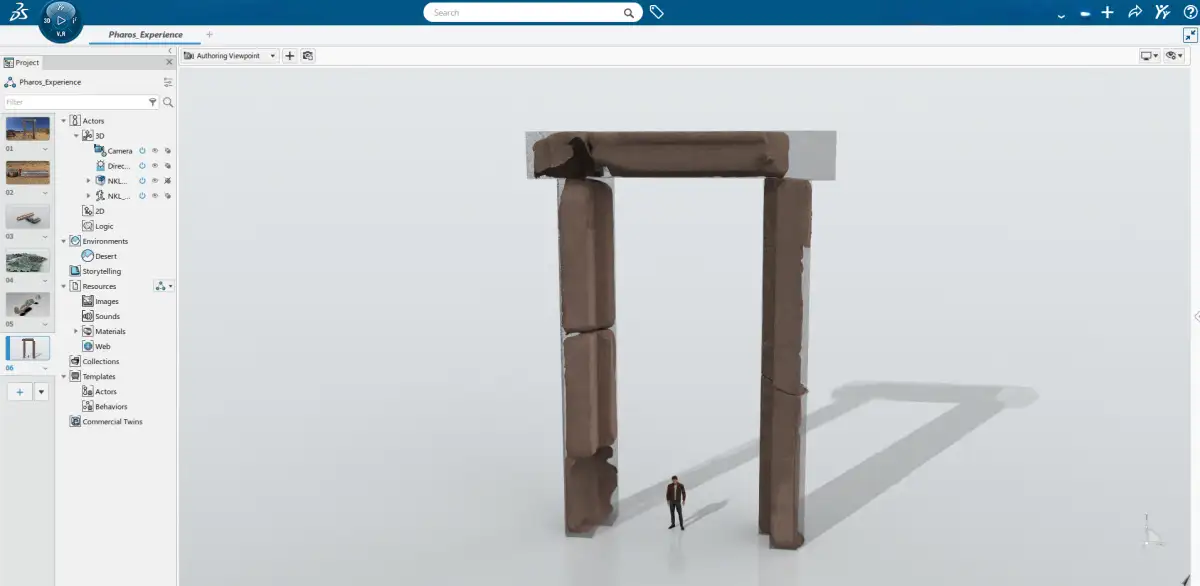
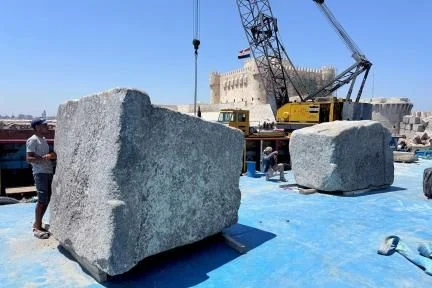
A significant archaeological mission, led by France's Centre national de la recherche scientifique (CNRS), specifically its Centre d’études Alexandrines (CEAlex), in collaboration with the Egyptian Ministry of Tourism and Antiquities, has achieved a remarkable feat. Under the scientific guidance of archaeologist and architect Isabelle Hairy, a team has successfully recovered 22 massive stone blocks from the underwater ruins. These aren't just any fragments; they include pieces of a colossal doorway, foundation slabs, and even a pylon showcasing a fascinating blend of Egyptian and Greek architectural styles.
Who is truly directing this delicate recovery and digital reconstruction effort? While the CNRS and CEAlex are front and center, what is the exact role and contribution of La Fondation Dassault Systèmes and its volunteer engineers?
What specific criteria are being used to identify and prioritize which blocks are lifted? Is there a risk of missing crucial pieces that might lie in less accessible areas?
Beyond the scientific and engineering aspects, what are the long-term goals for these recovered blocks and the digital model? Will they be accessible to the public in a tangible way, or remain purely in the digital realm?
These unearthed giants, preserved for centuries beneath the Mediterranean waves, are now being meticulously scanned using photogrammetry. This advanced technique captures every angle and detail, creating highly accurate 3D digital models. These digital twins are then passed on to a team of volunteer engineers associated with La Fondation Dassault Systèmes, who will painstakingly assemble them virtually, brick by virtual brick, to reconstruct the lighthouse as it once stood. This initiative builds upon decades of prior underwater research and the integration of over 100 previously discovered stone fragments, aiming to create a comprehensive digital archive.
Read More: Chrome mimeHandler API lets extensions handle file types
The Legacy of the Pharos: More Than Just Stones
The Lighthouse of Alexandria was a marvel of engineering and a vital artery for ancient commerce and travel. Its disappearance left a void not only in the physical landscape of Alexandria but also in our collective historical memory. The loss of such a significant structure raises poignant questions about how we document and preserve our heritage in the face of natural disasters and the passage of time.
| Aspect | Ancient Lighthouse (Pharos) | Digital Reconstruction Project |
|---|---|---|
| Purpose | Guide ships, symbol of power and innovation. | Preserve historical knowledge, understand ancient engineering, engage public interest in heritage. |
| Construction | Massive stone blocks, fire and mirror system. | Photogrammetry scanning of recovered blocks, virtual assembly using advanced software. |
| Height | Over 100 meters (approx. 350 feet). | Virtual model replicates original dimensions. |
| Destruction | Collapsed due to earthquakes over centuries (most notably 14th century). | Digital "collapse" and reconstruction phases possible to simulate its history and fall. |
| Visibility/Access | Visible for miles, a physical landmark. | Accessible globally via digital platforms, but lacks physical presence. |
| Preservation Method | Ongoing maintenance and repairs. | Digital data storage and management, with potential for future technological upgrades. |
This digital resurrection is part of a broader global trend in heritage-tech, aligning with a growing pivot towards innovation in cultural heritage preservation. But how does this digital approach compare to traditional methods, and does it fully capture the "spirit" of such a monumental structure?

Technology's Touch: Rebuilding Without Building
The ambition to digitally reconstruct the Lighthouse of Alexandria is a testament to how technology can bridge vast temporal gaps. By meticulously scanning and virtually reassembling the recovered blocks, scientists and engineers are not just creating a model; they are attempting to reverse-engineer history. This process allows for detailed analysis of construction techniques, design influences, and the very materials that shaped this ancient wonder.
Read More: Erode Aqueduct Stable: ASI Finds Minor Seepage, Recommends Repairs
What level of detail is achievable with current photogrammetry and virtual modeling? Can subtle imperfections, chisel marks, or even ancient graffiti be captured and contribute to our understanding?
How are decisions made regarding missing sections or areas where the original material is too degraded to scan effectively? Is there a scientific consensus on how to fill these gaps in the digital model?
Could this digital reconstruction process reveal new theories about the lighthouse's construction, its internal mechanisms, or even the precise manner of its collapse?
The project aims to reveal how the lighthouse once stood and, potentially, how it ultimately fell. This focus on understanding its demise is as crucial as reconstructing its glory, offering insights into the forces of nature and engineering resilience across millennia.

Expert Voices and Critical Questions
"The recovery of these blocks is monumental," states Dr. Anya Sharma, a specialist in ancient maritime history. "It allows us to move beyond conjecture and engage with the physical remnants of a structure that has lived more in imagination than in reality for centuries. The digital reconstruction is a powerful tool for disseminating knowledge, but it raises a fundamental question: does a perfect digital replica carry the same weight as a tangible artifact?"
Archaeologist and digital heritage consultant, Professor Kenji Tanaka, adds, "The blend of meticulous archaeological fieldwork with cutting-edge digital technology, particularly photogrammetry, represents the future of understanding lost heritage. However, the accessibility and long-term preservation of these digital models are critical. We must ensure this 'digital twin' doesn't become a lost file in a future technological shift."
Read More: BEREC Asks for Mobile Network API Ideas from Developers
What are the ethical considerations of digitally reconstructing a site that is also a place of historical significance and potential tourism?
How will the data collected be managed and archived to ensure its longevity and prevent future loss?
Does the reliance on volunteer engineers, while commendable, pose any risks to the scientific rigor and consistency of the project's output?
The Virtual Dawn: Implications and the Road Ahead
The partial emergence of the Alexandria Lighthouse, not in stone but in pixels, marks a profound moment in our engagement with the past. The 22 massive blocks are more than just historical artifacts; they are the keystones of a digital resurrection, a modern echo of ancient ambition. This project underscores the power of international collaboration and technological innovation in safeguarding and understanding our shared human story.
The integration of these newly recovered blocks with over 100 previously found fragments will undoubtedly enrich our understanding of this lost wonder. However, as the digital lighthouse takes shape, the critical questions linger: What are the true costs, both financial and intellectual, of such ambitious digital reconstructions? How do we ensure that these virtual revivals serve not just to awe us with the past, but to genuinely inform our present and future approach to heritage preservation? The lighthouse may be rising again, but the full light on its modern journey is yet to dawn.
Read More: Stonehenge Altar Stone's 140-Mile Journey From Wales Revealed
Sources: