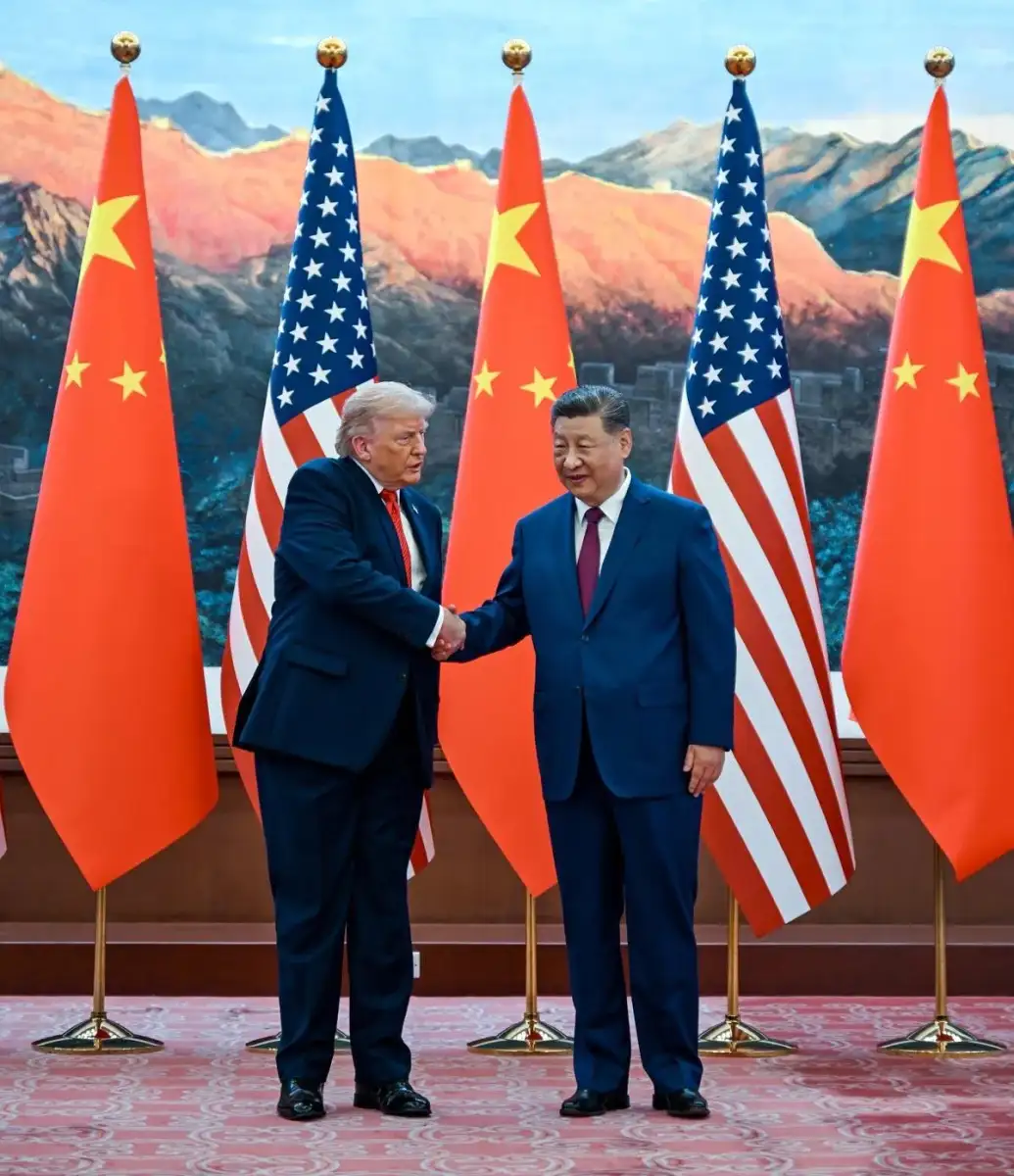
Beijing Hears Stark Warning Over Island's Status
Xi Jinping, China's paramount leader, has directly warned Donald Trump that the unresolved status of Taiwan poses a significant risk of "conflict" between the United States and China. The admonition, delivered during a high-stakes summit in Beijing earlier today, underscores the island's persistent position as a critical flashpoint in the relationship between the world's two most powerful nations.

Xi emphasized Taiwan as the "most important issue" in U.S.-China relations, stating that mishandling it could lead to clashes. According to Chinese state media readouts, the discussion centered on the potential for "conflict" and "clashes" if differences over the self-ruled democracy are not managed carefully. This warning was conveyed directly to Trump, highlighting Beijing's firm stance on the matter.

Despite Xi's blunt language regarding Taiwan, U.S. Secretary of State Marco Rubio reiterated that American policy towards the island remains unchanged. The United States acknowledges Beijing's assertion of sovereignty but maintains unofficial relations with Taiwan and is legally bound to provide it with the means for self-defense. Rubio noted that while Taiwan was discussed, the conversation moved on to other topics, framing the U.S. position as clear and consistent.
Read More: Coalition migration cap plan faces criticism on Today Show

Business Ties and Broader Geopolitics Take Center Stage
The summit, which extended over two days and included a lavish state banquet, also saw discussions on other pressing geopolitical and economic matters. China's foreign ministry indicated that the Middle East was a significant topic of conversation, though specific details, such as Iran's nuclear program or potential arms deals, were not elaborated upon in their official readouts.

Trump brought a delegation of prominent U.S. business leaders, including Boeing's CEO Kelly Ortberg, Nvidia's Jensen Huang, and Tesla's Elon Musk. These executives engaged with Chinese officials, with Trump suggesting that Xi had indicated a commitment to purchasing 200 jets from Boeing. Trump himself described the economic discussions as "extremely positive and productive," looking forward to "reciprocal" trade.
Read More: Trump and Xi Body Language Shows Different Styles in Beijing Meeting
Xi, during a toast at the state banquet, spoke of the importance of cooperation between the two nations, framing the U.S.-China relationship as the most crucial globally. He also extended an invitation to Trump for a reciprocal visit to the U.S. in September. The meeting aimed to build on a previous encounter in South Korea last October, where the two leaders had agreed to de-escalate a trade dispute.
Background: A Perennial Point of Contention
Taiwan, a self-governing democracy, has been a persistent source of tension since the Chinese Civil War. Beijing views the island as a renegade province and has not renounced the use of force to achieve reunification, increasing military pressure in recent years. The U.S. adheres to a "one China" policy, recognizing Beijing's claim, but simultaneously maintains robust unofficial ties with Taipei and supplies it with defensive weaponry, a policy enshrined in the Taiwan Relations Act. This delicate balancing act, often referred to as "strategic ambiguity," underscores the inherent risks associated with the Taiwan issue in U.S.-China relations.
Read More: Australia Opposition Wants Fewer Immigrants, Lower Taxes