A Subtle Spread: New Worm Species Identified in European Pets
Pet owners across Europe are being alerted to the growing presence of an invasive flatworm species, believed to be silently spreading through the continent. Recent research, primarily focusing on France, suggests that domestic cats and dogs may be acting as unwitting carriers for this Australian native, raising concerns about its wider dissemination. The worm, characterized by a distinct yellow stripe along its back, poses a new concern for animal health and potentially for public well-being, although direct human health impacts are not yet detailed.
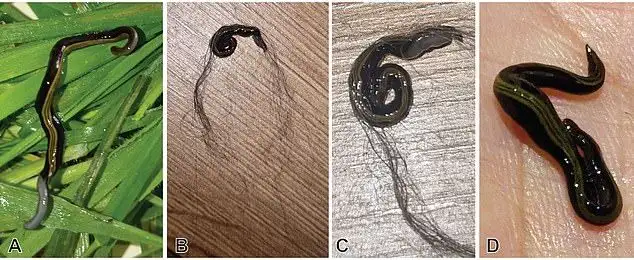
The Traveler: Origin and Identification
The flatworm in question, scientifically known as Australieplana plesia and commonly referred to as the yellow-striped flatworm, is a species that originates from Australia. Its recent detection in European environments represents an introduction, a process where a species is moved by human activity to a new area where it can survive and reproduce.
Read More: Orangutan Mothers Plan Playdates for Babies in Borneo

The yellow-striped flatworm has been identified on pets in France.
Researchers hypothesize that similar movements are likely occurring in other regions, including the United Kingdom.
The worm's physical description includes a prominent bright yellow stripe flanked by two narrower brown stripes along its dorsal side.
Modes of Transmission: Pets as Vectors
The core of the current concern lies in the observed association between the invasive flatworm and domestic animals. Studies indicate that the worms can attach to the fur of cats and dogs, facilitating their transport between locations and potentially across borders.

Attachment to fur: The flatworm has been observed clinging to the coats of pets.
Unsuspecting carriers: Animals are not aware of carrying the organism.
Geographic spread: This mode of transport enables the worm to move to new environments.
Scientific Scrutiny and European Concerns
While the initial research focused on a specific geographical area, the implications are considered broader. Scientists are evaluating the potential for this invasive species to establish itself and proliferate throughout Europe, driven by the widespread presence of domestic pets.
The study's findings, though centered on France, suggest a continental-level concern.
There is an expectation that the worm's presence on pets extends beyond the immediate study area.
Further investigation is needed to map the full extent of the flatworm's distribution.
Expert Insights and Future Research
The identification of Australieplana plesia in European pet populations necessitates a deeper understanding of its ecological impact and pathways of spread. Scientists are now tasked with elaborating on the life cycle of the worm in its new environment and assessing any risks it may pose.
The primary data available originates from studies conducted in France.
Concerns have been voiced about the worm's potential presence in the United Kingdom.
The implications for animal health and ecosystems require continued scientific assessment.
Conclusion: An Emerging Ecological Challenge
The confirmed presence of the Australian yellow-striped flatworm on domestic pets in Europe marks an emerging ecological concern. The ability of this species to travel unnoticed on cats and dogs suggests a capacity for silent, yet significant, geographic expansion. Pet owners are advised to remain vigilant for any unusual organisms on their animals. Continued scientific monitoring and research are essential to fully grasp the scope of this invasive species' presence and its potential long-term effects on the European environment.
Read More: Amazon Land Use Changes Cause Disease Clusters in Brazil
Sources Used:
Daily Mail: This report details the core findings of a study identifying the yellow-striped flatworm on pets in France and its potential spread to other European countries, including the UK.
Link: https://www.dailymail.co.uk/sciencetech/article-15545349/Urgent-warning-cats-dogs-invasive-WORM.html

:strip_icc()/GettyImages-688951857-586d7be13df78c17b6e3a3cb.jpg)