

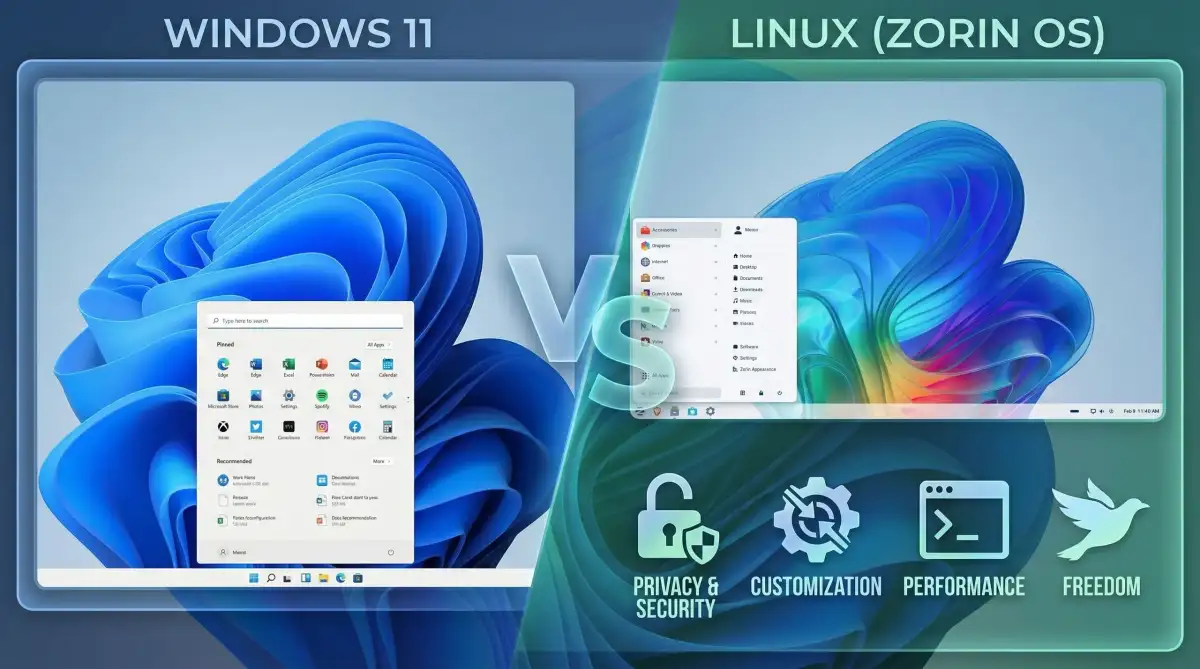
Despite the growing presence and accessibility of Linux, a significant number of users continue to opt for Windows as their primary operating system. This adherence stems from a confluence of factors, including established user familiarity, extensive software and hardware compatibility, and the perceived complexity of transitioning to a new system. While Linux offers compelling advantages, including cost savings and a high degree of user control, these are often outweighed by the practical considerations that tie users to the Windows ecosystem.

The Enduring Appeal of Windows
For many, the decision to stick with Windows is less about a direct comparison of features and more about avoiding disruption. The widespread adoption of Windows has created a deeply ingrained user base that is hesitant to abandon a familiar environment.

Familiarity and Reduced Learning Curve: Users are accustomed to the Windows interface and workflow. Learning a new operating system, even one as powerful as Linux, involves a learning curve that many are unwilling to undertake, particularly when their current system functions adequately for their needs.
Software Availability: A crucial element in Windows' continued dominance is the vast library of exclusive applications and games developed specifically for the platform. While Linux has made strides in software compatibility, many professional tools and popular games are still Windows-first or Windows-only.
Hardware Support and Drivers: The hardware ecosystem is heavily geared towards Windows. Manufacturers frequently prioritize driver development for Windows, leading to smoother and more reliable hardware integration for most users. While Linux hardware support has improved, drivers for specific peripherals can still be a point of contention.
Linux's Growing Momentum
Conversely, Linux is increasingly being recognized for its strengths, attracting users with its open-source nature, robust functionality, and privacy-centric approach.
Read More: Chrome mimeHandler API lets extensions handle file types

Cost and Open-Source Benefits: Linux is free to use and distribute, offering a significant financial advantage over Windows. Its open-source foundation also allows for greater transparency and community-driven development.
User Control and Privacy: Linux systems often provide users with a greater degree of control over their operating system and data. Some users are drawn to Linux's perceived privacy benefits, especially in contrast to Microsoft's data collection practices.
Evolving User-Friendliness: Modern Linux distributions have significantly enhanced their user interfaces, offering graphical environments that are more accessible to newcomers. The notion of Linux being exclusively for technical experts is becoming increasingly outdated.
Bridging the Gap: Compatibility and Alternatives
The perceived dichotomy between Windows and Linux is not always absolute. Efforts are underway to make the transition smoother and to allow for the coexistence of both ecosystems.

Compatibility Layers: Technologies like Wine and virtual machine software enable users to run Windows applications and even entire Windows operating systems within Linux. This offers a compromise, allowing users to leverage Linux's benefits while retaining access to essential Windows software.
Dual Booting: Users can install both Windows and Linux on the same computer, choosing which operating system to boot into at startup. This provides flexibility and allows for experimentation with Linux without abandoning Windows entirely.
Windows Subsystem for Linux (WSL): Microsoft's WSL allows users to run a Linux environment directly within Windows, providing access to Linux command-line tools and applications without leaving the Windows desktop.
Expert Perspectives
Industry observers note that user inertia is a powerful force.
"The 'if it ain't broke, don't fix it' mentality is incredibly strong with operating systems. People have invested years into learning Windows, and their workflows are built around it. The perceived effort to switch, even if technically the benefits are clear, is a significant barrier," stated Sarah Chen, a technology analyst.
Conclusion: A Matter of Priorities
The continued preference for Windows over Linux is largely driven by practical considerations and user habit. While Linux presents a compelling alternative, particularly for those seeking cost savings, greater control, and enhanced privacy, the entrenched software ecosystem, widespread hardware compatibility, and the lesser learning curve associated with Windows remain powerful attractors for the majority of users. As technology evolves, the lines between operating systems continue to blur, with increasing interoperability and accessible transition tools. However, until the perceived effort and potential disruption of switching significantly diminish, Windows is likely to maintain its dominant position.
Read More: LLM Council AI System Released 7 April 2026 for Better Accuracy
Sources Used:
Digital Tech & Productivity Tips: Discusses the learning curve, compatibility, and hardware support as reasons for Windows' dominance.
🔗 https://dtptips.com/windows-vs-linux-why-windows-still-dominates-the-os-market/
XDA Developers: Highlights the reluctance to learn new systems, exclusive apps, and the difficulty of switching due to hardware and familiarity.
🔗 https://www.xda-developers.com/reasons-youre-going-keep-using-windows-despite-problems/
MakeUseOf: Presents a perspective suggesting Linux may not be suitable for many users, implying Windows is the preferred choice for a broader audience.
Windows Central: Notes areas where Linux excels and contrasts them with Windows 11, also referencing reasons users might stick with Windows.
🔗 https://www.windowscentral.com/microsoft/windows-11/5-reasons-for-linux-being-better-than-windows-11
ZDNet: Discusses reasons to switch to Linux, mentioning Windows 10 support ending and Microsoft account requirements for Windows 11.
🔗 https://www.zdnet.com/article/5-reasons-you-should-ditch-windows-for-linux-today/
How-To Geek: Explains reasons users might avoid Linux that are no longer true, highlighting improved user-friendliness and compatibility layers for Windows software.
🔗 https://www.howtogeek.com/reasons-why-windows-users-avoid-linux-which-arent-true-anymore/





