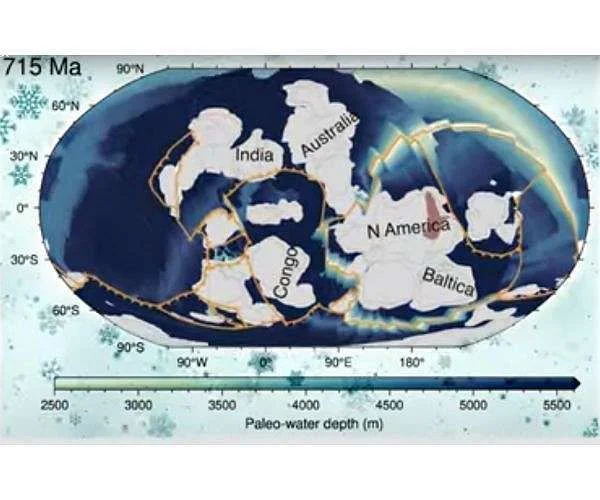
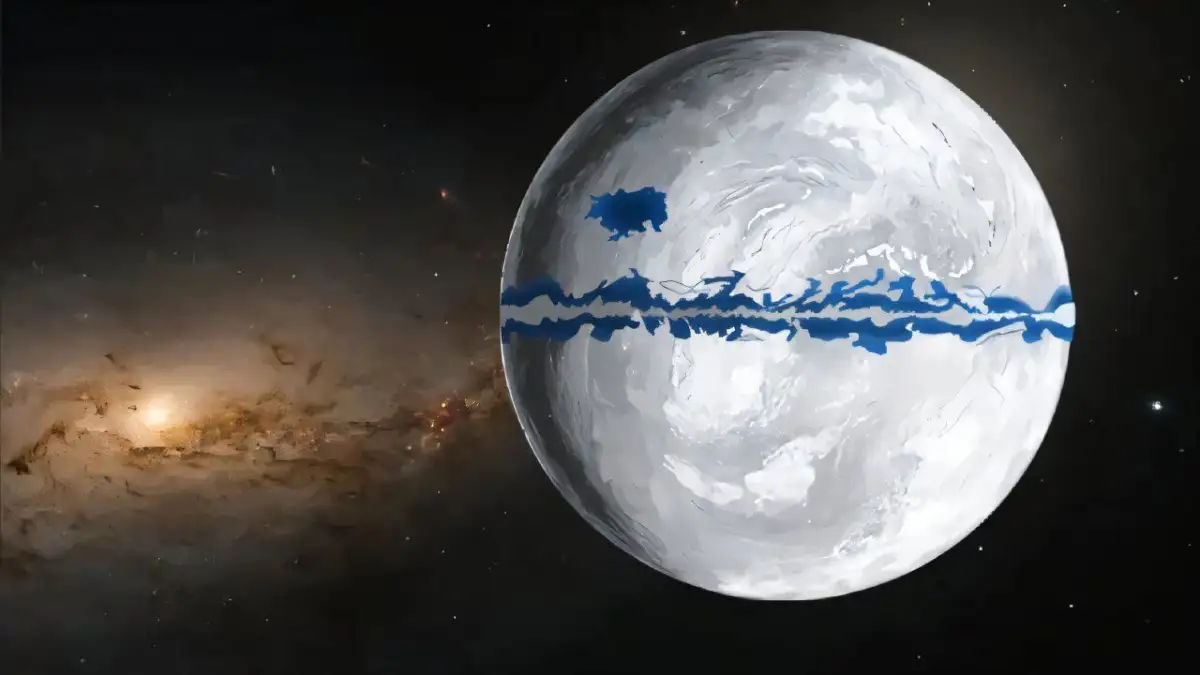
The deep freeze that encased the planet roughly 700 million years ago, known as the Sturtian ice age, resulted from a specific collapse in the planet’s carbon cycle. New data links the onset of "Snowball Earth" to an all-time low in volcanic CO2 emissions, caused by a massive reorganization of tectonic plates. This volcanic silence coincided with the heavy erosion of a large igneous province in what is now Canada, a process that actively pulled remaining carbon dioxide out of the sky.
The Mechanics of Cooling
The Sturtian ice age kicked in due to a double whammy: a plate tectonic reorganisation brought volcanic degassing to a minimum, while simultaneously a continental volcanic province in Canada started eroding away, consuming atmospheric CO2.
The planet remained in this frozen stasis because the CO2 outflux stayed at a deficit for the entire duration of the ice age. Unlike modern atmospheric shifts, these changes were dictated by the slow, jagged movements of the crust which dictated how much heat-trapping gas could reach the atmosphere.
Read More: Indigenous Data Rights Now Key in Conservation Genomics
| Factor | Influence on Climate | Outcome |
|---|---|---|
| Plate Reorganization | Minimal volcanic degassing | Less heat trapped in the sky |
| Canadian Volcanics | Chemical weathering/erosion | Active CO2 removal |
| Glacial Movement | Scouring of the Earth's crust | Release of phosphorus and metals |
| Salinity Changes | Oceanic shifts | Potential feedback loops |
Physical Evidence and Biological Scars
Researchers have identified physical markers of this upheaval in the Tava sandstone found in Colorado’s Front Range. These formations, poking through at Arapaho Pass and Pikes Peak, serve as a ledger for the "Snowball" upheaval. The glaciers did more than just reflect sunlight; they acted as heavy machinery, bulldozing the surface of the planet.
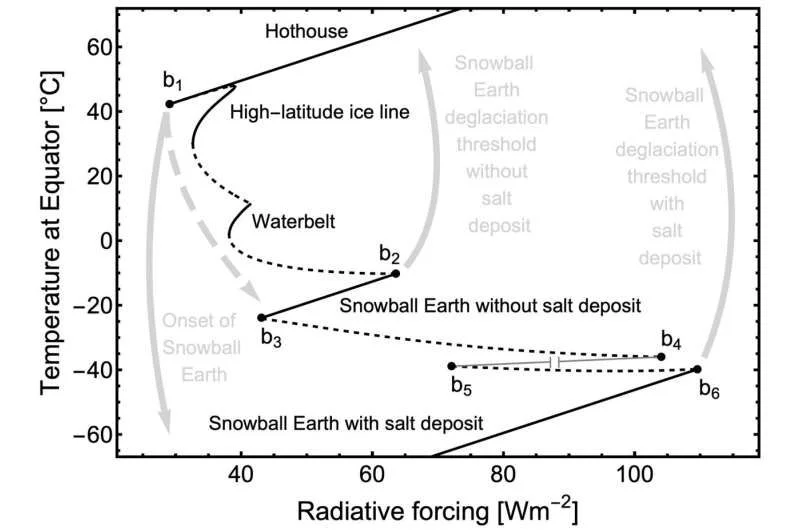
Glaciers carved essential metals and zircons from the bedrock.
Chemical reactions in the oceans followed this scouring.
Life-supporting elements like phosphorus were dumped into the water.
These shifts likely paved the way for early animal evolution and complex life forms.
The Trajectory of a Cooling Engine
Current geological trends show the Earth is again on a path of lower volcanic CO2 emissions. As continental masses prepare to converge into a future supercontinent, Pangea Ultima, tectonic plates are slowing down. This gradual huddling of landmasses will eventually redraw the global map, though the timescales involved remain disconnected from the immediate pace of human-induced climate change.
The Earth remains a sensitive machine, where the thinness of the air is dictated by the grinding of the stone beneath it. While the Sturtian freeze shows the extremes of a low-carbon atmosphere, it also demonstrates how the planet's inorganic cycles—volcanoes and eroding rocks—ultimately set the boundaries for biological possibility.
Read More: Jupiter's Early Role in Earth's Life Elements Explained