A novel mechanism suggests chemical processes beneath kilometers of ice could have held Earth in prolonged frozen states.
Chemical reactions occurring deep beneath the planet's ice sheets, during periods known as "Snowball Earth," may have absorbed enough atmospheric carbon dioxide to significantly extend these global glaciations. This new understanding challenges previous assumptions about how the planet transitioned out of these extreme ice ages, offering a potential explanation for why some "Snowball Earth" events persisted for tens of millions of years.
The findings, published in Earth and Planetary Science Letters, emerge from research conducted by scientists at the 'Earth-Life Science Institute' (ELSI) at the 'Institute of Science Tokyo', in collaboration with the 'Jet Propulsion Laboratory' at the 'California Institute of Technology'.
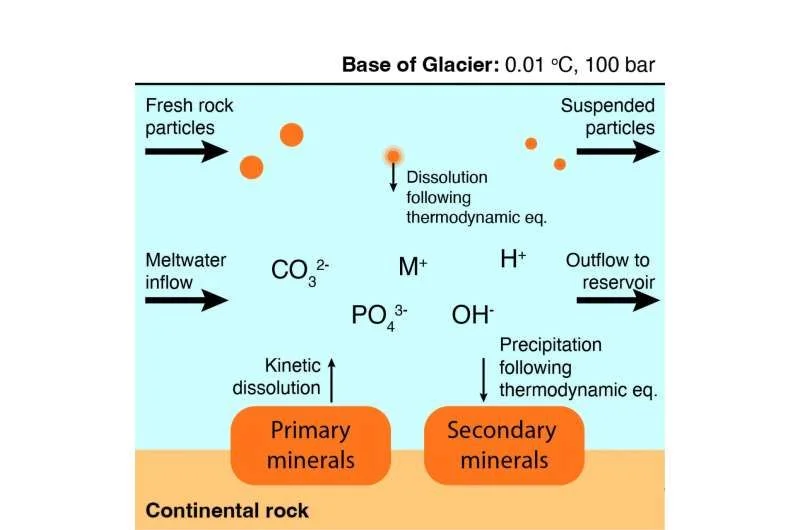
These subglacial chemical processes, specifically the weathering of rocks, could have consumed carbon dioxide at rates comparable to volcanic emissions, effectively suppressing the buildup of greenhouse gases needed to warm the planet. This geological feedback loop, previously not fully accounted for, suggests that weathering beneath thick ice sheets might have played a critical role in maintaining frigid conditions for extended geological timescales.
Read More: Indigenous Data Rights Now Key in Conservation Genomics
A Puzzling Duration
"Snowball Earth" refers to hypothetical periods in Earth's history where the entire planet was covered in ice. These events dramatically reshaped the planet's environment, influencing the evolution of climate, oceans, and life. However, a persistent puzzle has been the variable duration of these glaciations, with some lasting considerably longer than others.

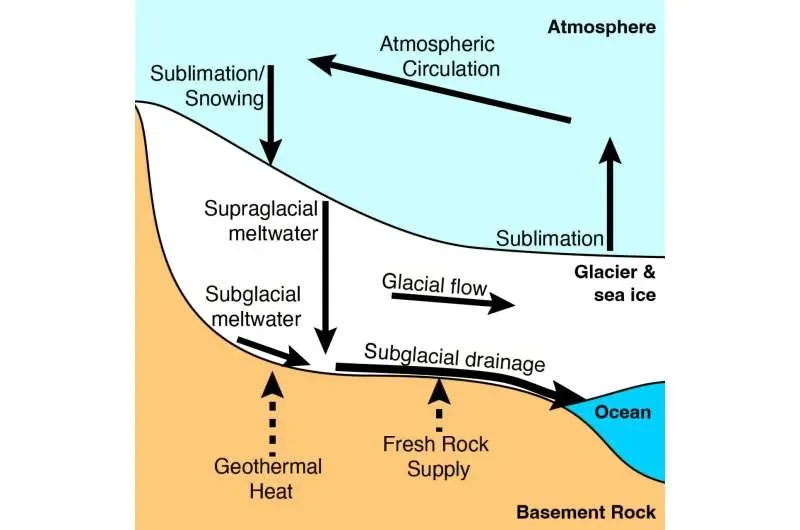
The study proposes that weathering, the process by which rocks are broken down by chemical reactions, continued even under kilometers of ice. This subglacial weathering, fueled by meltwater, interacted with rocks, removing carbon dioxide from the atmosphere.
Reassessing the Carbon Cycle
Standard theories often assume weathering significantly diminishes under extreme glaciation. However, the new research, utilizing 'geochemical modeling' and 'simulations', suggests otherwise.
The models indicate that a "balance" between the supply of water and rocks at the ice-rock interface could sustain significant carbon removal.
This process acted as a counterforce against the natural accumulation of greenhouse gases from volcanic activity.
The continued removal of CO₂ would then prolong the ice-bound state, creating a feedback loop that made escape from the glaciation more difficult.
The implications of this research extend to understanding 'Earth's climate dynamics', particularly during the 'Neoproterozoic glaciations'. It provides a quantified mechanism for a major climate puzzle that has long intrigued scientists studying planetary climate systems.
Read More: Jupiter's Early Role in Earth's Life Elements Explained
Background
The 'Institute of Science Tokyo' was established in October 2024, merging the 'Tokyo Medical and Dental University' and 'Tokyo Institute of Technology' with a stated mission to "Advance science and human wellbeing to create value for and with society." The research published draws on 'carbon cycle modeling' and 'geochemical simulations' to explore ancient climate scenarios. The underlying paper is titled "Continued continental weathering during snowball Earth mitigated greenhouse gas buildup and prolonged global glaciation."