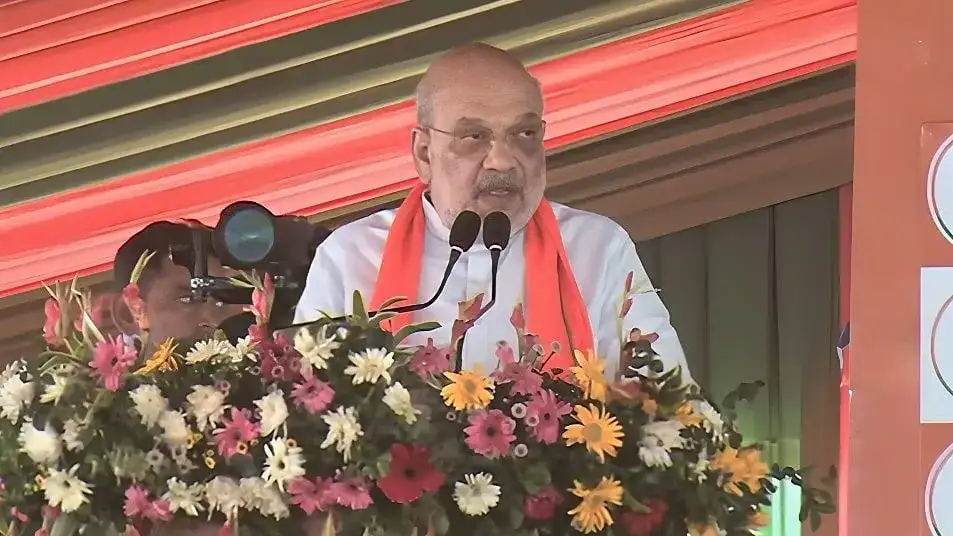
Union Home Minister Amit Shah has declared that the people of West Bengal are resolute in expelling "infiltrators" from the state, a sentiment he echoed during multiple campaign rallies. He positioned the upcoming elections as a decisive moment for Bengal to respond to perceived "bombs and bullets" with votes, promising a swift implementation of the Uniform Civil Code (UCC) should the BJP form the government. Simultaneously, Chief Minister Mamata Banerjee has framed the election as an unequal struggle, alleging that "19 States and the Centre have come together to counter me," positioning herself as a lone fighter for the common populace against a national apparatus.

Shah's Campaign Promises and Accusations
Amit Shah, addressing rallies in districts like Birbhum and Paschim Bardhaman, explicitly linked political violence in Bengal to Chief Minister Mamata Banerjee and her nephew, Abhishek Banerjee. He asserted that TMC-backed individuals have long subjected BJP workers to mistreatment, vowing retribution post-election. The BJP's 'Sankalp Patra' (manifesto) includes pledges to establish industrial estates to foster investment, provide a monthly allowance of ₹3,000 to women and unemployed youth, and ensure the implementation of the Uniform Civil Code, aiming for a unified legal framework across the state. Shah also highlighted the BJP's commitment to addressing financial scams, promising to redirect recovered funds towards women and youth, and ensuring Dearness Allowance (DA) for government employees and pensioners, alongside implementing the 7th Pay Commission recommendations within 45 days of forming the government. He further reiterated the promise to implement the Ayushman Bharat scheme in West Bengal.
Read More: Taiwan Holds Nantou County Drills to Prepare for State Collapse
Banerjee's Counter-Narrative and Political Sparring
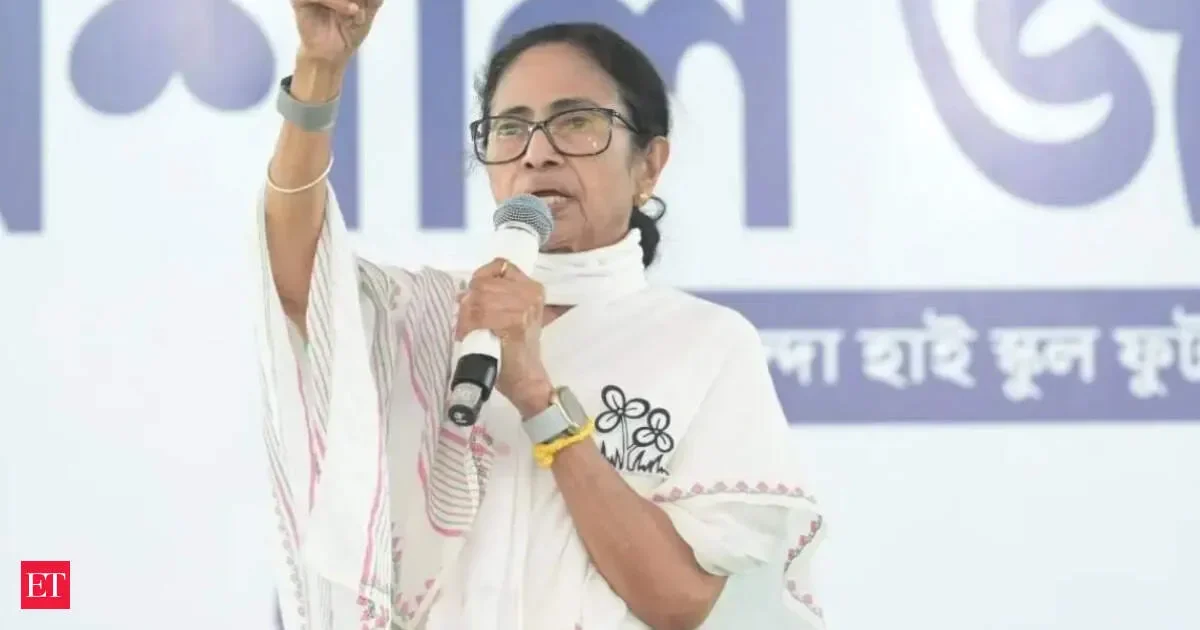
Mamata Banerjee, speaking at a rally in Birbhum, dismissed the BJP's electoral prospects, suggesting they cannot win through "forces from Delhi." She critiqued Prime Minister Narendra Modi's "Mann Ki Baat" program, alleging its use to influence young minds. Banerjee has also accused the BJP of orchestrating a conspiracy, claiming a widespread alignment against her, involving numerous states and the central government. In a sharp retort to Shah's remarks on infiltrators, TMC MP Abhishek Banerjee characterized the repeated "same cassette" of accusations, implying a lack of new arguments from the BJP. He countered criticisms regarding illegal immigration by pointing to the BJP's rule in many border states, questioning Shah's position as Union Home Minister.

Election Dynamics and Manifestos
The electoral landscape in West Bengal is unfolding amidst a backdrop of other state assembly elections in Tamil Nadu, Kerala, and Assam. While campaigning intensifies, other parties are also presenting their agendas. The Congress, for instance, has pledged to establish AI hubs and boost job creation through a 'Yuva Samman' scheme in its Bengal manifesto. In a notable point of electoral data, West Bengal ranks second only to Uttar Pradesh in the deletion of deceased electors from the rolls, with nearly 24.2 lakh names removed.
Read More: Om Birla asks West Bengal MLAs for solutions, not just criticism

Background Context
The exchanges between Amit Shah and Mamata Banerjee signify a sharpening political conflict in West Bengal, with core issues of national security, governance, and political violence at the forefront. Shah's repeated focus on "infiltrators" and his promises regarding law and order, economic development, and social welfare schemes aim to sway voters towards the BJP. Conversely, Banerjee's strategy involves projecting an image of resilience against perceived central government overreach and highlighting her party's decade-plus track record of governance. The ongoing electoral contest is marked by sharp rhetoric and contrasting visions for the state's future.