Waymo is deploying its latest driverless vehicle technology, designed to be more affordable and adaptable, as it seeks to grow its ride-hailing services across the United States and internationally. This push for wider adoption is occurring as the company navigates a complex landscape of increasing ride volumes, pricing adjustments, and evolving regulatory decisions.
Waymo has announced its sixth-generation "Waymo Driver" hardware. This new system is noted for its reduced cost and increased compatibility with a wider range of vehicle models. The company's goal is to deploy more driverless cars in more locations at a lower price point. Waymo stated this new hardware is their smartest and most capable autonomous system to date, using fewer sensors to decrease overall costs.
The company currently has around 1,500 vehicles in operation.
Waymo has experienced rapid growth, with its annual ride volume more than tripling last year to 15 million rides.
The service now provides over 400,000 rides weekly across six major U.S. metropolitan areas.
Waymo has secured a substantial investment of $16 billion, intended to fuel its expansion efforts both domestically and globally.
The company aims to reach 1 million paid weekly robotaxi rides by 2026.
Waymo is currently testing its robotaxis in New York City, with its permit for testing valid through March 31.
However, a proposal to effectively legalize robotaxis across New York state, outside of New York City, has been withdrawn by Governor Kathy Hochul.
Expanding Operations and Funding
Waymo's strategy for growth is supported by significant financial backing. The company recently raised $16 billion, an investment intended to accelerate its plans for global expansion. This funding is seen as a signal of growing confidence in autonomous ride-hailing as a scalable business model. Waymo's leadership views this investment as confirmation that the era of widespread autonomous mobility is beginning.
Read More: Chrome mimeHandler API lets extensions handle file types
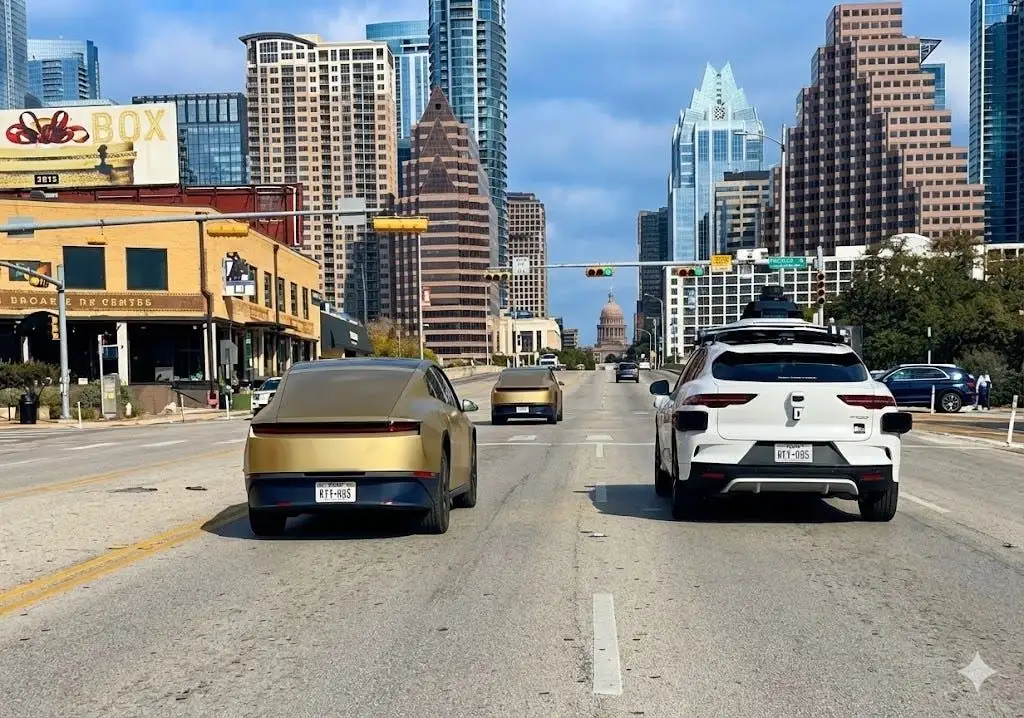
The company has been steadily increasing its fleet size and operational areas. As of November 2025, Waymo had 2,500 robotaxis in the U.S. This expansion includes operations in dense urban environments, catering to both urban and suburban residents, particularly in areas with limited public transport.
Waymo is aiming to place a fleet of Lucid robotaxis into service in San Francisco later this year.
The company has ambitious targets, aiming for 1 million paid weekly robotaxi rides by 2026. This goal highlights the shift from pilot projects to large-scale operational metrics in commercial autonomous driving.
Technological Advancements and Cost Reductions
A key element of Waymo's expansion strategy is its new sixth-generation "Waymo Driver" hardware. This iteration focuses on reducing the cost of its autonomous driving systems while making them more adaptable to different vehicle platforms.
The new hardware is described as being less expensive and fitting into more vehicles.
Waymo's approach utilizes a multi-sensor hardware stack, which they state provides necessary redundancy for a robust understanding of the vehicle's surroundings. This is contrasted with systems relying solely on cameras, emphasizing the ability to detect difficult-to-see objects and edge cases.
Reducing costs is viewed as critical for robotaxi companies aiming to scale up and enter new markets.
Competitive Landscape and Pricing
Waymo operates in a competitive sector with other companies also developing autonomous vehicle technology. While Waymo is a pioneer, newer entrants and established players are vying for market share.
Read More: New Bengaluru Green Line Metro Trains Arriving by August 2026
Tesla is also developing robotaxi services, with its vehicles reportedly being cheaper but having longer wait times compared to Waymo.
In June, one report indicated Waymo's rides were 30-40% more expensive than Uber and Lyft. More recent data suggests this gap is narrowing.
Waymo is now, on average, 12.7% more expensive than Uber and 27.3% more expensive than Lyft. For longer distances, the price difference is significantly smaller.
Waymo has adjusted its pricing, particularly in the San Francisco Bay Area, while traditional ride-hailing prices from Uber and Lyft have increased.
Regulatory Environment and Safety Concerns
The expansion of robotaxi services is occurring within a dynamic regulatory framework, with varying levels of acceptance and oversight across different jurisdictions.
Waymo's permit to test robotaxis in New York City is valid through March 31.
The withdrawal of a proposal to legalize robotaxis across New York state presents a temporary setback for broader deployment in the region.
Waymo has faced scrutiny from regulatory bodies. The National Highway Traffic Safety Administration (NHTSA) launched an investigation after a Waymo robotaxi was involved in an incident with a child near a school.
Despite advancements, Waymo still faces challenges related to safety, regulation, and public acceptance.
Expert Analysis
"Lowering costs is going to be increasingly important for robotaxi companies as they look to scale up and expand into new markets." - The Verge
This statement highlights the central role of economic viability in Waymo's expansion. The development of cheaper hardware is a direct response to this imperative.
"The long road ahead: Regulatory approval, public trust, and infrastructure integration remain hurdles." - Startup News FYI
This observation underscores the multifaceted challenges Waymo and similar companies face beyond technological development. Securing widespread approval, gaining public confidence, and adapting infrastructure are crucial for long-term success.
Conclusion
Waymo is actively pursuing a strategy of expansion driven by its new, more cost-effective and versatile driverless technology. The company has demonstrated significant growth in ride volume and has secured substantial funding to support its ambitious plans, including international markets like London and Tokyo. However, this growth is occurring alongside ongoing efforts to manage pricing, address safety concerns, and navigate a complex and sometimes restrictive regulatory landscape, as evidenced by recent developments in New York. The effectiveness of Waymo's cheaper technology in accelerating rides and its ability to overcome regulatory and public trust hurdles will be critical determinants of its future success.
Read More: BEREC Asks for Mobile Network API Ideas from Developers
Key Sources
Fox News: Waymo’s cheaper robotaxi tech could help expand rides fast - https://www.foxnews.com/tech/waymos-cheaper-robotaxi-tech-could-help-expand-rides-fast
The Verge: Waymo’s next-gen robotaxi is ready for passengers — and also ‘high-volume production’ - https://www.theverge.com/transportation/877902/waymo-sixth-generation-robotaxi-ojai-hyundai-sensors-cost
The Guardian: Waymo raises $16bn to fuel global robotaxi expansion - https://www.theguardian.com/technology/2026/feb/03/waymo-raises-16bn-global-robotaxi-expansion
Carbon Credits: Waymo Hits 2,500 Robotaxis in US, Shaping the Future of Driverless Rides - https://carboncredits.com/waymo-hits-2500-robotaxi-in-u-s-the-future-of-driverless-rides/
TechCrunch: Waymo raises $16B to scale robotaxi fleet internationally - https://techcrunch.com/2026/02/02/waymo-raises-16-billion-round-to-scale-robotaxi-fleet-london-tokyo/
Startup News FYI: Waymo raises $16B to push robotaxis into London and Tokyo - https://startupnews.fyi/2026/02/03/waymo-16b-robotaxi-expansion/
TechCrunch: The price gap between Waymo and Uber is narrowing - https://techcrunch.com/2026/01/27/the-price-gap-between-waymo-and-uber-is-narrowing/
The Verge: Tesla’s robotaxis are cheaper than Waymo, but the wait times are longer - https://www.theverge.com/news/867934/tesla-waymo-robotaxi-price-comparison-uber-lyft-obi
Startup News FYI: Waymo aims for 1M paid weekly robotaxi rides by 2026 - https://startupnews.fyi/2026/02/12/waymo-1m-weekly-robotaxi-rides-2026/
TechCrunch: New York hits the brakes on robotaxi expansion plan - https://techcrunch.com/2026/02/19/new-york-hits-the-brakes-on-robotaxi-expansion-plan/

/newsfirstprime/media/media_files/2026/02/18/green-line-metro-2026-02-18-14-46-47.jpg)