Polymer Films Embedded With Viral Sprinkles Target Salmonella
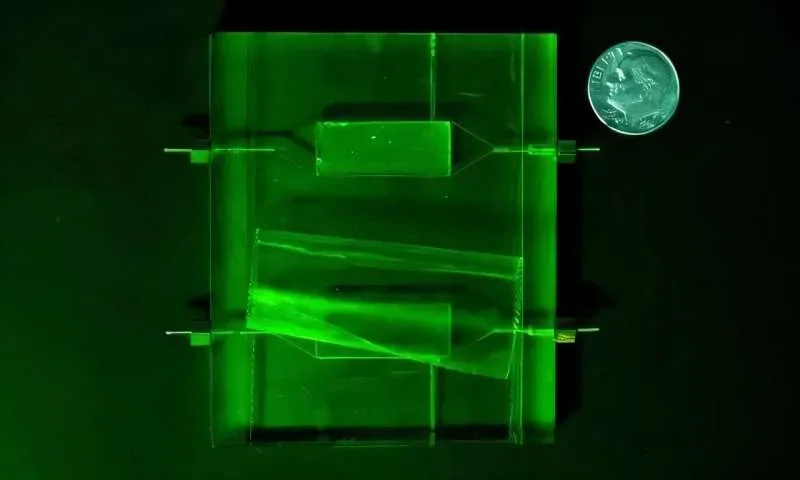
Researchers at Worcester Polytechnic Institute (WPI) have unveiled a novel approach to detecting Salmonella enterica (S. enterica). Their innovation involves a flexible polymer surface treated with harmless viruses. This setup, integrated into a portable microfluidic sensor, shows promise for swift identification of the bacteria.
The core of the development is a polymer material, textured and flexible, which is then coated with viruses known to not harm humans but capable of interacting with S. enterica. This coated polymer acts as a trap, concentrating the target bacteria within the portable device.
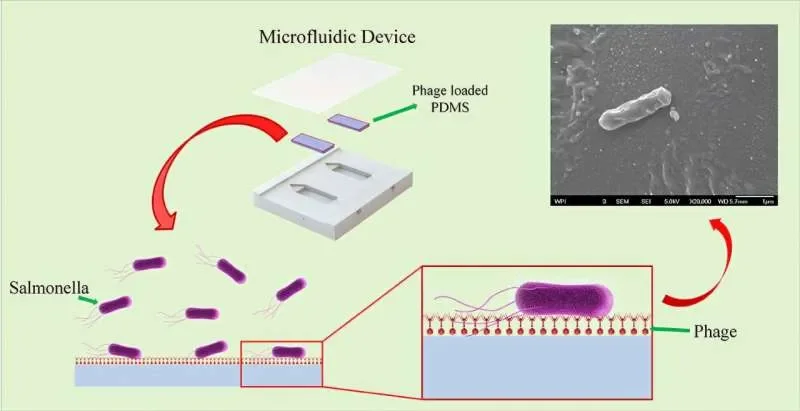
Beyond Conventional Methods
Current food safety checks for bacteria like Salmonella often depend on laboratory procedures. These established methods typically demand specialized gear and trained personnel, making them unsuitable for rapid, on-site assessments. The WPI team’s work sidesteps these lab-bound limitations.
Other detection strategies exist, such as methods that amplify genetic material or identify antibodies against bacteria. However, these approaches might not distinguish between live and deceased bacterial cells, a crucial detail for assessing contamination risks.
Read More: New Fish Parasite Found Globally, Affecting Oceans

A Look at the Device's Inner Workings
The WPI researchers' effort focuses on creating a device that is both effective and accessible. The polymer, treated with viruses, is housed within a microfluidic chip. This chip, a marvel of modern engineering where minuscule channels guide fluid flow, is a state-of-the-art advance in miniaturized analytical systems. Previous work has seen microfluidic platforms built from either paper or polymers, integrating various amplification techniques like recombinase aided amplification (RAA) or loop-mediated isothermal amplification (LAMP) for detecting multiple pathogens simultaneously.
Past Explorations in Bacterial Detection
Research into portable sensors for bacterial identification is not entirely new. Studies have explored using cell imprinted polymers (CIPs) on microfluidic devices for detecting bacteria in water samples, reporting detection limits in the thousands of Colony Forming Units per milliliter. Another avenue has investigated the use of viscoelastic properties within microfluidics for rapid Salmonella detection.
Read More: AI Maps Cell 'Social Networks' for Cancer Research