New Therapy Leverages Body's Own Defenses
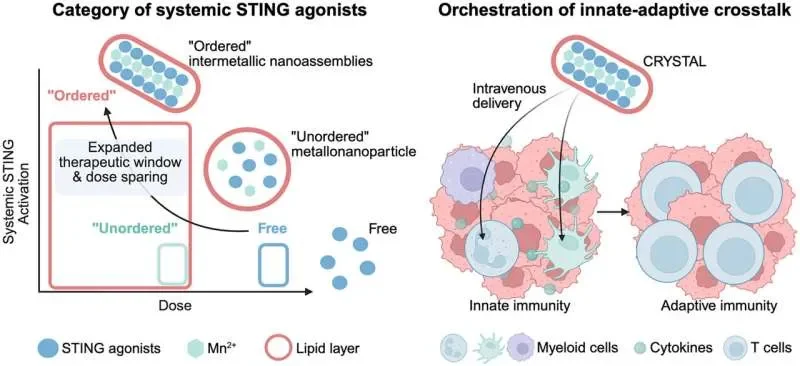
A novel nanoparticle treatment, incorporating manganese, has shown promising results in preclinical trials, activating the human immune system to combat and eliminate tumors without the severe side effects associated with some current immunotherapies. This approach, detailed in a paper published in Science, is being hailed as a potential next-generation immunotherapy. The nanoparticles, dubbed CRYSTAL, appear to initiate a potent immune response by engaging the cGAS-STING pathway—a critical cellular alarm system that detects danger and mobilizes the body's defenses against cancerous growths.
The CRYSTAL nanoparticles demonstrated an ability to reduce or eradicate tumors, even in advanced stages. Crucially, these studies indicated a significant reduction in the dangerous cytokine storm that can accompany other immunotherapies, a severe inflammatory reaction that can harm healthy tissues. This suggests a more targeted and potentially safer way to harness the body's innate defenses.
Read More: AI Maps Cell 'Social Networks' for Cancer Research
A New Paradigm in Drug Design?
The researchers behind this development posit that their findings signal a shift in how medicines are conceived. The way a drug is constructed—its physical form and architecture—is deemed as important as its chemical composition. This focus on the 'nanomedicine' aspect underscores a holistic view of therapeutic design.
Beyond Cancer?
The potential applications of this manganese-based nanoparticle technology may extend beyond oncology. The scientists involved express belief that this method could also be adapted for treating other immune-related diseases, hinting at a broader therapeutic utility.
Underpinnings of the Research
This work builds on an understanding of the body's inherent mechanisms for identifying and neutralizing malignant cells. The cGAS-STING pathway, for instance, is a well-documented part of the innate immune system's response to infection and inflammation, and its role in cancer defense is an area of active investigation. Prior research has explored self-assembled nanomedicines capable of triggering combined photo- and immuno-therapy for synergistic effects in cancer treatment. The development of nanoparticles with high drug-loading capacity, like those incorporating manganese, is a key area within this field.
Read More: New Virus Sensor Detects Salmonella Bacteria Quickly