Disturbing Basement Ritual Exposed by Police Bodycam Footage
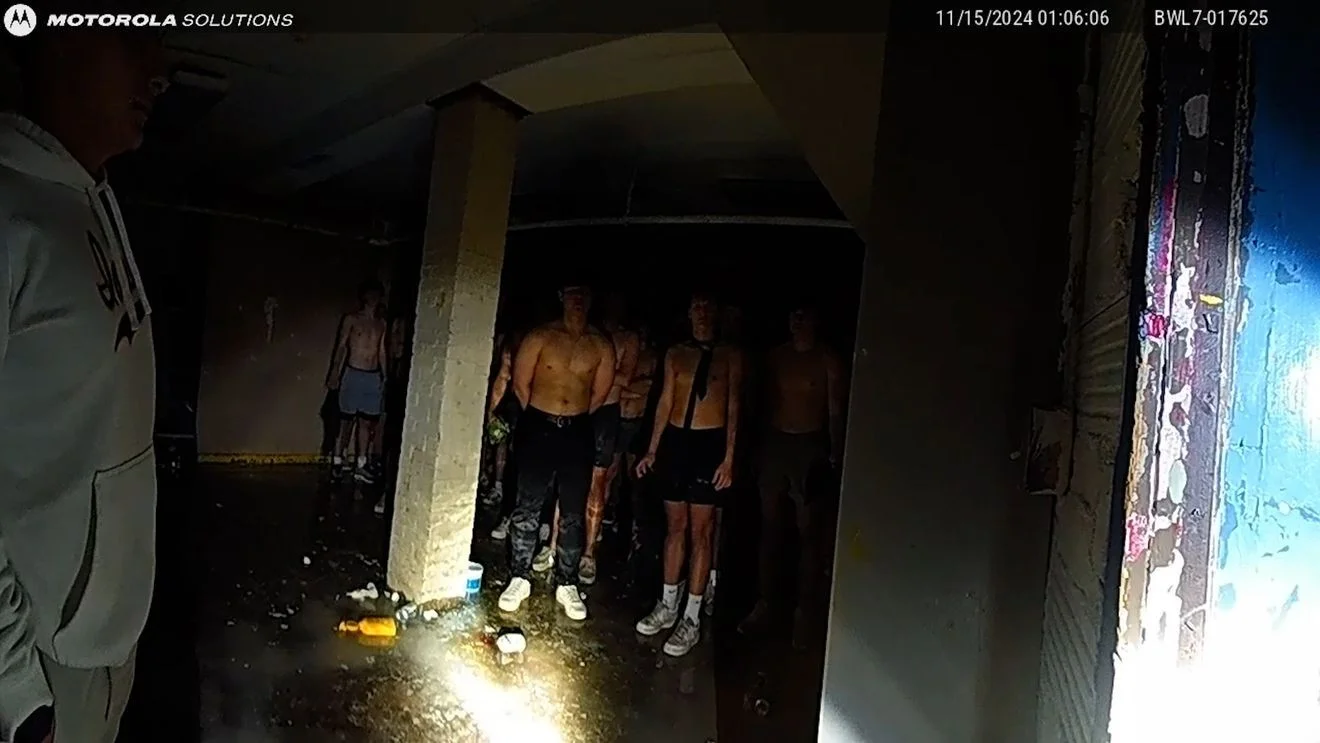
Police responding to a fire alarm at the Alpha Delta Phi fraternity house at the University of Iowa found a disturbing scene: 56 male students, many shirtless and blindfolded, packed into a dark basement. The students, some covered in condiments, were reportedly participating in a hazing ritual leading up to initiation. The incident, captured on police bodycam footage, has led to the fraternity's suspension and widespread attention.

Context of the Investigation
On November (year not specified), emergency crews, including the Iowa City Police, Fire Department, and University of Iowa Police, were dispatched to the Alpha Delta Phi fraternity house due to a fire alarm. Upon arrival, officers discovered the large group of students in the basement.

Number of Students: 56 male students were found in the basement.
Condition: Many were shirtless, blindfolded, and some were covered in condiments.
Activity: The students were reportedly engaged in a hazing ritual.
Interference: Joseph Gaya, 21, was arrested for interfering with the police investigation. He reportedly provided a fake ID and made flippant remarks about the event.
University Action: The University of Iowa initiated an investigation and subsequently banned the Alpha Delta Phi fraternity for five years.
National Fraternity Response: The national Alpha Delta Phi office conducted its own investigation and concluded that two fraternity members bore "sole responsibility" for organizing the hazing. Their memberships were revoked.
Evidence of Hazing
Bodycam Footage: Police bodycam footage released from the incident shows officers entering a dark basement to find the 56 students. The footage captured the students' condition and the officers' reactions, with one officer stating, "What the f— did I just walk into?"
Student Accounts: While many students were uncooperative, some indicated they were undergoing the "lead up to initiation." Joseph Gaya, who identified himself as fraternity president, described the event as a "celebration of life."
University Findings: The University of Iowa found that the fraternity violated policies on hazing and misconduct.
National Fraternity Findings: The national office's investigation, which led to the revocation of two members' memberships, corroborated the occurrence of hazing.
Hazing Ritual Details
The specifics of the ritual remain somewhat obscured, but key elements are apparent from the evidence:

Blindfolds and Semi-Nudity: The majority of the students present were blindfolded and shirtless. This suggests an intent to disorient and humiliate participants.
Condiments: Students were found covered in various condiments, such as red splattered substances, implying a deliberate act of mess and degradation.
Coercion and Secrecy: The organized nature of the event, coupled with the students' reluctance to cooperate with authorities, points towards a culture of secrecy and potential coercion inherent in hazing practices.
"Celebration of Life" / "Lead up to Initiation": The explanations provided by those present, like "celebration of life" or "lead up to initiation," suggest a ritualistic purpose behind the hazing.
University's Response and Justification for Ban
The University of Iowa has taken a firm stance against the actions of the Alpha Delta Phi chapter.
Read More: Yenepoya University Campus Bird Count 2026 Finds 58 Bird Species in Mangaluru
Violation of Policies: The university cited violations of policies regarding hazing and misconduct on organizational property.
Lack of Cooperation: The fraternity members' failure to fully comply with the investigation further fueled the university's disciplinary action.
Five-Year Ban: The imposed five-year ban reflects the severity with which the university views the hazing incident and aims to deter future occurrences.
Legal Implications of Hazing in Iowa
Hazing is a serious offense under Iowa law.
Criminal Misdemeanor: In Iowa, hazing is defined as any reckless or dangerous act that risks the health and safety of a student for initiation or admission into a university organization. This is classified as a criminal misdemeanor.
Statewide Prohibition: Hazing is illegal in 44 states across the United States.
National Fraternity's Internal Actions
The national Alpha Delta Phi organization has also taken action, indicating internal accountability measures.
Identification of Responsible Parties: The national office's investigation pinpointed two members as solely responsible for organizing the hazing.
Revocation of Memberships: These individuals had their memberships revoked by the national organization.
Claim of No Chapter Leadership Consent: The national office stated that the two members proceeded without the consent of "chapter leadership."
Expert and Public Reaction
The released footage has generated significant public outcry and discussion.
Viral Spread: The bodycam footage has garnered millions of views online, sparking widespread condemnation of hazing practices.
Cult-like Comparisons: Some observers have described the scene as "weird and cultist."
Calls for Action: The incident has amplified calls for stronger measures against hazing in universities.
Conclusion and Next Steps
The University of Iowa's Alpha Delta Phi chapter has been banned for five years following the discovery of a significant hazing incident involving 56 students. The incident, captured on police bodycam, revealed a disturbing ritual where students were blindfolded, semi-naked, and covered in condiments. While the university and the national fraternity have taken disciplinary actions, including a five-year ban for the chapter and revoked memberships for two individuals, the full extent of legal repercussions for all involved remains to be seen. Further investigations may be conducted to ascertain the complete scope of responsibility and to ensure compliance with anti-hazing laws.
Read More: Andrew Mountbatten-Windsor arrested on Feb 19 2026 for misconduct in public office in Norfolk