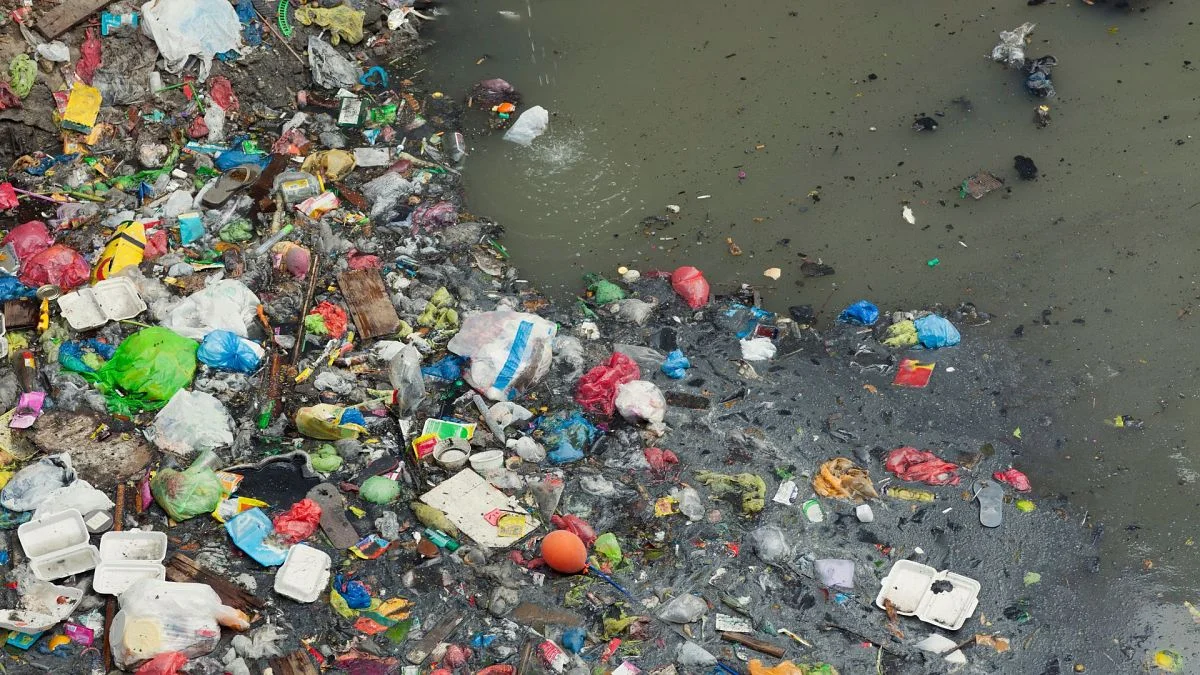
Reports and legal filings now suggest a large gap between what the public was told about plastic recycling and what industry leaders knew to be true. For decades, the public has been encouraged to sort waste with the belief that most plastic would be reused. However, new evidence from internal documents shows that the companies making plastic have known since the 1970s that recycling most plastics is not easy or cheap. While people around the world tried to use less plastic, companies increased production. In the last 20 years, the amount of plastic made has doubled. This investigation looks at the data showing that current recycling methods may not be able to solve the plastic waste problem as promised.
Timeline of Industry Knowledge and Public Campaigns
The history of plastic recycling is marked by a series of internal meetings and public relations moves. Records show that industry groups understood the limits of recycling early on.
Read More: White House East Wing Rubble Moved to DC Golf Course Causing Lawsuit in February 2026

1970s–1980s: Internal industry notes began to describe plastic recycling as "uneconomical" and something that could not last forever.
1988: The "chasing arrows" symbol with numbers 1 through 7 was created. Reports suggest this was a move to stop states from banning plastic by making it look like all types could be recycled.
2024: The Center for Climate Integrity (CCI) released a report titled "The Fraud of Advanced Recycling." This report claims the industry is now using "chemical recycling" as a new way to avoid making real changes.
Current Day: The California Attorney General has started a lawsuit against ExxonMobil, using internal documents to argue that the company misled the public about how much plastic actually gets recycled.
Core Evidence and Data Points
| Category | Finding | Source |
|---|---|---|
| Recycling Rate | More than 90% of plastic is not recycled or can only be reused once. | Daily Mail / CCI |
| Capacity | Only nine "chemical recycling" plants exist in the U.S. | Scientific American |
| Waste Volume | These plants handle less than 1.2% of U.S. plastic waste. | Scientific American |
| Production | Plastic production has doubled in 20 years and continues to rise. | The Guardian |
"We are committed to the activities, but not committed to the results." — Exxon Chemical Vice President (Internal meeting notes)
The evidence suggests that the recycling symbol was used as a tool to prevent laws that would have banned plastic use.
Deep Dive: Mechanical vs. Technical Realities
There is a conflict between how recycling is explained to the public and how it works in a factory.

The Public View: If a bottle has a symbol on it, it belongs in the blue bin. People believe that by sorting these items, they are turned into new bottles.
The Technical Reality: Many plastics cannot be mixed. For example, two bottles made of different colors or chemicals cannot be recycled together. This makes the sorting process very expensive.
The Conflict: While companies tell people to recycle, their own experts have noted for 30 years that it is cheaper to make new plastic from oil than it is to clean and fix old plastic.
Deep Dive: The Rise of "Advanced Recycling"
As traditional recycling faces more doubt, the industry has begun promoting "advanced" or "chemical" recycling.
Industry Claim: They argue that new technology can break down any plastic into its original parts using heat or chemicals. This would allow even "dirty" plastic to be saved.
Investigative Finding: The CCI report shows that these processes are very energy-intensive and create hazardous pollution. Most of the plastic put into these systems is turned into fuel to be burned, rather than being made into new plastic.
The Conflict: The Association of Plastic Recyclers noted in 2024 that much of the information about these technologies ignores the fact that the necessary collection and sorting systems do not exist yet.
Deep Dive: Individual Action vs. Industrial Scale
There is a significant difference between the effort of a single person and the choices of large companies.

The Consumer Experience: People like Beth Gardiner describe being careful to bring their own bags to the store and feeling bad when they forget.
The Corporate Plan: Records from Plastic Inc show that while individuals try to use less, companies are planning to double or even triple production in the coming years.
The Conflict: Does the focus on individual recycling distract from the fact that companies are making more plastic than the world can handle?
Expert Analysis
Experts who have looked at these internal documents suggest the goal was never to fix the waste problem, but to keep selling oil and gas.
Rob Bonta (California Attorney General): His office argues that ExxonMobil used "disinformation" to make people believe recycling was a solution. He claims this allowed the company to keep making money while the planet became contaminated.
Read More: Centrica British Gas Profits Fall Due to Warmer Weather and Fixed Tariffs in 2023
Center for Climate Integrity (CCI): Their researchers state that the industry "consistently concedes" (admits) in private that there are huge obstacles to recycling, even while they tell the public that the technology is "scaling up."
The Association of Plastic Recyclers: This group admits that "advanced recycling" cannot work without a massive new system for collecting and sorting waste that currently does not exist.
Findings and Implications
The investigation shows that the plastic industry has been aware of the failure of recycling for over thirty years. The following points summarize the current situation:
Legal Risk: Companies like ExxonMobil are now being sued for their public statements about recycling. Courts will decide if these companies lied to the public to protect their profits.
Environmental Impact: Plastic waste continues to grow because it is cheaper to make new plastic than to recycle the old. Chemical recycling, which was presented as a fix, currently handles very little of the total waste.
Future Actions: Groups are now pushing for laws that would make plastic producers "pay for the damage" they have caused. This would move the responsibility from the person at the grocery store to the companies making the plastic.
The primary takeaway is that the recycling symbol was often a marketing tool rather than a technical guarantee.
Sources and Context
Center for Climate Integrity (2024): The Fraud of Advanced Recycling report details how industry leaders knew recycling had limits. Link
The Guardian (Feb 2026): Reports on the fight against Big Oil’s plan to increase plastic production. Link
Euronews (Feb 2024): Discusses the 50-year history of deception regarding plastic waste. Link
Scientific American (Oct 2024): Provides data on the failure of chemical recycling facilities in the U.S. Link
JSTOR Daily (May 2025): Explains how the recycling symbol was used to stop government bans. Link
Daily Mail (Feb 2024): Lists internal quotes from Exxon and the American Plastics Council regarding recycling feasibility. Link