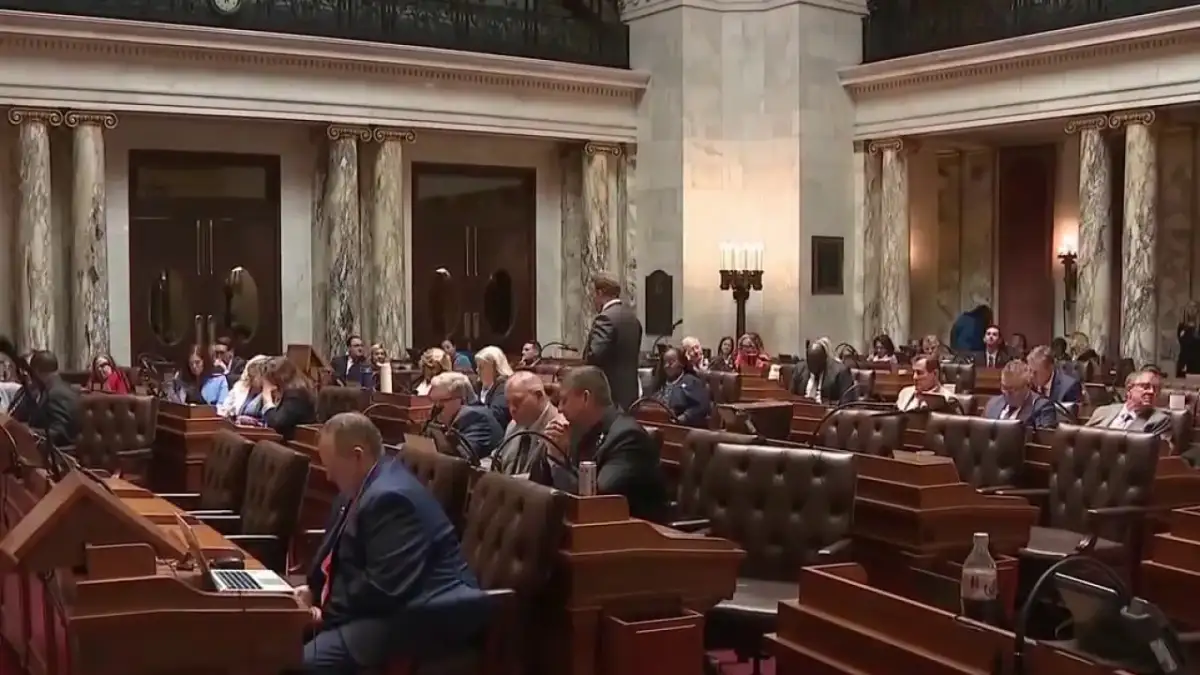
The Wisconsin State Senate rejected a bipartisan spending bill on May 13, effectively terminating a proposed $1.8 billion infusion into school districts and individual taxpayer rebates. The measure, which had successfully cleared the State Assembly, failed in a 15-18 vote after a unified Democratic caucus and three dissenting Republicans blocked its passage.
The core components of the abandoned legislation included:
Direct Economic Aid: Tax rebates of $300 for individual filers and up to $600 for joint filers.
Fiscal Adjustments: Elimination of state income taxes on tipped wages and overtime pay.
Education Investment: Targeted increases in special education funding and property tax relief via the Technical College System.
Anatomy of a Failed Negotiation
The proposal was the result of extensive closed-door bargaining between Governor Tony Evers and top GOP leadership, including Assembly Speaker Robin Vos and Senate Majority Leader Devin LeMahieu. Despite this high-level consensus, the plan buckled under late-stage external pressures.
Observers cite the active opposition of gubernatorial candidate Tom Tiffany as a primary catalyst for the bill’s erosion within the Senate. Meanwhile, legislative Democrats maintained a firm stance against the proposal, with Assembly Minority Leader Greta Neubauer framing the fiscal plan as structurally precarious. Critics argued that utilizing one-time surplus funds for these measures could risk future budgetary solvency, potentially necessitating school funding cuts in subsequent years.
Read More: Taiwan Holds Nantou County Drills to Prepare for State Collapse

Political Friction and Aftermath
Governor Evers condemned the legislative impasse, stating:
“Wisconsin’s kids and schools aren’t going to get the investments they desperately need this year because… a few Republican and Democratic lawmakers chose to blow up a bipartisan plan.”
Conversely, Republican proponents—who had championed the deal as a pragmatic return of surplus revenue to residents—expressed frustration that the opportunity to address rising household costs was sacrificed for political signaling.
Institutional Context
The failure of this tax and education package occurs during a significant period of institutional transition. Evers, Vos, and LeMahieu are all concluding their current tenures in office. Political scientists, such as Anthony Chergosky of the University of Wisconsin-La Crosse, have suggested that the "lame duck" nature of the current leadership may have weakened the influence typically required to hold a caucus together for major fiscal legislation. With the rejection, the state's surplus funds remain unallocated, and the mechanisms for tax reform and school aid proposed in the deal are now effectively dead for the current session.
Read More: Wisconsin Football Changes Recruiting Plan After 2026 NFL Draft Fail