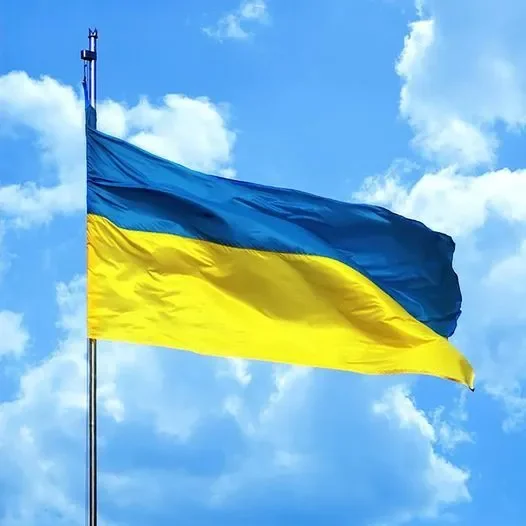
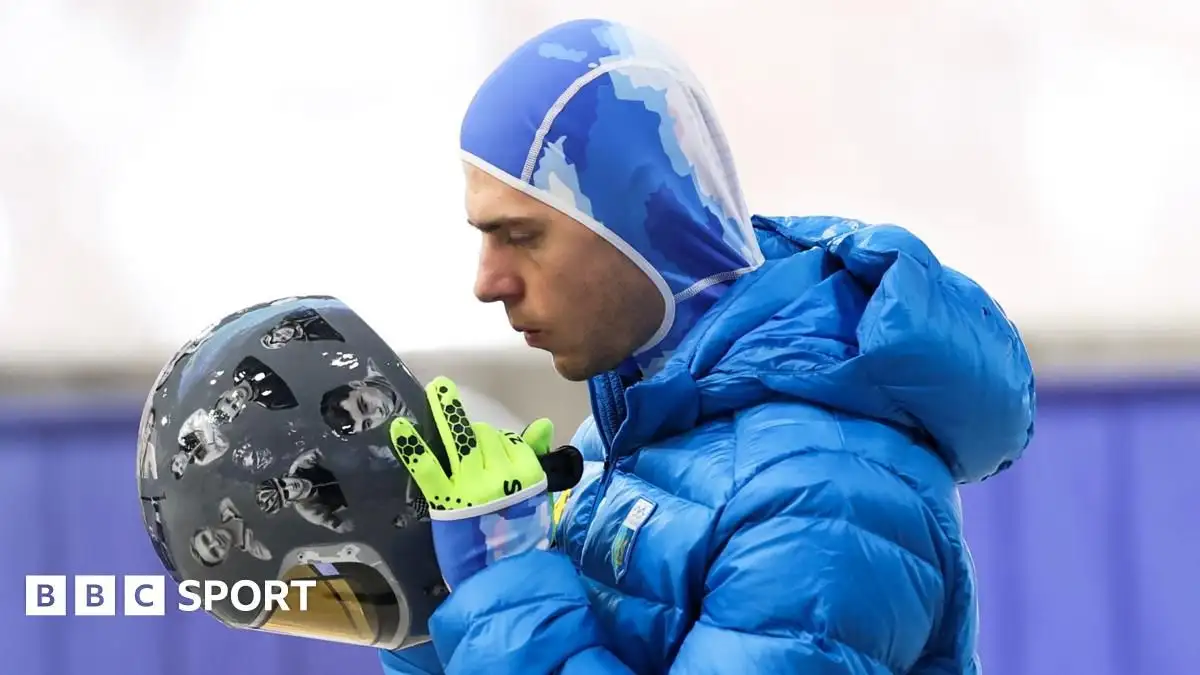
Vladyslav Heraskevych, a Ukrainian skeleton athlete, has been barred from competing in the 2026 Winter Olympics after the Court of Arbitration for Sport (CAS) upheld the International Olympic Committee's (IOC) decision. Heraskevych sought to wear a helmet bearing portraits of Ukrainian athletes killed during Russia's invasion of Ukraine. The IOC cited a violation of rules against political statements in competition.

Background of the Dispute
Vladyslav Heraskevych prepared a special helmet for the 2026 Winter Olympics featuring images of Ukrainian athletes and coaches who died during Russia's invasion of Ukraine. Heraskevych intended this as a memorial, stating it was a "message of memory" rather than a political statement.

The IOC informed Heraskevych on Tuesday, February 11, 2026, that he would not be allowed to compete in the helmet.
The IOC's initial reasoning pointed to Rule 50 of the Olympic Charter, which prohibits "any kind of demonstration or political, religious or racial propaganda in any Olympic sites."
Later, the IOC also cited Rule 40.2 of the Olympic Charter as grounds for the disqualification.
Heraskevych trained in the helmet as late as Wednesday, February 12, 2026, before the IOC's final decision.
IOC's Stance and Actions
The International Olympic Committee maintained that Heraskevych's helmet violated Olympic rules by making a political statement on the field of play.
IOC spokesperson Mark Adams defended the decision, stating that the organization "cannot take a stand against countries involved in war" and highlighting that there are "130 conflicts going on in the world."
The IOC initially withdrew Heraskevych's accreditation for the Games.
Following discussions, the IOC partially reinstated Heraskevych's accreditation, allowing him to remain at the Games, but the ban from competition persisted.
IOC President Kirsty Coventry reportedly met with Heraskevych and his father in Cortina on the morning of the competition in a final attempt to persuade him to change his helmet, but no agreement was reached. Coventry was described as being tearful after the meeting.
"The message of the athletes, that the athletes reiterate to us time and time again." - International Olympic Committee statement.
Heraskevych's Defense and Appeal
Heraskevych argued that his memorial act was not political and denied violating any rules.
Read More: FIFA World Cup 2026 Revenue Reaches $15 Billion With New Ticket Prices
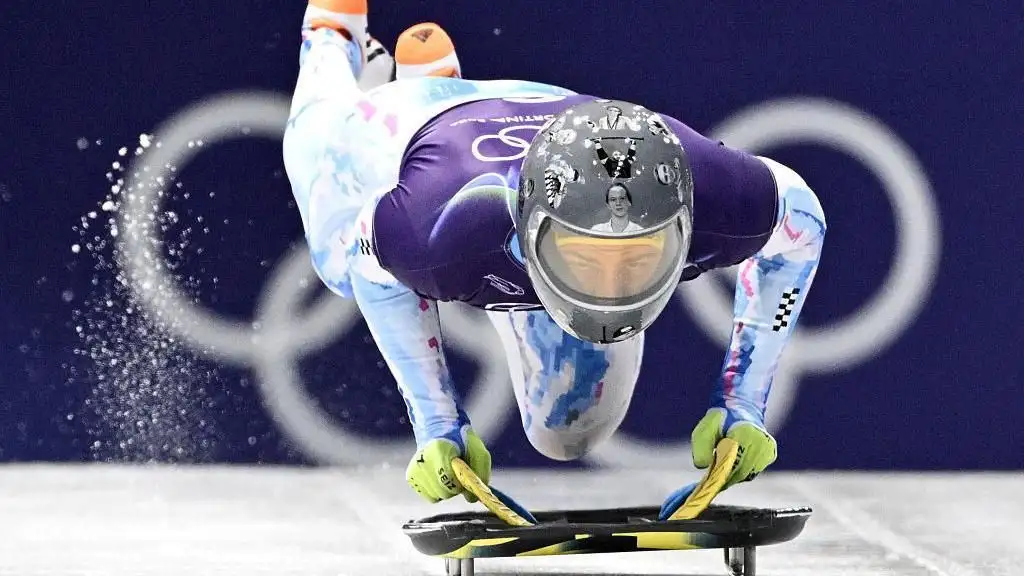
He asserted that the helmet was an act of remembrance for his fallen friends and compatriots.
Heraskevych also claimed that the IOC had been inconsistent in its application of rules regarding athlete expression.
His lawyer, Yevhen Pronin, filed an appeal with the Court of Arbitration for Sport (CAS) under a special procedure.
"It's emptiness… the decision of the International Olympic Committee to disqualify Ukrainian skeleton racer Vladyslav Heraskevych says otherwise. This is a message of memory." - Vladyslav Heraskevych.
The Court of Arbitration for Sport (CAS) Ruling
The CAS reviewed Heraskevych's appeal and ultimately upheld the IOC's decision to disqualify him from competition.
An arbitrator from Germany, Annett Romba, presided over Heraskevych's case at CAS.
The CAS agreed with the IOC's assertion that the helmet constituted a political statement, violating Olympic rules.
The CAS ruling dismissed Heraskevych's claim against the IOC.
Even if the CAS had allowed Heraskevych to race, the logistical challenges, including the distance between the hearing in Milan and the track in Cortina, and the conclusion of the competition, would have made his participation difficult.
"The CAS agreed with the International Olympic Committee's assertion that Heraskevych's plan to wear a helmet honoring Ukrainian athletes killed during Russia's invasion of Ukraine would violate Olympic rules against making political statement on the field of play." - CBS Sports report.
Reactions to the Decision
The decision has drawn significant attention and condemnation from various Ukrainian officials and some athletes.
Ukraine's Foreign Minister Andriy Sybiga and Sports Minister Matviy Bidnyi have criticized the IOC's decision. The Sports Minister had threatened legal action.
Ukrainian President Volodymyr Zelenskyy publicly denounced the ban as "morally appalling," stating that the IOC "should help stop wars, not play into the hands of aggressors."
Heraskevych himself called the ban a "terrible mistake."
A number of Ukrainian athletes and colleagues have supported Heraskevych's stance.
"Watching his interviews after his disqualification, you can see the sadness in his eyes – he doesn’t normally look like that." - Lizzy Yarnold, former Olympian.
Broader Implications and Questions
The controversy surrounding Heraskevych's helmet has raised questions about the application and interpretation of Olympic rules on athlete expression and political neutrality.
The dispute touches upon the freedom of expression of athletes, the limits of discretion of sports bodies, and the understanding of Olympic values.
Heraskevych's supporters have pointed to instances where other athletes displayed symbols without facing similar repercussions, suggesting an inconsistent application of rules. For example, the Italian snowboarder Roland Fischnaller reportedly displayed a Russian flag on his helmet without apparent consequences.
The IOC's defense, emphasizing the need for neutrality amidst numerous global conflicts, has also been met with scrutiny, with some arguing that silence can be perceived as endorsement.
"Heraskevych’s ‘helmet of memory’ forces IOC on to PR back foot at Winter Olympics." - The Guardian headline.
Conclusion
The Court of Arbitration for Sport has concluded the legal challenge, affirming the International Olympic Committee's ban on Vladyslav Heraskevych's memorial helmet for the 2026 Winter Olympics. While Heraskevych's accreditation was partially reinstated, allowing him to remain at the Games, his participation in the skeleton event was prohibited. The incident highlights the complex intersection of athlete activism, political neutrality, and the enforcement of Olympic regulations. The decision has sparked considerable debate regarding the IOC's handling of such matters and its commitment to balancing rule adherence with freedom of expression in the context of international conflict.
Read More: 22 Civilians Killed in Russian Missile Attack on April 7 2026
Sources
The Guardian:
CAS backs IOC in Ukraine war helmet row as Heraskevych ban upheld
Ukrainian athlete’s appeal for Winter Olympics reinstatement dismissed by Cas
Heraskevych’s ‘helmet of memory’ forces IOC on to PR back foot at Winter Olympics
‘It’s emptiness’: banned Ukrainian athlete accuses IOC of fuelling Russia’s propaganda
Olympic chiefs have got it badly wrong over Heraskevych ban and owe him an apology
CBS Sports:
The Washington Post:
Ukrainian athlete’s ban from Olympic skeleton event over helmet images is upheld
Mezha.net:
CAS Rejects Ukrainian Skeleton Racer Heraskevych’s Appeal Against 2026 Olympic Disqualification
Le Monde:
2026 Winter Olympics: Ukrainian skeleton racer Heraskevych banned over memorial helmet
Politico:
Ukrainian skeleton racer fails to overturn Olympics ban at top court
BBC Sport:
2026 Winter Olympics: Why Vladyslav Heraskevych was banned for remembrance helmet
Sky Sports:
United24 Media:
IOC Partially Reinstates Heraskevych for 2026 Winter Olympics, Yet Competition Ban Remains
Al Jazeera:
Ukraine’s Heraskevych has appeal for Winter Olympic reinstatement dismissed