The United Kingdom maintains its firm stance on sovereignty over the Falkland Islands, asserting that the will of the islanders, who overwhelmingly wish to remain a British Overseas Territory, is paramount. This position, underscored by the principle of self-determination, is a cornerstone of Britain's policy, with no intention of negotiating this aspect of their future.
Islanders' Self-Determination: The British Rationale
The UK's assertion of sovereignty rests heavily on the declared wishes of the Falkland Islanders. A referendum held ten years prior saw the population clearly express their desire to remain a self-governing British Overseas Territory. The islanders, described as British subjects who travel with British passports, have made their lives and origins on the islands for generations. Their internal self-governance allows them to elect their own leaders and manage their affairs, reinforcing their autonomy.

"The people of the Falkland Islands have made their wishes clear. Ten years ago, the Falkland Islands Government asked its people whether they wished to remain a self-governing British Overseas Territory." - UK Statement to the OAS, June 23, 2023
The British government emphasizes that this stance on self-determination is non-negotiable, echoing similar principles for other British Overseas Territories. This perspective frames the islands not as a relic of colonial administration but as a territory whose inhabitants are "masters of their own fate."
Read More: China Denies Trump's Claim of 'Gift' on Seized Iranian Ship
Argentina's Persistent Claim and Historical Context
Argentina, however, continues to contest British sovereignty, grounding its claim on historical rights stemming from Spain's possessory title and the concept of territorial continuity. Argentina officially argues that the right of self-determination, as espoused by the UK, does not apply to the Falkland Islanders. This disagreement has fueled a long-standing dispute, punctuated by historical events such as the 1982 conflict, which saw British forces retake the islands after an Argentine invasion. Despite reestablished diplomatic relations in 1990, the sovereignty issue remains unresolved in the eyes of Argentina.
"No Argentine government will cease in its pursuit of our sovereign claim. The United Kingdom alleges that there is no sovereignty dispute over these territories." - Santiago Cafiero, April 8, 2022
Historically, the UK has considered various proposals, including the idea of ceding sovereignty to Argentina with a long-term leaseback arrangement, but these negotiations have historically broken down due to opposition from parliament and, crucially, the islanders themselves.
Geographic and Historical Underpinnings of the Dispute
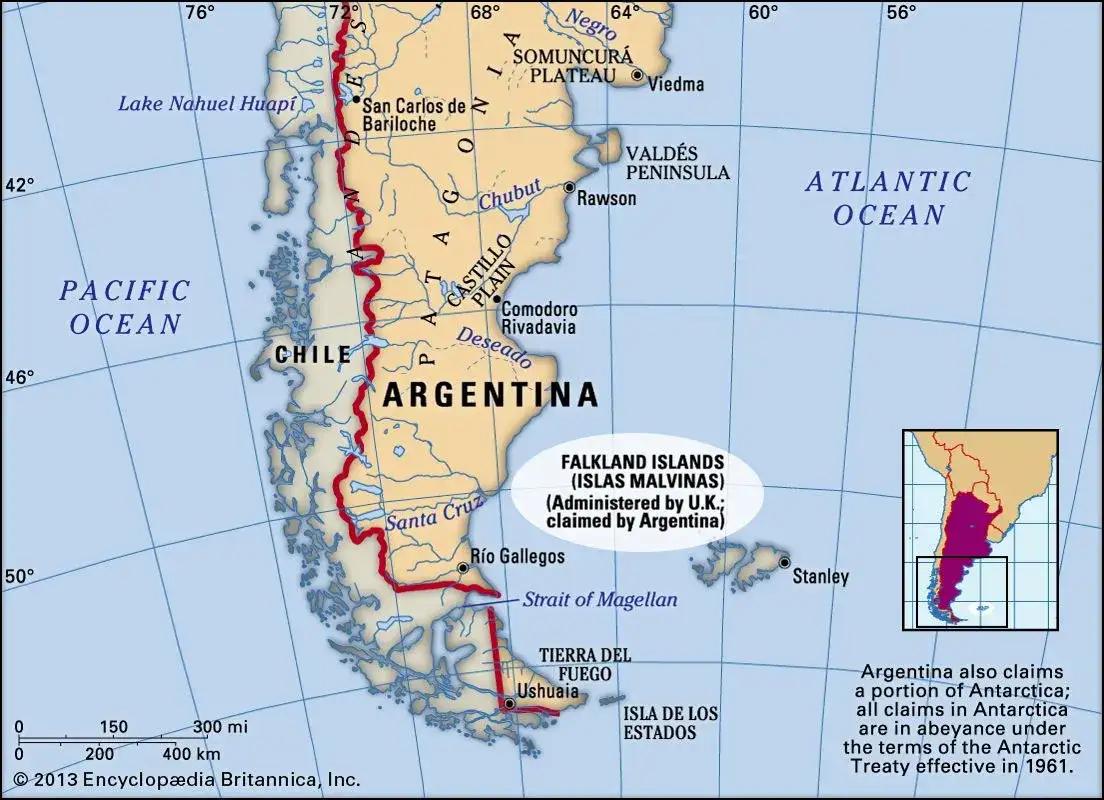
The Falkland Islands, consisting of two main islands and hundreds of smaller ones, are geographically situated in the South Atlantic, approximately 8,000 miles from Britain and significantly closer to the South American mainland. Britain's claim is supported by its long-term administration of the islands, dating back nearly 180 years, and the principle of self-determination, with the islanders being of almost all British descent. Argentina's legal arguments often rely on the principle of uti possidetis juris, a post-colonial doctrine asserting that territories of former colonies belong to the successor states.
Read More: US Military Ordered to Shoot Iranian Boats in Hormuz Strait
Recent international discussions, such as those within the UN's C-24 committee, have seen Argentina continue to raise the issue, while the UK reiterates its position. The ongoing nature of this dispute underscores a persistent geopolitical tension in the South Atlantic.