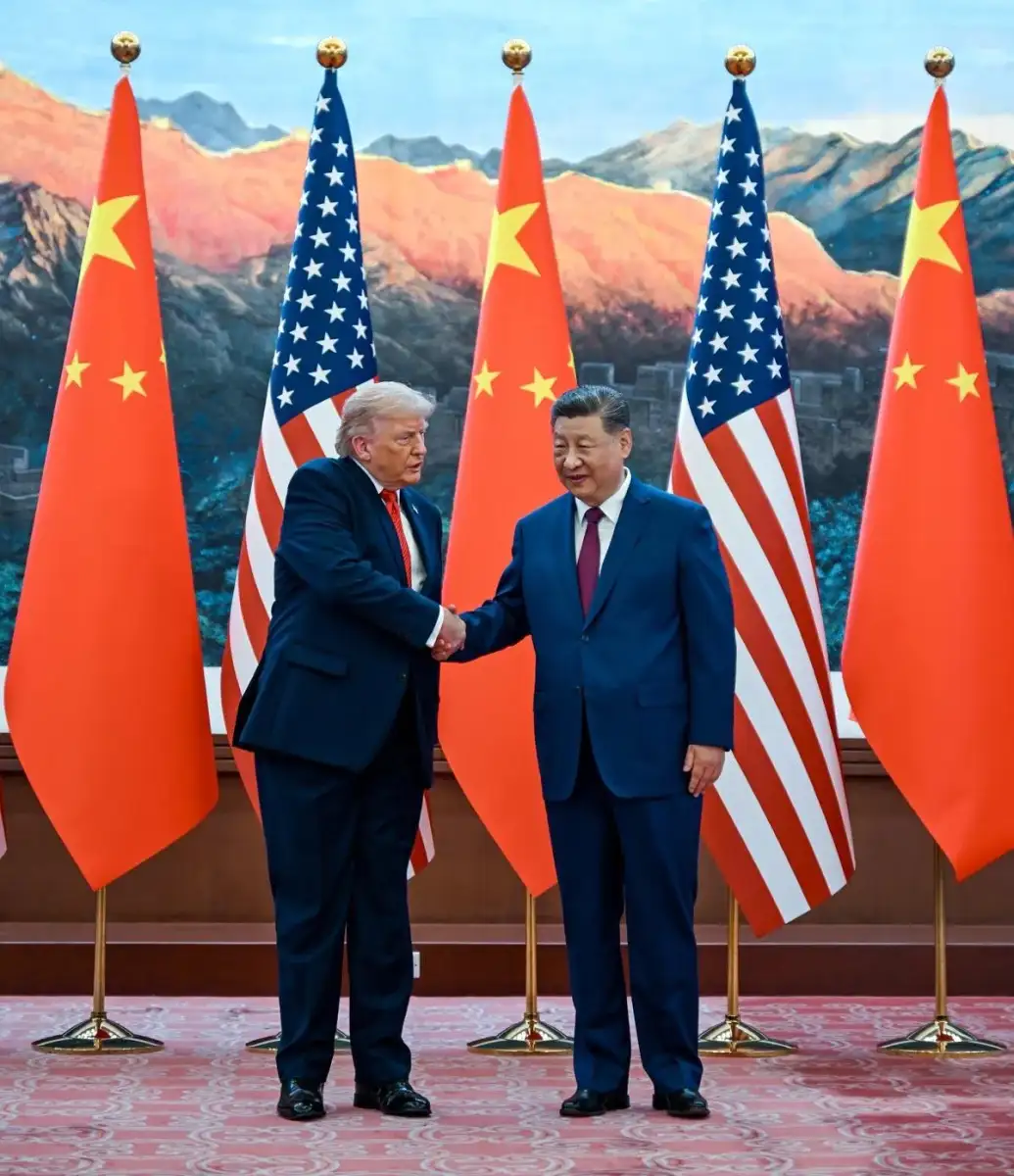
BEIJING – The much-anticipated summit between President Donald Trump and Chinese President Xi Jinping concluded Friday, marked by an apparent pledge from Beijing not to provide military equipment to Iran, alongside Xi's stern warning on Taiwan. Meanwhile, calls for the release of jailed Hong Kong activist Jimmy Lai appear to have met a wall of official silence from the Chinese side.
During their talks, Xi Jinping reportedly vowed to abstain from supplying military hardware to Iran, a development that Secretary of State Marco Rubio expressed hope would be seen as a "positive response" to US appeals. Rubio, who accompanied Trump to China, indicated that while discussions covered significant ground, including the ongoing conflict with Iran and the Strait of Hormuz, concrete outcomes regarding Lai's freedom remained elusive.

Diplomatic Exchanges Overshadow Activist's Plight
The summit, which unfolded over several days, saw discussions that ranged from economic cooperation and a potential order of 200 Boeing jets by China, to sensitive geopolitical issues like Taiwan and Iran. While US officials emphasized discussions on economic cooperation and security matters in the Strait of Hormuz, details regarding the fate of Jimmy Lai were conspicuously absent from official Chinese readouts.
Read More: Colbert Mocks Trump's 'Operation Sledgehammer' Name Change Plan
Secretary of State Rubio, speaking to NBC News on Thursday, acknowledged the US appeals for Lai's release and that of others, but stopped short of detailing any specific Chinese commitments on the matter. Rubio noted that while China signaled no intent to bar him from the trip, official Chinese government reports on the meeting omitted any direct reference to Iran, suggesting a selective dissemination of information.

Calls for Lai's Release Mount, Unanswered
Prior to and during the visit, a chorus of voices, including over 100 US lawmakers, press freedom organizations like 'Reporters Without Borders' (RSF), and Jimmy Lai's own son, Sebastien Lai, urged President Trump to leverage the summit to secure the activist's freedom. Lai, a media tycoon and prominent figure in Hong Kong's pro-democracy movement, is serving a 20-year prison sentence. His deteriorating health and long incarceration have amplified these appeals.
Read More: Lebanon and Israel Hold Direct Talks in Washington for First Time
However, Beijing's stance on issues of sovereignty and foreign interference appears to remain resolute. Reports suggest that any potential release of Lai would likely be contingent on concessions from the US on other Chinese priorities, a dynamic that has not publicly shifted during the summit.

Background: A Contentious Alliance
The meeting between Trump and Xi, the first by a sitting US president in nearly a decade, took place against a backdrop of complex bilateral relations. Trump's agenda reportedly included trade, the war with Iran, and Taiwan, with the latter being a point of sharp warning from Xi. The presence of numerous US business leaders underscored the economic dimensions of the visit, with reports of Xi agreeing to a substantial order of Boeing jets.
Jimmy Lai, a British citizen, has been a focal point for international pressure regarding Hong Kong's diminishing autonomy and freedoms following the imposition of a national security law. His case has become a symbol for many advocating for democratic rights in the region, and his imprisonment has drawn criticism from various international bodies and political figures. The summit's proceedings suggest that this complex international issue, for now, has not yielded a breakthrough.
Read More: Xi Warns Trump About Taiwan Conflict Risk