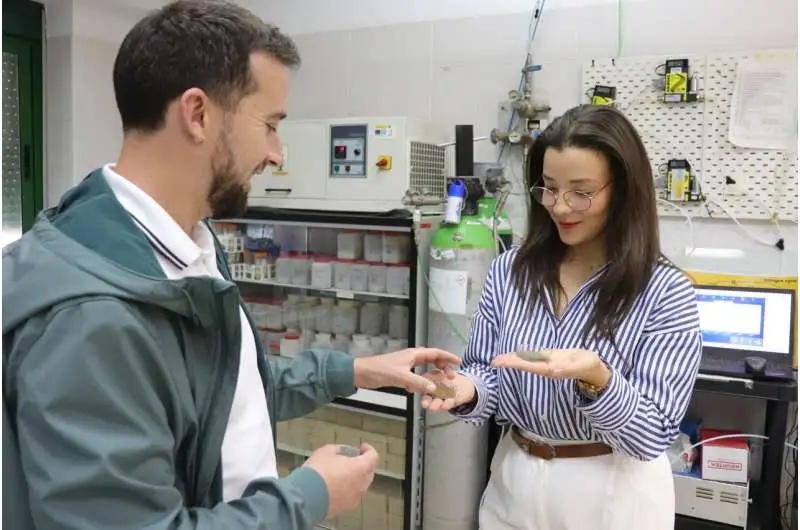
SOUTHERN SPAIN—The relentless summer heatwaves baking southern Spain are taking a toll on the very ground beneath us. Researchers have found that soil, like other living things, suffers under extreme temperatures, with its microbial inhabitants particularly vulnerable. A recent study highlights how adding organic waste could bolster soil's ability to withstand scorching heat, even reaching 50 degrees Celsius.
Integrating organic amendments into soil enhances its resilience against extreme heat, a critical finding for regions like the Mediterranean facing increasingly severe heatwaves. The research, published in the European Journal of Soil Science, involved exposing soil samples from different Spanish locales to temperatures ranging from 20 to 50 degrees Celsius.
Microbial Fortitude Under Duress
The findings underscore the vital role of soil's microscopic ecosystem. These microbes, essential for soil health and function, demonstrate a surprising capacity to endure repeated extreme temperature events. The application of organic-based fertilizers, it appears, can further strengthen this inherent resilience.
Read More: Amazon Land Use Changes Cause Disease Clusters in Brazil
"The socio-economic dimensions of soil preservation are profound," a summary notes, linking soil health directly to agricultural outcomes.
This approach promises not only to bolster soil longevity but also to improve crop yields and farm profitability. Simultaneously, it offers wider 'ecosystem service benefits,' suggesting a more holistic approach to land management.
The Broader Environmental Context
The study from Spain is not an isolated incident. A wider body of research points to the significant impact of climate extremes on soil health. Reports from Nature Climate Change, published in late 2023, indicate that global warming, coupled with more frequent and intense extreme weather events, is exacerbating losses of soil organic carbon. This suggests a feedback loop where climate change degrades soil, and degraded soil, in turn, contributes to climate change.
Further explorations into 'sustainable management of organic agricultural wastes' and the role of amendments like 'biochar' suggest a growing interest in circular economy principles applied to land. Research from 2024 in Discover Agriculture and commentary in Frontiers in Soil Science touch upon the "critical network" connecting soil ecology, food systems, and waste management, a system often overlooked.
Read More: Barcelona may target Harry Kane amid transfer market changes
While older research from 2021 in ScienceDirect delved into the effects of extreme temperatures on 'soil organic matter decomposition' in specific forest ecosystems, the more recent work from Spain brings a sharp focus to agricultural soils and direct mitigation strategies. The practical implications, as outlined in the Scienmag report, extend beyond environmental concerns, touching upon economic viability for farmers and the overall health of our food systems.