


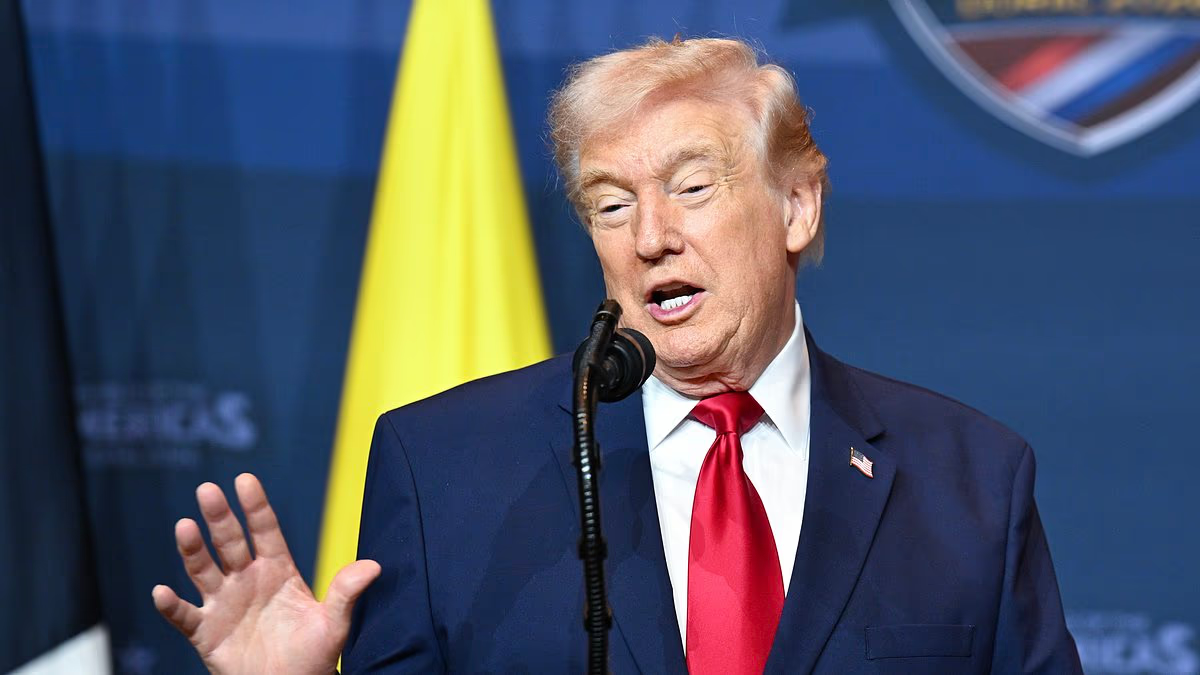
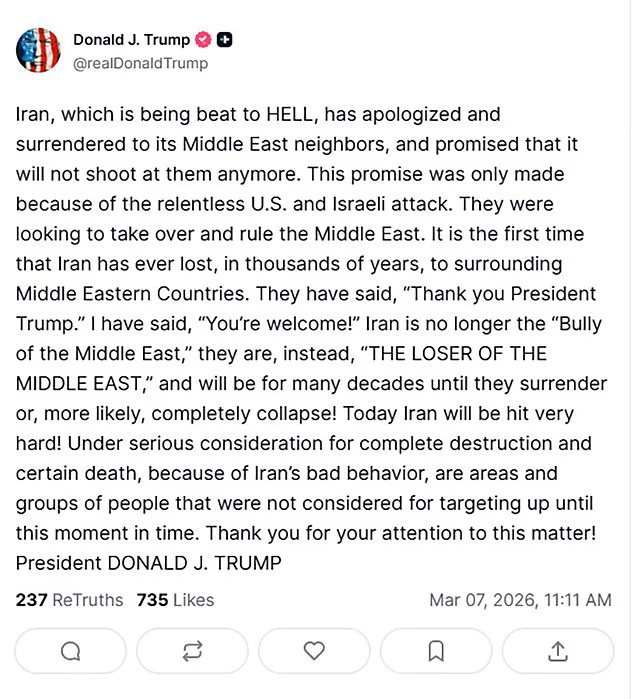
Washington D.C. – In a sharp escalation of rhetoric, U.S. President Donald Trump has declared that 'Iran will be hit very hard,' threatening to expand the scope of American targets within the Islamic Republic. Trump's pronouncements, disseminated via his social media platform 'Truth Social,' frame Iran not as a regional power, but as "The Loser Of The Middle East." This aggressive posture coincides with a week-long conflict initiated by a joint U.S.-Israel campaign against Iran, now entering its second week.
The core of Trump's statement centers on an explicit threat of expanded U.S. military action, with new targets and groups being "under serious consideration for complete destruction and certain death." This declaration comes in response to Iran's continued missile and drone strikes targeting Israel and U.S. interests in regional countries, primarily in the Gulf. Trump's messaging also suggests Iran has, in effect, "apologized and surrendered" to its Middle Eastern neighbors, a claim that appears to be a rhetorical framing of recent events rather than a documented surrender.
Reports indicate that Iran's President Masoud Pezeshkian has offered apologies for retaliatory attacks on neighboring countries following the initial U.S.-Israel offensive. However, Pezeshkian also maintained Iran's right to self-defense and rejected calls for unconditional surrender. This diplomatic posture is contrasted by Trump's narrative, which casts Iran's actions as an admission of defeat and a prelude to further punishment.
Read More: Iran conflict end uncertain: Military and political factors shape future
Escalating Retaliation and Shifting Blame
Trump's pronouncements on Saturday follow a series of missile and drone launches attributed to Iran, which targeted Bahrain, Saudi Arabia, and the United Arab Emirates. Saudi Arabia confirmed intercepting drones over its airspace, with explosions reported near Dubai International Airport. Trump has leveraged these events, suggesting that Iran has, in essence, "thanked" him and acknowledged its diminished status.
The conflict, which commenced on February 28th, has reportedly resulted in significant casualties, with figures cited suggesting at least 1,230 deaths in Iran, over 200 in Lebanon, and a dozen in Israel.

Geopolitical Currents and Alleged Intelligence Sharing
Amidst the heightened tensions, Russia is noted as a potential beneficiary should global oil markets shift due to the conflict. NPR independently confirmed reports of Russia providing intelligence on targets to Iran. President Vladimir Putin reportedly sent a condolence letter following the assassination of Iran's supreme leader, adding another layer to the complex regional dynamics.
Read More: UK Government Memo Suggests Overriding Scotland and Wales Spending Decisions
Historical Framing and Mockery
Trump has repeatedly employed derisive language towards Iran, moving from calling it the "Bully of the Middle East" to "The Loser Of The Middle East." He asserts that Iran's current situation represents its first loss in "thousands of years" to surrounding nations. This rhetoric is coupled with threats of expanded targeting, aiming at "groups and people" previously not considered for strikes, signaling a potential broadening of the U.S. military campaign. The arrival of U.S. Air Force B-1 Lancer bombers in the UK has also been noted in connection with the escalating military posture.