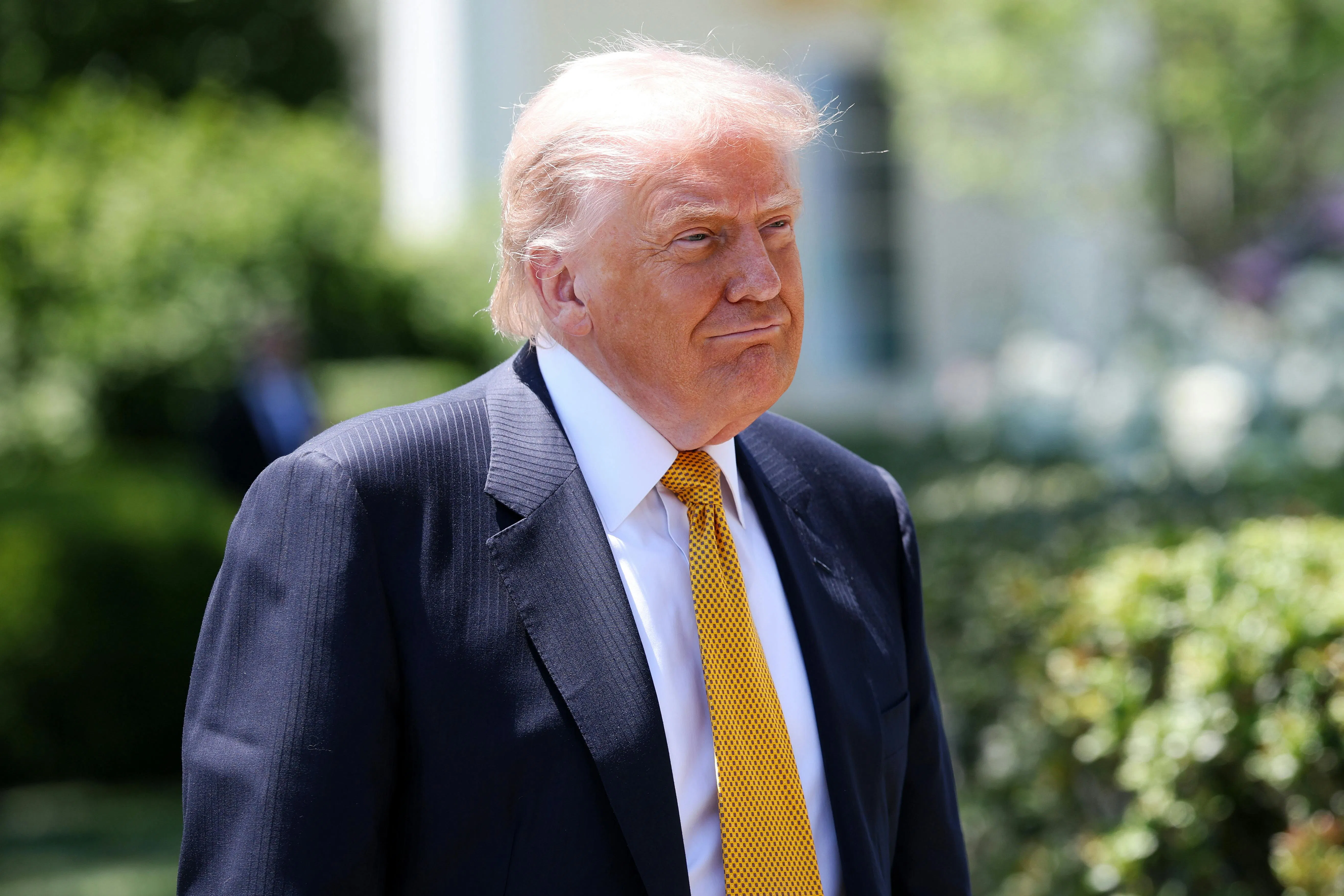
Donald Trump arrived in Beijing on Wednesday for a critical two-day summit with Chinese President Xi Jinping. The U.S. president received a lavish state welcome, marked by imperial pomp and goose-stepping honor guards at the Great Hall of the People in Tiananmen Square. This marks Trump's first meeting with Xi since the Iran war escalated on February 28.
The summit is poised to tackle a range of complex issues, including the ongoing Iran war, trade disputes, and U.S. arms sales to Taiwan.

The President's arrival was met with pageantry, including flags, bouquets, and marching soldiers, signaling Beijing's attempt to project a significant diplomatic gesture. Trump himself posted a video of his arrival on 'Truth Social', describing the reception as "warm" and highlighting the presence of a red carpet and waving flags.
Read More: Denise Powell wins Nebraska 2nd District Democratic nomination
Trump is accompanied by a delegation of prominent American business leaders, including NVIDIA President and CEO Jensen Huang, Tesla and SpaceX's Elon Musk, and Apple's Tim Cook. Trump explicitly addressed reports regarding Huang's attendance, confirming his presence aboard Air Force One and refuting claims of an uninvited status. These business leaders are expected to play a role in discussions, particularly concerning economic measures and potential market openings.

The agenda is packed: Trump is anticipated to push for increased Chinese purchases of U.S. agricultural products, while China is expected to press for the reduction of tariffs on its goods. The conflict in Iran also looms large, with China's economic reliance on Iranian oil giving it considerable leverage. Officials have publicly projected an air of calm ahead of the talks.
U.S. officials, including Secretary of State Marco Rubio and Defense Secretary Pete Hegseth, are part of the delegation. Rubio has indicated that the U.S. will urge China to take a more active role in resolving the Iran war. Conversely, Trump has previously stated he would not seek China's assistance in ending the conflict.
Read More: Trump Beijing Summit: Trade, Taiwan, Iran Talks Today

The summit's context is fraught with global instability. The U.S. is currently engaged in a war with Iran, a situation that has dominated Trump's domestic agenda. China, meanwhile, has been criticized for its alleged role in assisting Iran's military capabilities.
Business and Trade Focus
Trump articulated his intention to discuss economic opening measures with Xi, aiming to facilitate greater market access for American businesses. The decline in bilateral trade, exacerbated by escalating tariffs and other restrictions, is a significant backdrop to these discussions. Trade between the two nations fell to $414.7 billion last year, a considerable drop from $690.4 billion in 2022.
Read More: Yukon Halts $17.2M Health Plan, First Nations Unhappy

Taiwan and Regional Security
U.S. arms sales to Taiwan are another key point of contention. Trump has indicated he intends to raise this issue with Xi, a shift from the traditional U.S. stance of not consulting Beijing on its support for the island. Trump has previously asserted that his personal relationship with Xi would deter a Chinese invasion of Taiwan.
Protocol and Perception
The elaborate ceremony signifies the weight China places on diplomatic protocol and hierarchy. This approach aims to underscore the perceived parity between the two global economic powers. The choice of greeting, including the specific officials present and the musical arrangements, are all viewed as calculated diplomatic signals.
Broader Global Concerns
Ukrainian President Volodymyr Zelensky has reportedly urged Trump to raise the ongoing Russian invasion of Ukraine during his meetings with Xi, reflecting the interconnectedness of global crises.
Read More: Trump says he ignores US finances when deciding on Iran war