
The emergence of 'sourdough stuffing' as a distinct culinary construct, particularly for the Thanksgiving holiday, presents a curious case of evolving, or perhaps contested, tradition. While the notion of stuffing bread with other ingredients is ancient, the deliberate branding and specification of sourdough as the base suggests a more recent, articulated need for textural distinction or a perceived upgrade from more common bread varieties.
The core of this emergent stuffing phenomenon hinges on the use of rustic, cubed sourdough bread, combined with savory elements like Italian sausage, and often punctuated by the sweetness of raisins or the crispness of apples. Recipes diverge on precise ingredient ratios and preparation methods, with variations appearing across several online platforms. The 'Washington Post' offers a version incorporating sausage, raisins, and cinnamon, a nod to a 1964 recipe that also featured raisins but, crucially, was intended to be baked inside the turkey. Current iterations, however, generally favor separate baking in casserole dishes, a pragmatic shift that highlights the deconstructed nature of this modern culinary iteration.
Read More: Paella Recipe Updates: Bomba Rice and No Stir Rule
Divergent Pathways to the Same Pan
Specific ingredient lists reveal a landscape of subtle, yet significant, differences. The 'Washington Post' recipe calls for a 16-ounce loaf of sourdough, 1 pound of mild or sweet Italian sausage, a mix of diced yellow onion and celery, and dark raisins. Flavor enhancers include butter, thyme, cinnamon, salt, and pepper, all moistened with chicken or turkey broth.
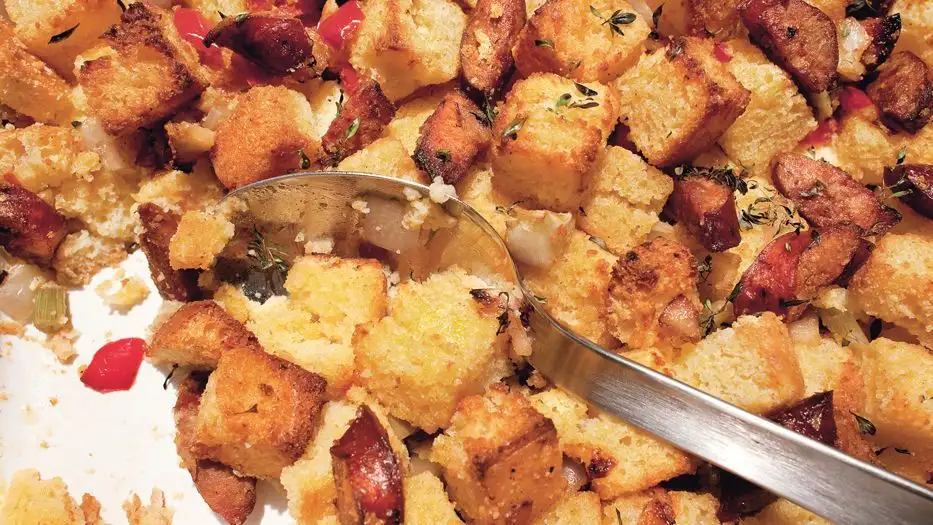
Contrast this with 'The Recipe Critic', which details a recipe requiring 10 cups of cubed sourdough bread, 1 pound of ground sausage, a more generous 12 tablespoons of butter, and a broader spectrum of aromatics including garlic, parsley, rosemary, sage, and thyme, along with chicken broth, salt, and pepper. The bread itself is pre-treated by being spread on a baking sheet and toasted.
Read More: Macy's Fireworks Tonight: Watch Live on NBC and Peacock
Other sources offer further divergences. 'Easy GF Recipes' hints at the possibility of using day-old bread without toasting and suggests a butter-leaner sausage option for those seeking lighter fare. 'Salt, Pepper, Skillet' mentions a more compact 8x8-inch baking dish and the removal of sausage from its casings as a preliminary step.
The Unseen Influences: Tradition and Adaptation
The background of this 'sourdough stuffing' points to a culinary evolution. The 'Washington Post' recipe explicitly references a 1964 iteration, indicating a lineage, albeit one that has undergone significant adaptation. The shift from stuffing inside the bird to baking in a separate dish signifies a departure from more traditional, perhaps even ritualistic, practices. This change suggests a focus on achieving a specific textural outcome – a crisper exterior, a more evenly cooked interior – or perhaps a response to evolving food safety concerns or aesthetic preferences. The recurring emphasis on sourdough itself, with its distinct tang and texture, points to a desire for a more robust, artisanal base compared to the pre-seasoned breadcrumbs often associated with more convenient stuffing preparations. The prevalence of these recipes across various online platforms, often with recent publication dates, indicates a contemporary interest in this specific formulation.
Read More: Habibi Grill on Cork's Northside Offers New Syrian Food
:max_bytes(150000):strip_icc()/image-460-7bdc9b0a055246f0b95bfb1b800773ec.jpg)