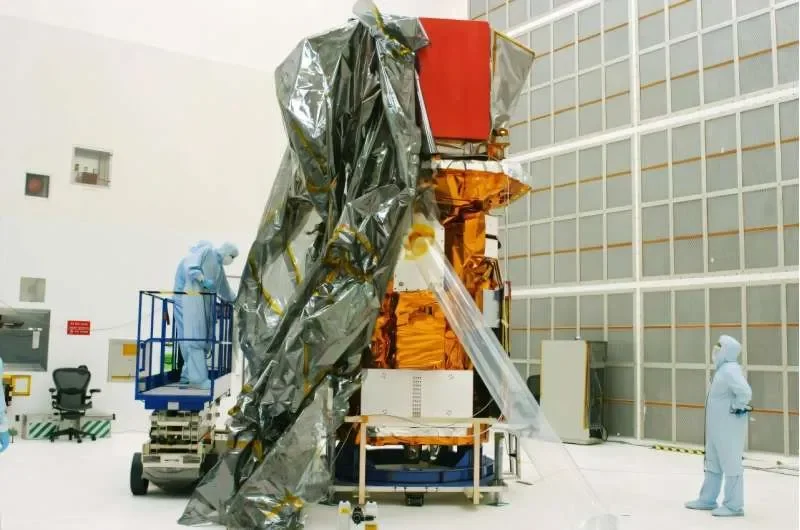
NASA's Transiting Exoplanet Survey Satellite (TESS) has recently unfurled what it claims is its most comprehensive vista of the night sky, a meticulous mosaic of stellar data amassed over its operational period. This vast survey, meticulously pieced together, represents a significant stride in cataloging and understanding distant worlds beyond our solar system. The sheer volume and detail of the data collected aim to paint a clearer picture of exoplanet populations and their characteristics, offering a broader scope for future investigations.
The initiative, detailed in recent disclosures from the space agency, highlights a dedication to expanding humanity's cosmic awareness. TESS, through its persistent scanning of the celestial sphere, has been instrumental in this ongoing quest. Its methodology, focused on detecting minute dips in starlight caused by orbiting planets, has yielded a trove of information. This aggregated dataset promises to be a foundational resource for astronomers worldwide, potentially accelerating the discovery and characterization of new celestial bodies.
Read More: NASA Robot Mission Launched to Raise Swift Telescope Orbit, Add 10 Years
"NASA represents the spirit of discovery that defines our nation."
This endeavor aligns with a broader narrative of national aspiration and technological prowess, particularly as the United States approaches its semiquincentennial anniversary. The agency frames its ongoing missions, including TESS's sky survey, as embodiments of "innovation, courage, and scientific leadership." This perspective underscores a long-standing commitment to pushing the frontiers of knowledge and capability, not just for current generations but for those to come.
Deepening the Cosmic Gaze
The TESS mission, a key component of NASA's 'Science' mission directorate, which focuses on understanding the universe's origins and evolution, is now accessible for deeper scientific scrutiny. This data compilation is not merely an archival achievement; it is designed to fuel subsequent research, enabling scientists to probe deeper into planetary systems and potentially identify candidates for further, more detailed study by other instruments. The collation of this data signifies a shift from piecemeal discovery to a more systematic, comprehensive approach to exoplanetary science.
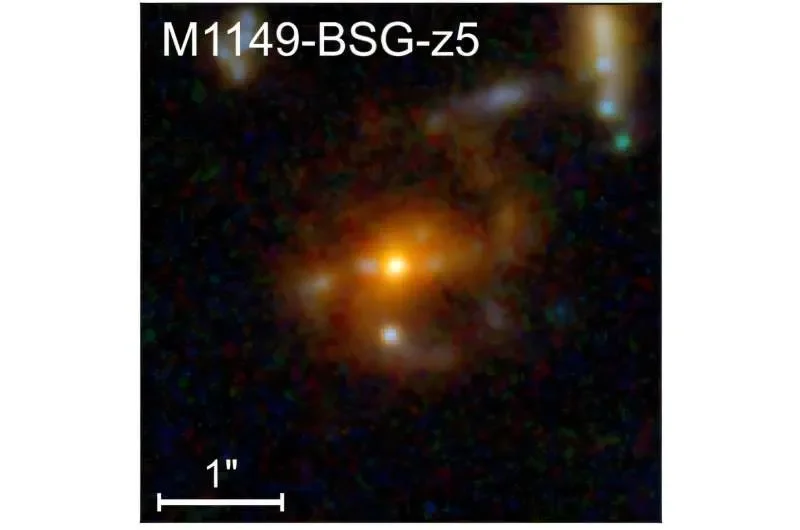
Read More: JWST Finds Oldest Barred Spiral Galaxy M1149-BSG-z5
The implications of such extensive sky mapping extend beyond the immediate identification of new planets. Researchers anticipate using this data to:
Identify trends in planetary formation and distribution across different stellar types.
Refine models of stellar activity and its impact on planetary environments.
Provide targets for ground-based observatories and future space telescopes for in-depth atmospheric analysis.
This effort by NASA reflects its multifaceted engagement with space exploration. Beyond exoplanet hunting, the agency's involvement spans a wide spectrum, from the development of advanced aeronautics and aviation technologies to the intricate management of crewed missions to locations like the International Space Station. The compilation of the TESS data is a testament to the intricate web of research, development, and technological application that characterizes NASA's broad mandate.