Recent scientific findings regarding the exoplanet K2-18b have generated significant attention, with initial reports suggesting the discovery of molecules potentially linked to life. However, these claims are now facing considerable scrutiny and pushback from other researchers, highlighting the complex and often tentative nature of such discoveries.
The initial excitement centered on the potential detection of dimethyl sulfide (DMS) and dimethyl disulfide (DMDS), molecules that, on Earth, are produced by living organisms. These molecular signatures were reportedly identified in the atmosphere of K2-18b using observations from NASA’s James Webb Space Telescope (JWST). This prospect, if confirmed, would represent a major step in answering fundamental questions about life beyond our planet.
A World of Uncertainty
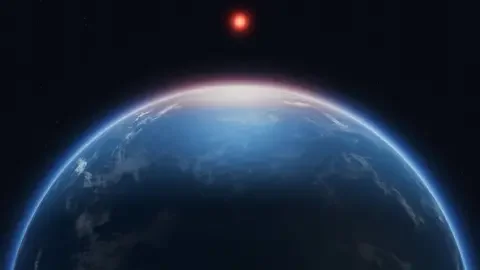
K2-18b itself is a substantial celestial body, approximately 2.6 times the radius of Earth and over eight times its mass. Its distance from its star places it within the habitable zone, a region where liquid water could exist. Previous speculation suggested the planet might be a "Hycean" world, possessing a substantial ocean beneath a hydrogen-rich atmosphere.
Read More: JWST Finds Oldest Barred Spiral Galaxy M1149-BSG-z5
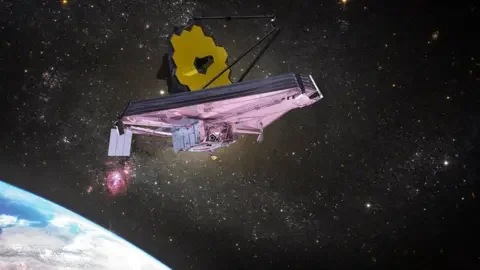
However, new analyses of the JWST data have yielded less definitive results. Some researchers, examining the same data, have reported finding "no clear statistical evidence for a signal," describing the findings as "essentially just a flat line." This has led to further debate about the planet's actual composition, with alternative theories proposing it might be a lava world or a gas giant akin to Neptune, lacking any solid surface.
The Path to Proof
The lead researcher behind the initial promising findings, Prof. Nikku Madhusudhan at Cambridge University, acknowledges that "a scientific mountain [remains] to climb" to definitively answer questions about life on K2-18b. While he believes his team is "on the right track" and hopes to obtain "clinching evidence soon," the scientific community is cautious.
Read More: US Space Force Victus Haze Mission Successfully Tests Orbital Intercepts
The very nature of proving extraterrestrial life requires extraordinary evidence, and initial signals, even those associated with life on Earth, are subject to rigorous independent verification. The scientific process demands further observations and analysis to rule out non-biological explanations for observed phenomena.
Despite the doubts surrounding the life claims, K2-18b remains a scientifically valuable target. Additional JWST observations have already been completed and are currently being analyzed, which may shed more light on the planet's atmospheric composition and potential habitability. This ongoing investigation underscores the incremental and often contested journey of scientific discovery, particularly when venturing into the profound question of whether we are alone in the universe.