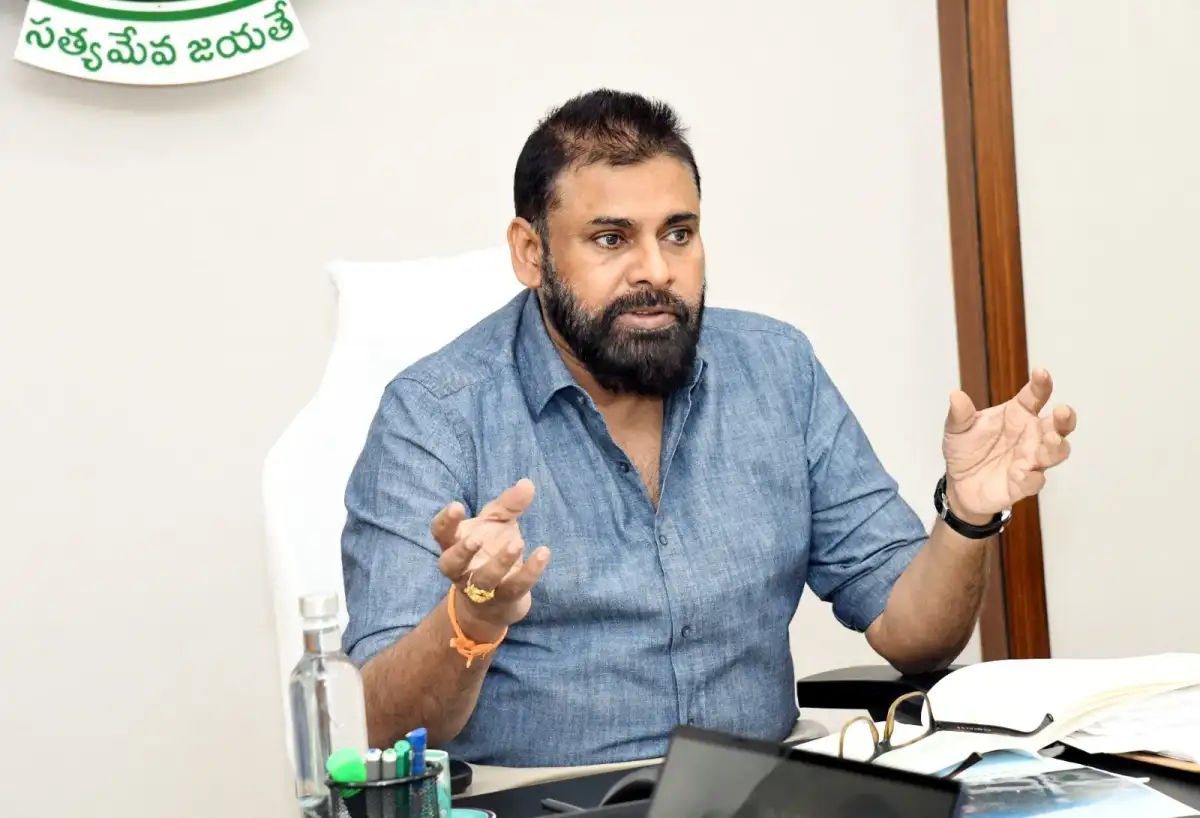
Prof. Balakista Reddy and the Telangana Council of Higher Education (TGCHE) have mandated a new arithmetic for degrees across the state. Under a directive to align with the central ' National Education Policy (NEP) 2020 ', universities must now enforce a fixed credit logic: a minimum of 120 credits for three-year undergraduate degrees and 160 credits for four-year honours programs. Postgraduate tracks are being compressed into an 80-credit frame. This restructuring is not merely academic; it is a tactical move to lift institutions within the ' National Institutional Ranking Framework (NIRF) ' and ' NAAC ' scoring systems.
The council is moving away from loose academic structures toward a rigid, modular system.
Universities are ordered to coordinate on a common academic calendar.
A committee of Vice-Chancellors will now draft the rules for ' Multiple Entry and Multiple Exit ' points, allowing students to drop out or return with partial credentials.
New curriculum models for BA, BSc, BCom, and BBA for the 2025-26 cycle are being rewritten to focus on English proficiency and skill modules rather than traditional deep-theory tracks.
The 100-Day Governance Grid
To ensure these changes do not stall in administrative sludge, the TGCHE has launched a phased roadmap labeled ' Praja Palana – Pragathi Pranalika '. This 99-to-100-day plan breaks down university management into "mission-mode" blocks. The final phase (Day 76-100) is strictly for outcome-oriented assessment, where results are measured and reported to the state. This phased approach acknowledges that some colleges are slower or more "immature" in their administration than others, refusing a one-size-fits-all rollout.
Read More: Google Learn About AI Tool Released April 2026 For Simple Learning

"A uniform, system-wide execution approach may not yield optimal results… downstream activities are not initiated without completing prerequisite actions." — TGCHE Observation.
The Quantified Student
| Program Type | Minimum Credits | Duration | Core Features |
|---|---|---|---|
| UG General | 120 - 142 | 3 Years | Skill modules, English focus |
| UG Honours | 160 | 4 Years | Research-linked, Industry bridge |
| Postgraduate | 80 | 2 Years | Alignment with NCrF |
| Apprenticeship | Variable | Integrated | On-the-job governance |
Refitting the Academic Machinery
The revision of the undergraduate syllabus has been an ongoing two-month grind involving industry partners and ' UGC directives '. By nudging the credit ceiling to 142 in some sectors (up from 124), the council claims it is reducing "student pressure" while actually increasing the hours required for vocational training and digital pedagogy. An internship program for higher education governance itself has been introduced, effectively turning students into participants of the very system that manages them.

Background: The Metric Fixation
Higher education in Telangana is increasingly viewed through the lens of marketability and compliance. The TGCHE annual report, submitted to the Governor in early 2026, highlights that these shifts are meant to solve problems of employability and "public perception." By adopting the ' National Credit Framework (NCrF) ', the state is plugging its local universities into a global-style marketplace where credits are currency, transferable and divisible, regardless of the institution's historical local character.
Read More: Telangana cancer data move, but treatment places lack staff
Reflective Note: The push for "holistic development" remains a buzzword in the council’s documentation, yet the practical application is a hard-edged focus on accreditation scores and industry-linked apprenticeships. The university is being rebuilt as a pre-professional training center, measured by the clock and the credit.