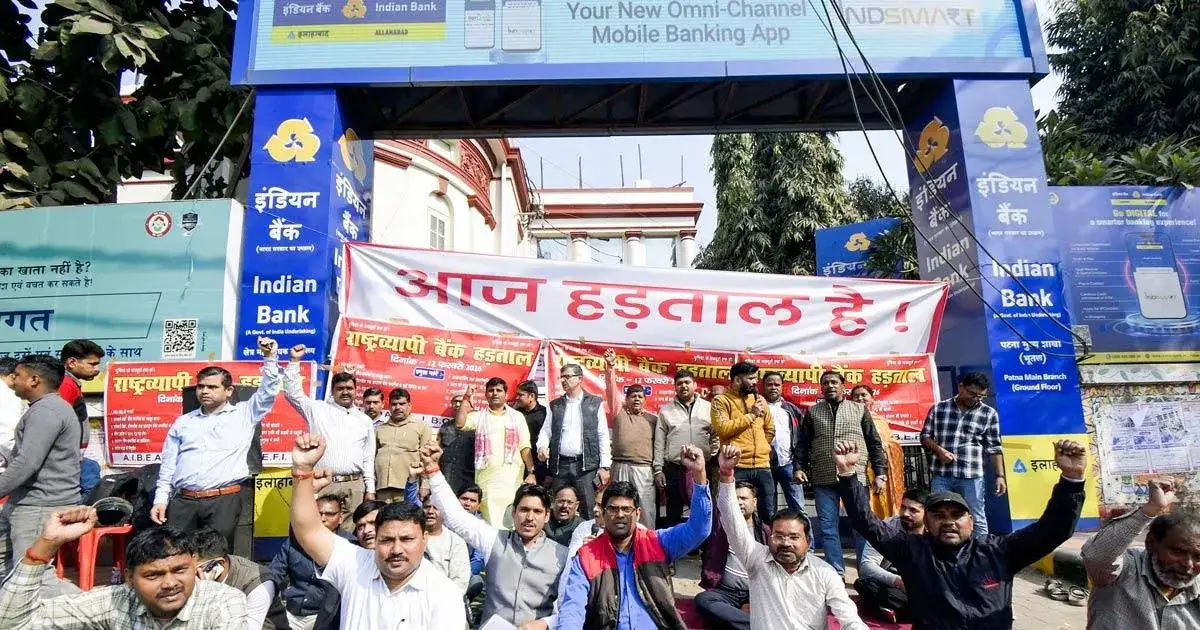
A deep dive into the new policy reveals a familiar pattern of ambition, but can it truly weave a new future for the industry, or is it just spinning its wheels?
The air in Tamil Nadu's textile corridors is thick with a buzz. The government, in a recent press release, has outlined a "Textile Policy" packed with subsidies, incentives, and ambitious goals. Promising everything from interest subventions for spinning machines to capital subsidies for modernizing looms and establishing processing units, the policy aims to breathe new life into an industry that has long been the backbone of the state's economy. Sixteen textile associations have even publicly thanked the Chief Minister for these measures. But as a critical observer, I can't help but ask: what’s the real story behind these glossy announcements? Is this a genuine leap forward, or just another elaborate piece of policy weaving that could unravel under scrutiny?
The Policy's Threads: What's Actually Being Offered?
The Tamil Nadu government, through its new textile policy, has laid out a smorgasbord of incentives designed to modernize and expand the sector. Let's break down what's on the table:
Read More: UK Economy Grew a Little at End of 2025
For Spinning: A 1.6% interest subvention on all spinning machines.
For Weaving:
20% capital subsidy for 1,000 looms to upgrade to shuttleless looms.
50% capital subsidy to upgrade 3,000 powerlooms to rapier shuttleless looms.
5% to 25% subsidy for worksheds for shuttleless looms in powerloom clusters.
For Processing:
25% capital investment subsidy for new textile processing units and individual Effluent Treatment Plants (ETPs).
25% subsidy for expansion, modernization, or upgradation of existing units and Individual Effluent Treatment Plants (IETPs).
For Technical & New Fibers:
25% capital investment subsidy for manufacturing non-conventional fibres/yarn.
₹15 crore to boost technical textiles and diversification.
₹25 crore for research and business development in technical textiles and man-made fibres (MMF).
For Efficiency: 50% capital investment subsidy for computerised cutting machines with CAD/CAM software.
Beyond these direct subsidies, the policy also boasts broader initiatives. The government has removed a 1% market committee cess on seed cotton, cotton waste, and cotton lint, a move that should bring some relief to raw material costs. They've also advised the Cotton Corporation of India to start depot sales in Tamil Nadu, aiming to streamline cotton availability. Furthermore, the implementation of the PM MITRA Park in Virudhunagar and making the mini textile park scheme more investment-friendly are touted as significant infrastructure developments. A sustainable cotton mission has been launched to boost cotton production, and a viscose fibre production factory near Thoothukudi is on the cards to strengthen the viscose staple fibre value chain.
Read More: Indian Shooter Aishwary Pratap Singh Tomar Wins Gold
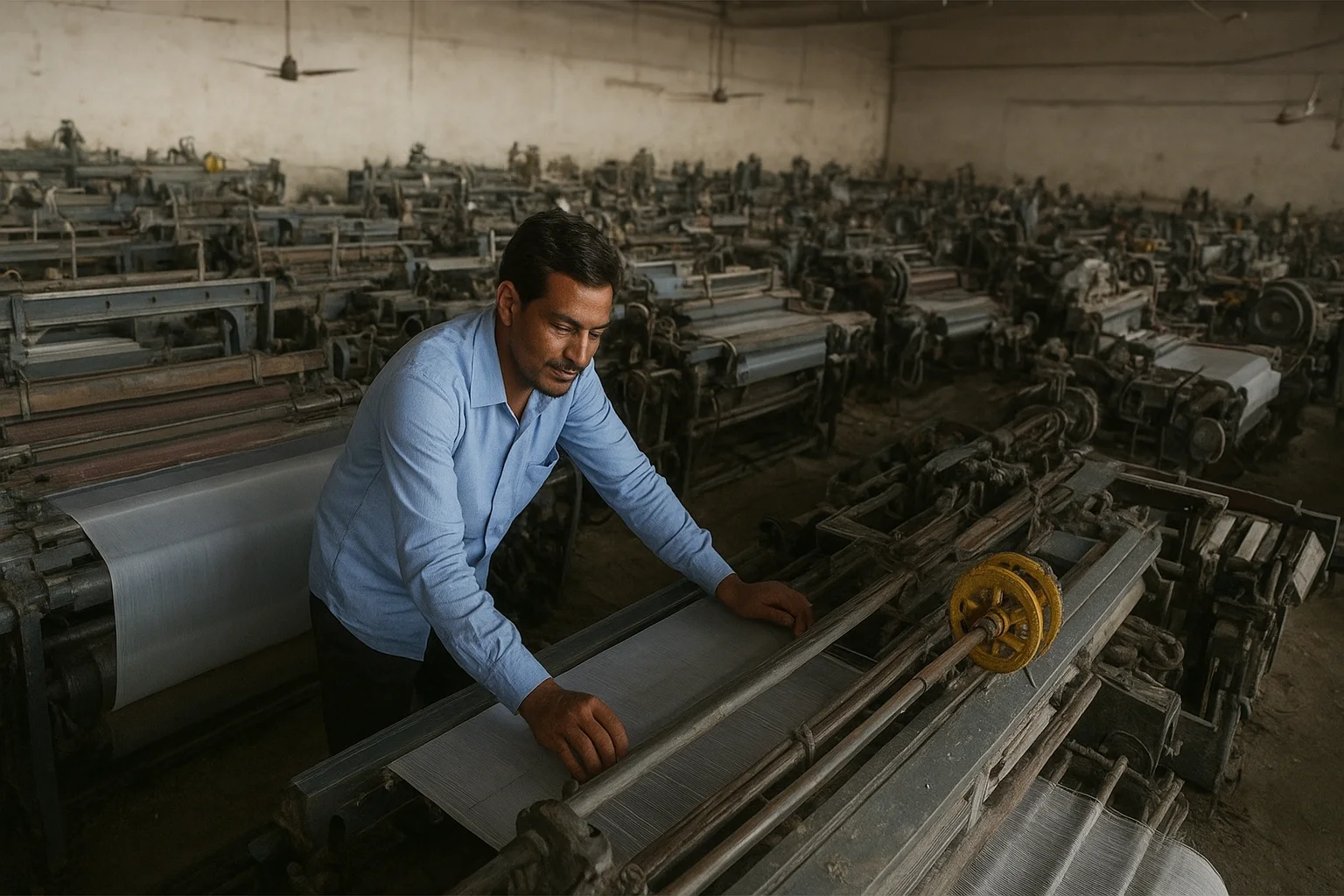
These are, on paper, a lot of good intentions. But how many of these promises translate into tangible benefits for the small-scale entrepreneur, the powerloom owner struggling to keep up, or the processing unit grappling with environmental regulations?
The Ghosts of Policies Past: Why Skepticism Lingers
This isn't the first time the government has promised a revolution in the textile sector. The history of Indian textile policy is a complex tapestry, often woven with good intentions that frayed under the weight of implementation, scale, and often, conflicting priorities.
Back in 2018, the Ministry of Textiles launched the Amended Technology Upgradation Fund Scheme (ATUFS), aiming to provide capital subsidy and interest relief for technology upgradation. While it aimed to modernize the sector, reports from various industry bodies often highlighted delays in subsidy disbursal and procedural hurdles.
Read More: Sir Jim Ratcliffe Says Sorry for Immigration Comments
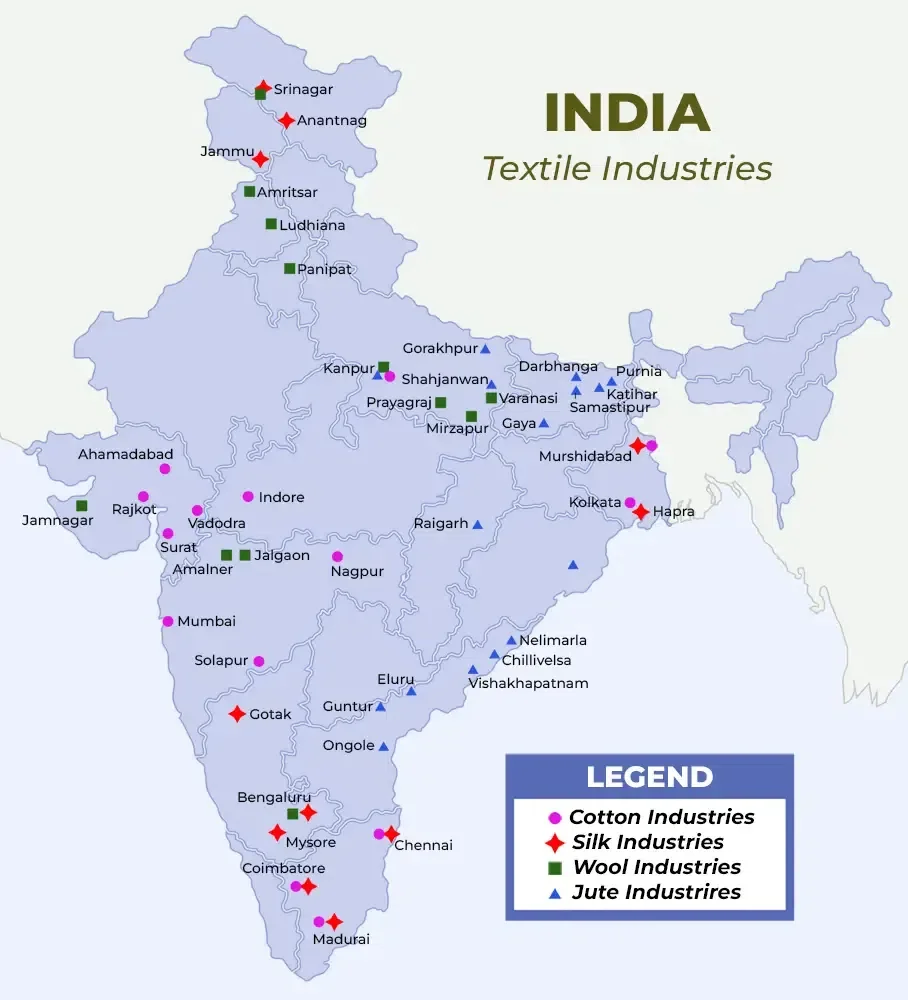
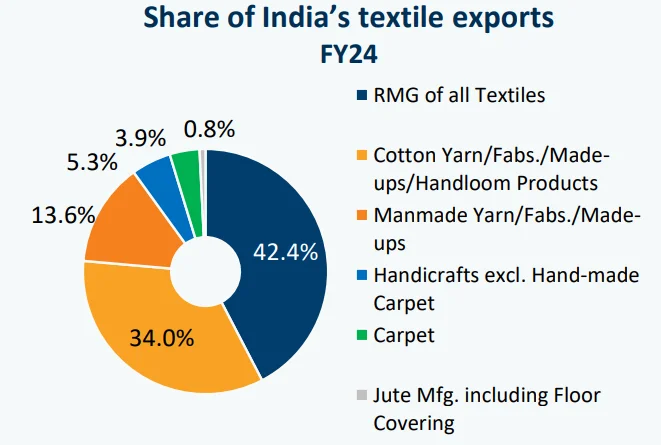
Then there's the persistent issue of fragmentation. India's textile industry is characterized by millions of small, often family-run units. Policies that favour large-scale investments, while necessary for global competitiveness, can sometimes leave these smaller players behind, unable to access the capital or scale required to benefit. As pointed out in the Policy Circle article, India often exports "low-value fibre and yarn instead of finished garments," indicating a persistent problem with moving up the value chain, a challenge that requires more than just subsidies—it demands strategic policy that addresses scale and integration.
| Past Policy Challenges vs. Current Promises ||—-|—-|| Outdated Technology: Historically, a major hurdle. | Focus: Subsidies for shuttleless looms, computerised cutting, modernization. || Fragmentation: Millions of small units struggle with scale. | Focus: Mini textile parks, PM MITRA Park - aims for better infrastructure. || High Raw Material Costs: A constant pain point. | Focus: Removal of market committee cess, advice for depot sales. || Low Value Addition: Exporting raw materials rather than finished goods. | Focus: Push for MMF, technical textiles, diversification. || Subsidy Delays & Procedural Hurdles: Common complaints with past schemes. | Current State: Not explicitly addressed, but "investment friendly" and thanks from associations suggest improvement. |
Read More: India Says US Trade Paper Changes Match What Was Agreed
Moreover, the global context is rapidly shifting. Countries like those in the EU are pushing for sustainability, circularity, and Extended Producer Responsibility (EPR). The EU's Strategy for Sustainable and Circular Textiles (Source: European Commission) explicitly recognizes the high environmental impact of textiles and aims to transform production and consumption. They are focusing on supply chain transparency, chemical safety, and circular design, and even refining waste management policies to reduce textile waste exports.
The question is: does Tamil Nadu's new policy adequately address these global shifts, or is it primarily focused on the traditional metrics of production volume and machinery upgrade?
The Sustainability Question: A Whisper in the Policy's Roar?
Sustainability is no longer a buzzword; it's a critical imperative for the global textile industry. Article 4, a journal piece from ScienceDirect, delves into the "Techniques, applications, and challenges in textiles for a sustainable future," highlighting the growing importance of this aspect. Article 6, discussing global textile policies in 2024, emphasizes that brands and manufacturers must now report carbon emissions and ensure product durability, repairability, and recyclability to contribute to a circular economy.
Read More: Arc Raiders Game Sells 14 Million Copies, Much More Than Expected
The EU's approach, as seen in Article 8, is comprehensive, looking at the entire lifecycle of textile products and aiming to change how we produce and consume. They are also implementing waste management policies to reduce textile waste exports. Article 7, from Fibershed, touches upon Extended Producer Responsibility (EPR) legislation, where producers are held accountable for the end-of-life of their products. While some EPR programs have faced criticism for lacking sufficient incentives, data collection, and enforcement, the concept itself signals a major global trend.
Tamil Nadu's policy does mention a "sustainable cotton mission." It also offers capital investment subsidies for establishing individual ETPs (Effluent Treatment Plants) and IETPs (Industrial Effluent Treatment Plants) for processing units. But is this enough?
Are the subsidies for ETPs substantial enough to cover the significant costs of advanced, compliant treatment systems?
Is there a clear mechanism for monitoring and enforcing effluent standards, beyond just providing the subsidy?
How does the policy integrate principles of circularity, waste reduction, and chemical safety, aligning with global trends?
Does it incentivize the use of recycled materials or promote the design of durable, repairable products?
Read More: India's January Inflation Rate is 2.75% with New Measuring System
The policy’s emphasis on "new textile processing units and individual ETPs" suggests a reactive approach to pollution control rather than a proactive embrace of sustainable design and resource efficiency across the entire value chain.
The Technical Textiles and MMF Gambit: A Leap of Faith?
A significant thrust of the policy is towards technical textiles and man-made fibres (MMF). This is a smart move, as these segments are often associated with higher value addition and global demand, as noted in Article 5. The policy earmarks ₹15 crore for diversification into technical textiles and ₹25 crore for a research and business development fund.

The Question of Scale: Will ₹15 crore and ₹25 crore be sufficient to truly accelerate growth and foster significant innovation in a field that often requires substantial R&D investment and specialized manufacturing capabilities?
Industry Readiness: Are our existing textile ecosystems, particularly the numerous small and medium enterprises, equipped with the skills and knowledge to pivot into complex technical textile manufacturing?
Market Access: How will the policy facilitate market access for these new products, both domestically and internationally?
Global Competition: Countries like China have heavily invested in and dominated the MMF and technical textile markets. What unique advantages will India, and specifically Tamil Nadu, leverage to compete effectively?
Read More: Sir Jim Ratcliffe Says Sorry for Immigration Words
The ambition to shift focus is commendable, but the allocated funds and the roadmap for achieving this shift need closer examination. Without robust support for R&D, skilled manpower development, and strategic market entry, these funds might simply be too little, too late.
Conclusion: Weaving Hope, but Watching the Warp and Weft
Tamil Nadu's latest textile policy is a document filled with promising initiatives. The removal of the market committee cess, the push for modern looms, the subsidies for processing units, and the focus on technical textiles are all steps in the right direction. The public appreciation from industry associations certainly adds a layer of endorsement.
However, as a free-thinking journalist committed to digging deeper, I must urge caution and continued vigilance. The effectiveness of any policy hinges not just on its pronouncements, but on its execution. Past experiences have shown that well-intentioned policies can falter due to:
Read More: Nationwide Strike Had Small Effect in Most Places
Implementation Gaps: Delays in subsidy disbursal, bureaucratic hurdles, and lack of transparency.
Inadequate Scale: Incentives that are too small to make a meaningful impact on modernization or R&D.
Ignoring Global Trends: Insufficient focus on crucial areas like circularity, chemical safety, and sustainable sourcing.
Limited Support for SMEs: Policies that inadvertently favour larger corporations, leaving the backbone of the industry behind.
The true test of this policy will be in its ability to empower the entire spectrum of the textile industry in Tamil Nadu, from the smallest powerloom owner to the largest integrated mill. It needs to not only foster modernization and diversification but also embed sustainability and circularity as core principles, not mere add-ons. We must ask: Will this policy lead to a tangible increase in high-value exports? Will it create truly sustainable and ethical production practices? Will it foster genuine innovation, or simply incentivize the purchase of new machinery?
Only time, and a rigorous, independent assessment of its impact on the ground, will tell if Tamil Nadu's textile policy is weaving a golden future or simply spinning the same old yarn.
Sources:
The Hindu: https://www.thehindu.com/news/cities/Coimbatore/textile-policy-focuses-on-weaving-processing-and-technical-textiles/article70601116.ece
Policy Circle: https://www.policycircle.org/industry/textile-industrys-policy-and-scale/
Textilesphere (via AOL): https://www.textilesphere.com/2024/10/india-new-textile-policy-2024.html
ScienceDirect (Journal of Open Innovation): https://www.sciencedirect.com/science/article/pii/S2199853124000246
IAS Gyan (via AOL): https://www.iasgyan.in/daily-current-affairs/textile-sector-in-india-challenges-and-way-forward
Alchemi Technology: https://www.alchemietechnology.com/news/textile-policies-2024/
Fibershed: https://fibershed.org/2023/11/02/textile-and-fiber-policy-101-influential-new-legislation-you-should-be-paying-attention-to/
European Commission: https://environment.ec.europa.eu/strategy/textiles-strategyen
PIB Headquarters: https://pib.gov.in/PressNoteDetails.aspx?NoteId=154084&ModuleId=3 (Note: Content extraction failed as per input)