


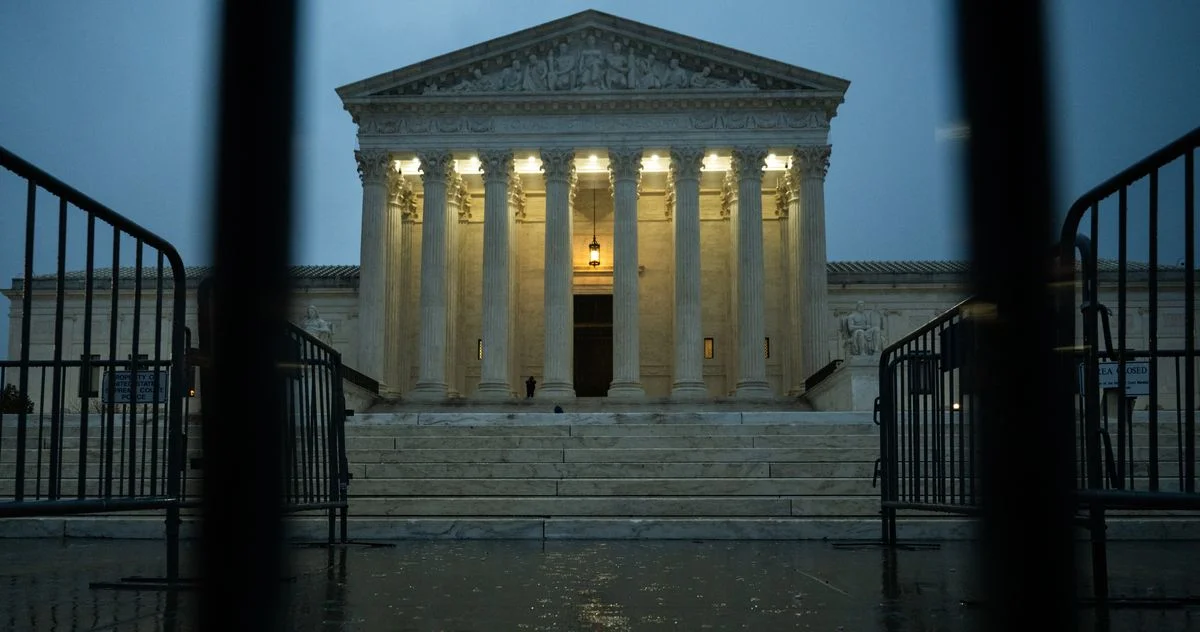
The U.S. Supreme Court has ruled against President Donald Trump's use of broad tariffs, impacting a key part of his economic policy. The decision found that the president did not have the authority to impose these tariffs under a specific federal law. This ruling deals a significant setback to the administration's trade strategy.

Background of the Tariffs and Legal Challenge
President Trump implemented wide-ranging tariffs on goods imported from many countries. These tariffs were a central piece of his economic agenda, intended to protect American industries and generate revenue.

The tariffs were imposed using powers granted by the International Emergency Economic Powers Act (IEEPA).
Businesses and various groups, including members of Congress, raised concerns that these tariffs were an overreach of presidential authority.
This led to legal challenges arguing that the president had exceeded his powers under IEEPA.
Lower courts, including a federal trade court and a federal appeals court, had previously found these specific tariffs illegal.
The Supreme Court's Decision
In a 6-3 decision, the Supreme Court upheld the lower court rulings, finding that President Trump's broad application of tariffs under IEEPA was unconstitutional.

The Court determined that IEEPA does not grant the president the power to impose such sweeping tariffs.
This decision directly challenges a core element of Trump's economic policy, which relied heavily on the use of tariffs.
Justices Clarence Thomas, Samuel Alito, and Brett Kavanaugh dissented, disagreeing with the majority opinion.
Impact and Reactions
The Supreme Court's ruling has significant implications for the administration's trade policies and has drawn varied reactions.
Business Community: Some businesses had already sued to recover tariffs paid, anticipating a ruling against the administration. The stock market showed positive movement following the decision, suggesting relief among investors.
Political Response: Democratic senators welcomed the ruling, having long criticized the tariffs as an illegal burden. The decision represents a notable rebuke of the president's actions.
Unanswered Questions and Remaining Authority
While this ruling strikes down the broad tariffs imposed under IEEPA, the president may still have other avenues to implement trade restrictions.
Read More: US Supreme Court Rules Trump's Global Tariffs Unlawful in February 2026
Did the administration explore all available legal bases for tariffs, or were these IEEPA-based tariffs simply the most prominent ones challenged?
Does the ruling prevent the use of tariffs under other statutory authorities, or is the focus specifically on IEEPA?
How will this decision affect ongoing trade disputes and future tariff actions by the administration?
Expert Analysis
The Supreme Court's decision highlights the delicate balance between executive authority and legislative intent in matters of trade and national security. Legal experts note that while this ruling curtails a specific method of imposing tariffs, it does not necessarily end the use of tariffs altogether. The president retains authority to impose tariffs under different legal frameworks, provided they align with existing statutes and congressional intent.
Conclusion and Next Steps
The Supreme Court's decision on President Trump's tariffs represents a significant judicial check on executive power in the realm of economic policy. By ruling that the International Emergency Economic Powers Act does not authorize such broad tariff impositions, the Court has underscored the importance of statutory limits on presidential actions.
The ruling invalidates tariffs imposed under IEEPA, potentially leading to refunds for affected businesses.
It signals a major setback for the Trump administration's signature economic strategy.
The dissent from three conservative justices suggests ongoing debate about the scope of presidential power.
The administration may need to rely on other existing laws or seek new congressional authorization to implement similar trade measures in the future.
Sources Used:
Associated Press (AP News): Provided live updates and an overview of the ruling's impact, noting the 6-3 decision and the involvement of Trump appointees on the Court.
NPR: Detailed the ruling's basis in the International Emergency Economic Powers Act (IEEPA) and identified the dissenting justices.
https://www.npr.org/2026/02/20/nx-s1-5672383/supreme-court-tariffs
CBS News: Emphasized the ruling as a blow to the president's economic agenda and confirmed the lower court's findings were upheld.
https://www.cbsnews.com/news/supreme-court-tariffs-decision-trump/
USA Today: Reported on the stock market's reaction and noted that companies were already seeking tariff refunds.
https://www.usatoday.com/story/news/politics/2026/02/20/supreme-court-trump-tariffs-ruling/87778248007/
CNBC: Highlighted that lower federal courts had also deemed the tariffs illegal prior to the Supreme Court's review.
https://www.cnbc.com/2026/02/20/supreme-court-trump-tariffs-ruling.html?msockid=0cd71f4ac54b6cea38df084cc4d46d46
New York Magazine (Intelligencer): Confirmed the 6-3 vote split and mentioned the dissenting justices.
https://nymag.com/intelligencer/article/supreme-courts-trump-tariffs-live-updates-reaction-analysis.html


