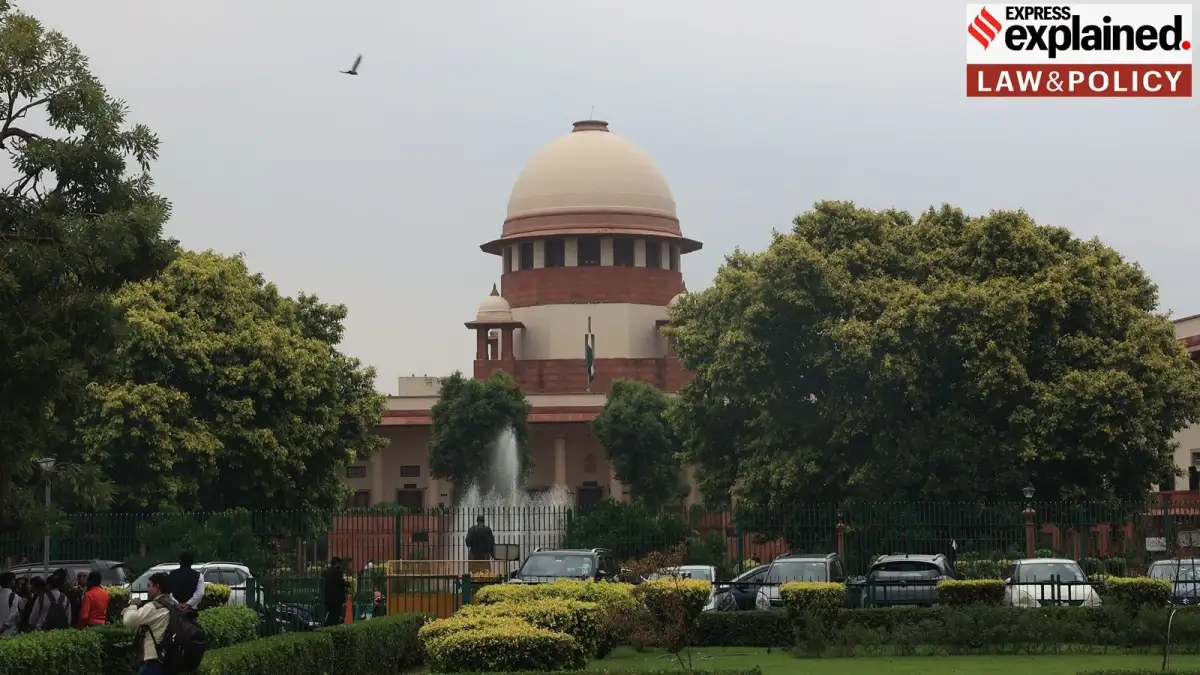
Supreme Court Settles Decades-Old Confusion on 'Creamy Layer' Income Calculation
The Supreme Court has resolved a protracted ambiguity regarding the calculation of income for determining the 'creamy layer' exclusion from Other Backward Classes (OBC) reservations. The judgment clarifies that while previous government orders (OMs) explicitly excluded salary and agricultural income from this assessment, a subsequent clarification in 2004 erroneously mandated their inclusion for individuals whose parents are in Public Sector Undertakings (PSUs) or private employment where their posts lack established equivalence with government positions. This discrepancy, the court noted, led to unequal treatment of similarly situated OBC candidates, deeming it legally flawed and constitutionally impermissible. The ruling addresses the specific concerns for children of parents employed in Central or State PSUs, or in private sector jobs where post equivalence with government roles is not yet formally recognized.
The core of the dispute lay in the conflicting directives between the original 1993 OM, which clearly separated salary and agricultural income for the wealth test, and a 2004 clarification by the Department of Personnel and Training (DoPT). This 2004 letter, in its ninth paragraph, directed the inclusion of salary income in the calculation for this specific group of OBC candidates, creating a divergence from the established framework. The court found this ad hoc inclusion to be discriminatory, particularly when compared to the treatment of wards of government servants.
Read More: Supreme Court May Order Ayodhya Temple Fund Audit Due to Theft Claims
Income as a Criterion: A Contentious Point
The 'creamy layer' concept aims to exclude affluent individuals within the OBC category from reservation benefits, based on socio-economic conditions. While some argue for income as the primary factor, with a suggested threshold of ₹8 lakh annual income, the recent Supreme Court ruling complicates this by focusing on the method of income assessment rather than just the amount for certain groups. This ruling underscores a long-standing debate about whether reservation policies should remain static or adapt to evolving socio-economic realities. The implications extend to ensuring transparency in identifying and excluding the 'creamy layer'.
Equivalence and Reservation Benefits
The Supreme Court's decision also touches upon the long-standing issue of establishing equivalence between posts in PSUs, government-aided institutions, private sectors, and central government services. Historically, direct equivalence has been difficult to establish, particularly for PSU and private sector employees whose roles might not have a direct counterpart in government hierarchies. The ruling emphasizes that differential treatment based on the sector of parental employment, without a clear justification for equivalence, is problematic. This points to a need for more uniform application of reservation rules across different employment sectors to ensure fairness. For instance, distinctions have been made regarding executive-level posts in State PSUs being equated for the creamy layer, while private sector roles often rely solely on income criteria due to perceived vast variations.
Read More: State Commission reviews Dalit issues in Chittoor, Andhra Pradesh
Historical Context of the 'Creamy Layer'
The 'creamy layer' doctrine itself emerged from landmark judgments like Indira Sawhney v Union of India, which sought to refine reservation policies by ensuring benefits reached the truly disadvantaged. The objective has been to prevent reservation policies from becoming perpetual and to adjust them based on changing societal and economic landscapes. While initially applied to OBCs, the principle has been considered for Scheduled Castes (SC) and Scheduled Tribes (ST) as well, though its application in promotions for SC/STs has faced separate legal scrutiny. The recent judgment in Devendra Singh vs State of Punjab is cited as bringing a "new dimension" to the creamy layer debate, emphasizing the need for evolving criteria.