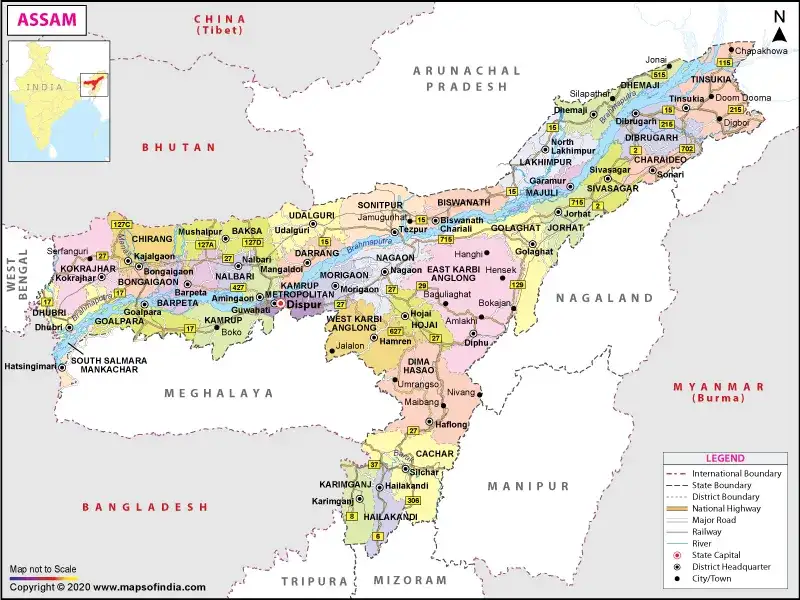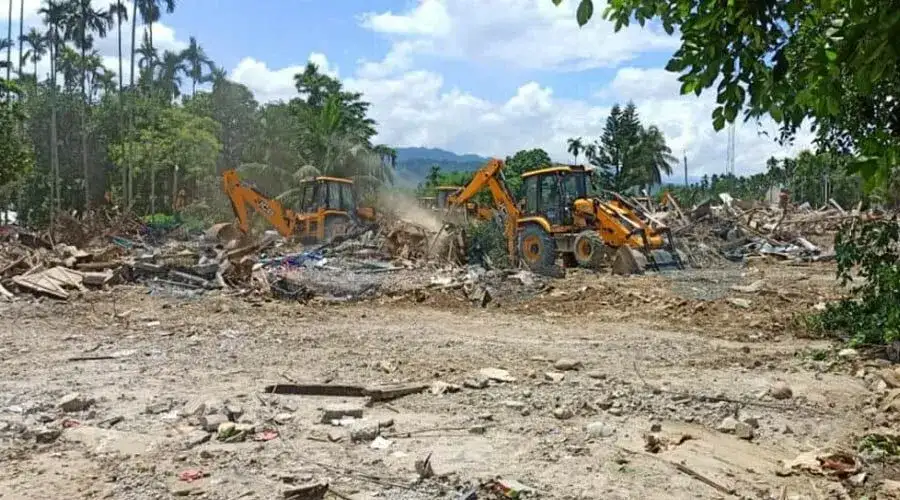
The Supreme Court of India has established a clarified process for the eviction of individuals occupying forest land in Assam. This intervention aims to streamline the state government's efforts to reclaim encroached forest areas while introducing procedural safeguards to address occupant claims. The ruling follows a series of eviction drives that have drawn attention to the complex interplay between environmental protection and the rights of forest-dwelling communities.
The central question revolves around how Assam can effectively clear encroachments from its forest lands while ensuring fairness to all affected parties. The Supreme Court's directive involves the formation of a committee to meticulously examine land status and occupant claims, marking a significant shift in how such disputes will be handled.

Context of Forest Land Occupancy and Evictions in Assam
Assam, a state with significant forest cover, has been grappling with extensive encroachments on its forest lands. Data suggests that a substantial amount of forest land, estimated in the range of 26-27 lakh bighas, remains under illegal occupation. The state government has actively pursued eviction drives to reclaim these areas, citing the urgent need for environmental preservation and conservation.
Read More: India IVF Costs And Social Barriers Limit Access In April 2026

Previous Efforts: The Assam government has reported clearing over 1.25 lakh bighas of forest land from encroachments. A recent drive in Hojai district cleared over 1,700 acres.
Government Policy: The state's policy aims to remove unauthorized occupants from reserved forest land and subsequently undertake reforestation and conservation measures. This initiative affects approximately 3,62,082 hectares, representing nearly 19.92 percent of the state's forest area.
Gauhati High Court Directives: Prior to the Supreme Court's intervention, the Gauhati High Court had ordered the state to fence forest areas to prevent future encroachments and had directed stern regulations against new occupations.
Controversy and Criticism: These eviction drives have not been without controversy. Allegations have surfaced that the exercise disproportionately targeted specific communities, leading to protests. A notable incident occurred in Goalpara district, where a protest against an eviction operation resulted in violence and fatalities.
Supreme Court's New Framework for Eviction Drives
The Supreme Court's recent order introduces a structured approach to managing forest land evictions in Assam. The directive mandates the establishment of a committee to ensure procedural fairness before any evictions proceed.
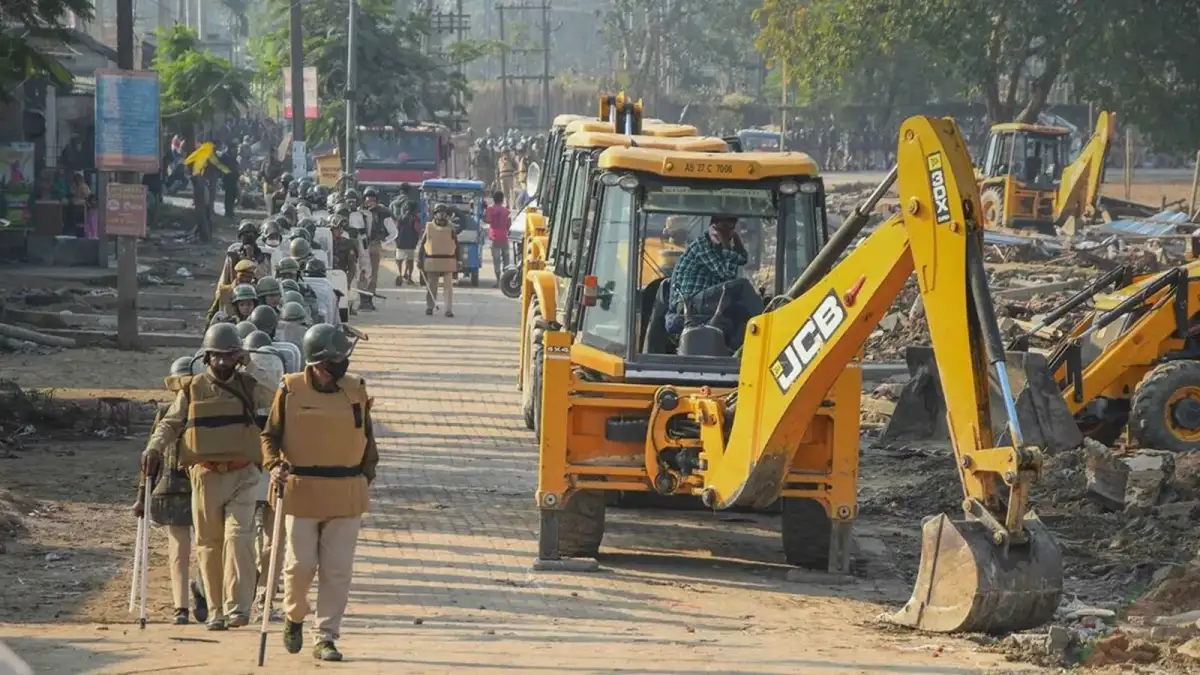
Committee Formation: A committee will be formed, typically including the Deputy Commissioner as chairman, the Divisional Forest Officer as member secretary, and other relevant officials such as the Additional Deputy Commissioner (Revenue) and Circle Officer.
Process for Occupants: If an unauthorized occupation is identified within a reserve forest area, a "speaking order" will be issued to the concerned individual. This order will provide 15 days' notice to vacate.
Opportunity to Adduce Evidence: The committee is tasked with issuing notices to alleged unauthorized occupants and affording them an opportunity to present evidence supporting their right to occupy the land.
Land Status Determination: The committee's primary role is to ascertain whether the land in question is classified as forest land or revenue land.
Appeals and Referrals: If an occupant's claim is found to be outside notified forest areas, the case will be referred to the revenue department.
Examining the Role of the Eviction Committee
The newly formed committee under the Supreme Court's direction plays a pivotal role in balancing the state's conservation goals with the rights of individuals occupying forest land. Its mandate is to ensure that eviction actions are not arbitrary and are based on a clear determination of land status and legal occupancy rights.
Procedural Safeguards: The Supreme Court emphasized that its approval of the state's eviction plan was contingent on the presence of "sufficient procedural safeguards." This highlights the court's concern for due process.
Distinguishing Forest vs. Revenue Land: A key function of the committee is to definitively classify land as either forest or revenue. This distinction is crucial, as eviction protocols may differ.
Objective and Fair Implementation: The Solicitor General assured the court that the policy would be implemented "objectively and fairly," suggesting an understanding of the need for impartiality in the committee's proceedings.
Addressing Claims of Indigenous Communities
A significant aspect of the Supreme Court's directive concerns the land rights of indigenous communities. The ruling acknowledges that some land currently occupied may fall under traditional rights, which require a different approach than standard encroachment removal.
Read More: Assam Cabinet Adds New Ministers, Excludes Party Switchers
"Forest Patta" for Indigenous Occupants: The state government plans to issue "forest patta" (land titles) to indigenous communities occupying forest land under relevant laws, effectively regularizing their possession.
Distinction from Unauthorized Occupation: This process distinguishes between legitimate, traditional occupation by indigenous groups and unauthorized encroachment by others.
Potential Impact of the Forest Rights Act: The case might influence the application of the Forest Rights Act, 2006, potentially reinforcing protections for recognized forest dwellers if their rights are substantiated.
The Court's Stance on Environmental Protection and Rule of Law
The Supreme Court's judgment underscores a critical principle: environmental protection must be pursued within the framework of the rule of law and constitutional procedure. The court acknowledged the gravity of forest encroachment as a challenge to environmental governance.
Constitutional Obligation: The court highlighted the Constitution's explicit obligation on the state to protect forests and the environment, and the fundamental duty of every citizen to do the same.
No Choice Between Conservation and Procedure: The Supreme Court clarified that environmental objectives cannot override constitutional procedures. This means that even for the sake of conservation, established legal processes must be followed.
Significance of Forests: The judgment recognized the vital role of forests in ecological balance, framing encroachment as a serious issue impacting environmental governance nationwide.
Expert Perspectives on the Ruling
Legal experts and observers have offered insights into the implications of the Supreme Court's decision, focusing on its balance between conservation and procedural justice.
"The Supreme Court's directive is a crucial intervention that attempts to strike a delicate balance between the imperative of forest conservation and the fundamental rights of long-settled communities. The formation of a committee with specific mandates is a positive step towards ensuring due process in eviction drives." - Legal Analyst
"This judgment provides a much-needed clarity on the procedures that must be followed. It moves away from broad-stroke evictions towards a more nuanced examination of land rights and classifications, which is essential for fair governance." - Environmental Lawyer
"The emphasis on affording occupants an opportunity to present evidence is key. This ensures that individuals with legitimate claims are not displaced arbitrarily, while still allowing the state to address illegal encroachments." - Human Rights Advocate
Conclusion and Future Implications
The Supreme Court's decision on forest evictions in Assam establishes a procedural framework designed to ensure that efforts to reclaim forest land are conducted with greater fairness and transparency. By mandating a committee to verify land status and hear occupant claims, the court has sought to integrate due process into the state's conservation agenda.
Streamlined Eviction Process: The ruling is expected to streamline the eviction process, making it more structured and less prone to arbitrary actions.
Balancing Interests: The judgment attempts to strike a balance between the state's constitutional duty to protect forests and the fundamental rights of individuals occupying these lands.
Potential Precedent: This case could set a precedent for how eviction drives are managed in other parts of India, emphasizing the importance of procedural safeguards in environmental governance.
Ongoing Scrutiny: While the framework offers clarity, the actual implementation by the committee and its impact on various communities will require continued observation. The court's directive for status quo in specific cases, like in Golaghat, also highlights the need for careful case-by-case examination.
Sources
The Hindu: Supreme Court verdict on forest evictions in Assam landmark, will streamline encroachment drives: Sarma - Reports on Assam CM's reaction and the procedural changes introduced by the Supreme Court.
Assam Tribune: Assam CM hails SC nod for forest land evictions; panel to decide status - Details the Chief Minister's endorsement of the verdict and the role of the committee.
Northeast Today: Supreme Court Allows Assam Government To Conduct Eviction Drives In Forest Areas - Covers the Supreme Court's approval and the composition of the oversight committee.
India Today: Relief for tribal residents as Supreme Court pauses Assam forest evictions - Highlights the Supreme Court's order for status quo on evictions for petitioner villages pending verification.
The Indian Express: Supreme Court okays Assam bid to clear forest encroachments - Discusses the Supreme Court's nod to Assam's plan, emphasizing the procedural safeguards.
Hindustan Times: Top court affirms Assam plan to free 360K ha encroached land - Reports on the Supreme Court's affirmation of Assam's plan, noting criticism and past incidents.
Lawbeat: Supreme Court upholds Assam government's action to clear nearly 20% encroached forest land - Explains the Supreme Court's backing of the eviction drive with safeguards and the extent of encroachment.
LiveLaw: Supreme Court Approves Assam Govt Mechanism To Evict Encroachers From Forest Lands - Provides a detailed account of the Supreme Court's approval of the eviction mechanism and directives for framing regulations.
Newkerala.com: Assam CM Sarma Backs Gauhati HC Order on Forest Encroachment Evictions - Features the Assam CM welcoming the Gauhati High Court's order and stating the government's intent for more evictions.
Lawyer's News: Constitution Does Not Envisage a Choice Between Environmental Protection and Rule of Law: Supreme Court Lays Down Due Process Framework for Eviction from Assam Reserved Forests - Offers analysis on the Supreme Court's view regarding environmental protection and procedural law.
Legally Present: Supreme Court Orders Status Quo on Assam Eviction Drive in Golaghat: Protecting Long-Settled Residents’ Rights - Discusses the implications of the status quo order in Golaghat and its potential impact on forest rights.
Prokerala: 27 lakh bighas encroached, evictions to continue: Assam CM Sarma - Reports on the Assam CM's statement regarding the extent of encroachment and the continuation of eviction drives.
Outlook India: Assam Reclaims 1,700+ Acres of Reserve Forest in Eviction Drive - Details a specific eviction drive in Hojai district and the reclaimed land.
The Wire: Will the Supreme Court Manage to Stop Assam’s Transformation Into an Eviction State? - An analytical piece questioning the implications of eviction policies in Assam.