The U.S.-Israeli war on Iran has triggered a breakdown in global energy logistics, manifesting as systemic instability across Asia and Africa. The closure of the Strait of Hormuz has evolved from a tactical bottleneck into a chronic scarcity event, driving violence, state-level rationing, and civil paralysis.
| Nation | Primary Intervention | Socio-Economic Symptom |
|---|---|---|
| Philippines | State of Energy Emergency | Panic-driven supply competition |
| Bangladesh | Electricity/Fuel rationing | Academic and commercial closures |
| Myanmar | Alternate-day driving/Work-from-home | Regulated mobility constraints |
| Lao PDR | Rotating civil shifts/Tax cuts | Diminished public infrastructure utility |
| Cambodia | Tightened pump oversight | Mandatory cooling/Lighting caps |
Beyond these mandates, the fabric of civil order is fraying. Reports confirm that fuel-starved regions are witnessing surges in robberies and killings as the scarcity of hydrocarbons—the literal energy substrate of modern machinery—collapses the price-discovery mechanisms of local markets.
The Administrative Response
Governments are shifting toward wartime management models, moving away from market-based distribution to bureaucratic allocation. The return of state-enforced rationing represents a pivot toward technocratic control—an attempt to insulate state functionality from the total absence of commodity flow.
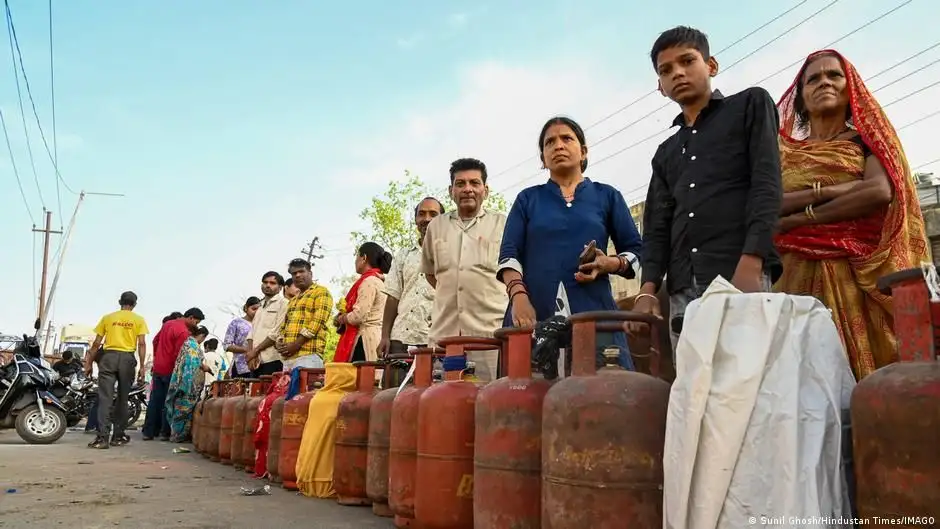
Resource Hoarding: Large-scale exporters, notably China, have moved to restrict overseas shipments to prioritize domestic reserves, effectively exporting their internal shortages to dependent neighbors.
Supply Asymmetry: Nations lacking indigenous production or existing strategic stockpiles are currently forced to choose between economic contraction or social unrest.
Inelastic Demand: Analysts suggest that because modern economies are physically tethered to machine-led production, policy intervention (price caps, tax cuts) can only mask the deficit temporarily.
Background: The Strait and the Strategy
The crisis ignited following the March 18 strikes on regional natural gas infrastructure. The resulting physical degradation of extraction facilities and the blockade of the Strait of Hormuz have created a cascading failure in the global supply chain for liquid gas, food, and fertilizer.
Read More: Solaris Energy SEI Stock Price Forecast Reaches $91.98 by July 2027
The current atmosphere mimics historical rationing paradigms, which prioritize order over individual liberty. As energy infrastructure suffers direct damage from ongoing kinetic action, the assumption that supply chains will recover post-conflict is being discarded by observers who view this as a permanent alteration of the Global Energy Economy.
The reality is not merely high prices; it is a fundamental inability of current markets to procure the caloric and kinetic fuel required for modern industrial life.