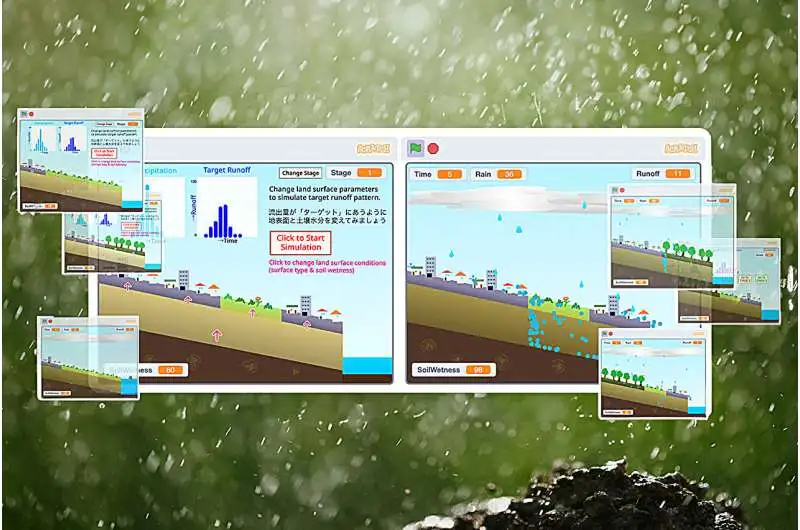
Students are engaging with complex flood dynamics through a new, gamified model called SplashTune. Developed using the Scratch programming language, this tool visualizes intricate hydrological processes – from rainfall and infiltration to surface flow and river runoff – using particle-based animation. The system aims to demystify how watersheds respond to precipitation, allowing students to actively manipulate environmental factors like forest cover and soil saturation to influence simulated river flow.
The SplashTune model represents a significant departure from traditional, often abstract, methods of teaching hydrology. By transforming abstract concepts into an interactive game, it targets a demographic that may lack prior scientific background or inherent interest in the subject. Participants in trials found the gamified approach not only more enjoyable but also more memorable, largely attributed to its visual clarity, hands-on interactivity, and the motivation provided by a score-based feedback system.
Read More: Princess of Wales visits Italy for early childhood education focus
Unpacking Flood Genesis
The development of SplashTune synthesizes advancements across environmental modeling, computer graphics, and behavioral science. Unlike didactic approaches that might present flooding as a simple cause-and-effect sequence, SplashTune illustrates the nonlinear interactions at play. For instance, it highlights how varying soil saturation levels can alter runoff speed, or how urban development can modify flood peaks, thereby promoting a deeper comprehension of hydrological feedback loops. This approach is framed as crucial in an era of escalating flood frequencies, driven by climate change, offering a means to improve public understanding and preparedness.
Beyond a Game: Systemic Understanding
The creators suggest SplashTune facilitates more than just casual engagement; it enables a systemic grasp of flood genesis. This involves understanding how multiple factors converge to produce emergent behaviors. The model visually depicts rainfall, infiltration, surface and subsurface flow, and runoff into rivers. Players adjust land conditions, such as forest cover and soil moisture, to manage water flow and achieve a target river discharge.
Read More: Rare Kashmir Flycatcher spotted in Kasaragod wetlands on 18 May 2026
A Wider Context of Water Education
While SplashTune focuses on flood generation, broader initiatives in water education are also employing interactive methods. Resources like those from The Water Project offer lesson plans and activities for high school students covering the water treatment cycle, aquifer function, and water conservation, employing tools such as interactive posters, word games, and fact sheets. Similarly, LearningMole highlights the value of interactive models in teaching concepts like the water cycle, emphasizing states of matter, the role of oceans, and plant contributions. These efforts collectively point to a trend towards making scientific concepts, particularly those related to environmental science and water, more accessible and engaging through digital and interactive platforms.