Extragalactic Archaeology Emerges as a Tool for Galactic Histories
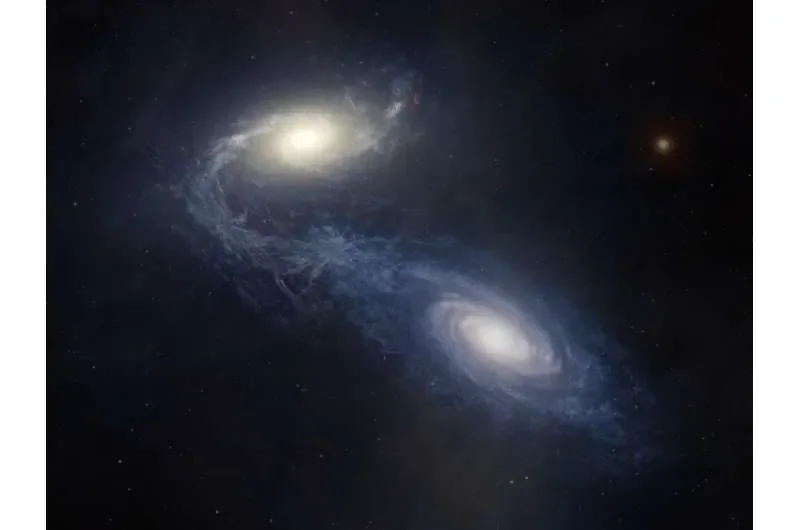
Astronomers have unveiled what they term 'extragalactic archaeology,' a novel methodology that probes the past of galaxies by analyzing the chemical composition of their gas. This technique, detailed in Nature Astronomy, has provided an unprecedentedly detailed, dynamic history of a giant spiral galaxy, specifically NGC 1365. This approach allows researchers to reconstruct a galaxy's evolution over billions of years by examining chemical fingerprints within its interstellar clouds. The method’s success suggests it could become a standard for future galaxy evolution studies.
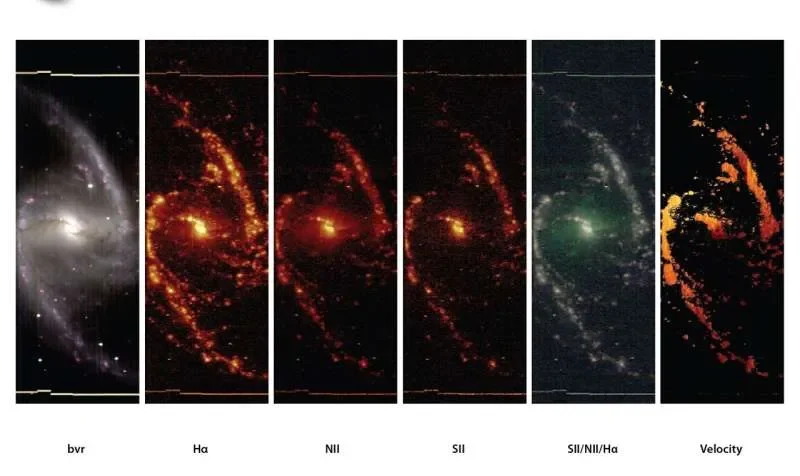
The researchers focused on chemical signatures, such as hydrogen, nitrogen, and sulfur, within the galaxy's gas. These elements act as 'chemical fingerprints,' revealing where and when they formed. For instance, the presence of significant amounts of oxygen in a galaxy's outer regions suggests those regions once resided closer to the galactic center, implying substantial movement over cosmic time. This analytical process allows scientists to map the distribution and evolution of elements, effectively piecing together a galaxy's life story, including its formation, growth, and interactions with other celestial bodies.
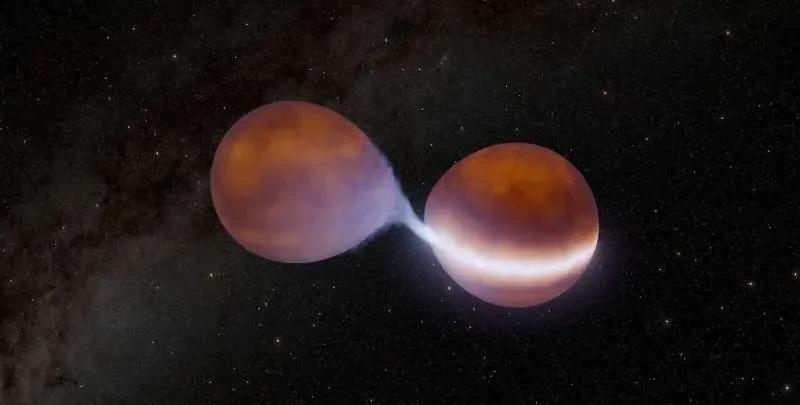
Read More: Brown Dwarfs Orbiting Hourly May Merge or Become Stars

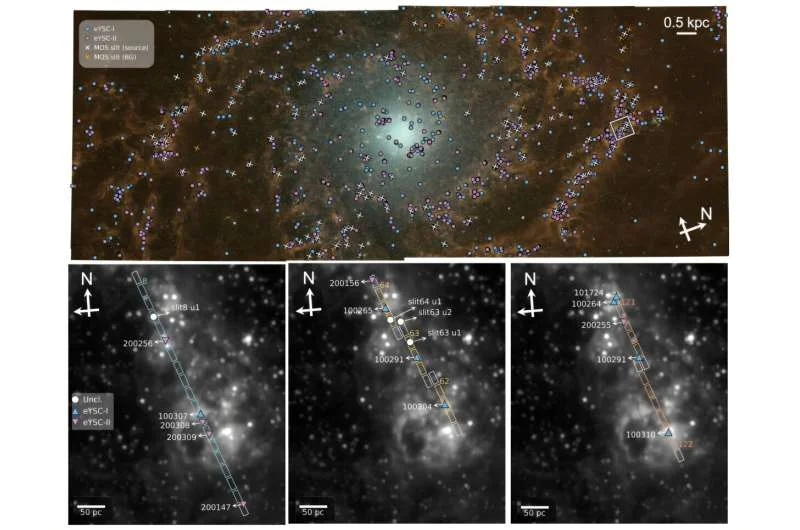
The study, led by Lisa Kewley, Director and Scientist at the Center for Astrophysics | Harvard & Smithsonian, utilized data from the TYPHOON survey. This survey employed the 'step-and-stare' observation method, providing exceptionally high-resolution data that enabled the study of individual star-forming clouds within NGC 1365. This level of detail was crucial for dissecting the galaxy’s chemical composition and inferring its historical processes.
A Deep History of Mergers and Growth
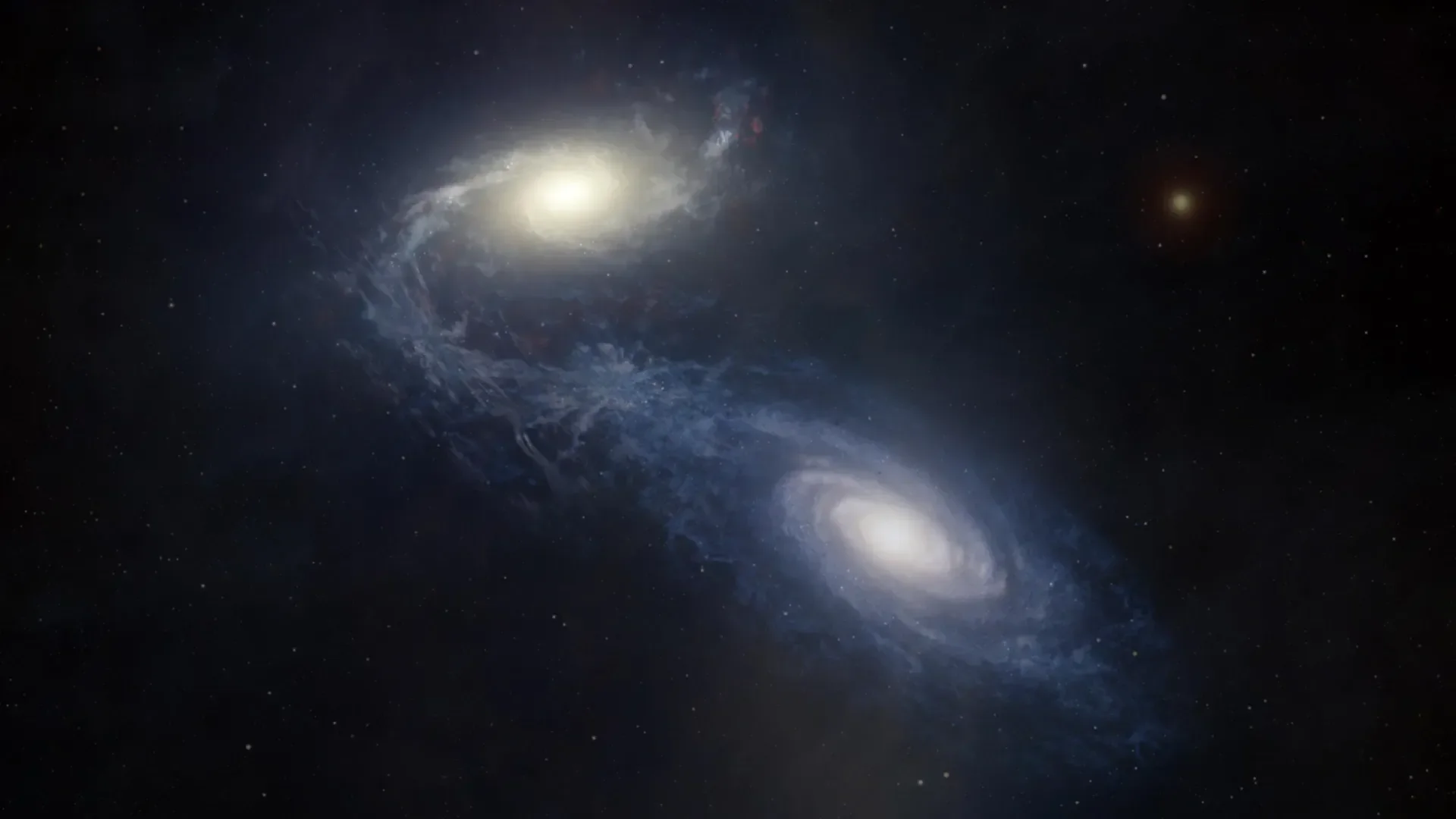
The 'archaeological' findings reveal that NGC 1365, a galaxy similar in structure to our own Milky Way, began as a smaller entity. Over approximately 12 billion years, it grew into its current massive spiral form through numerous mergers with smaller dwarf galaxies. The central region of the galaxy is indicated to have formed very early in cosmic history, becoming rich in oxygen, while its outer arms developed later through these accretional events. This contrasts with a galaxy that might form uniformly over time.
Read More: Cadell Last's Philosophy Portal Changes How We Think About Reality

The scientific endeavor seeks to answer fundamental questions about galactic origins, including the formation of our own Milky Way and the distribution of elements essential for life, such as oxygen. By comparing distant galaxies with our own, researchers aim to ascertain whether the Milky Way is unique or follows a common evolutionary path.
The collaborative effort involved a range of institutions, including the Center for Astrophysics | Harvard & Smithsonian, the Australian National University, the University of Florida, the University of Virginia, and the Carnegie Institution for Science. Key figures beyond Kewley include Kathryn Grasha, Alex Garcia, Paul Torrey, Jeff Rich, and Barry Madore.
Background
'Extragalactic archaeology' draws parallels with earth-based archaeology and the existing field of 'galactic archaeology,' which reconstructs the Milky Way's history using stellar records. However, this new approach extends such detailed analysis to galaxies beyond our immediate cosmic neighborhood. The ability to study galaxies from a single perspective, as is often the case with distant objects, presents challenges that this chemical analysis method aims to overcome.
Read More: Webb Telescope Sees New Stars Forming in Galaxy NGC 628