REPUBLICANS HIGHLIGHT PREVIOUS SUPPORT FOR VOTER ID LAWS
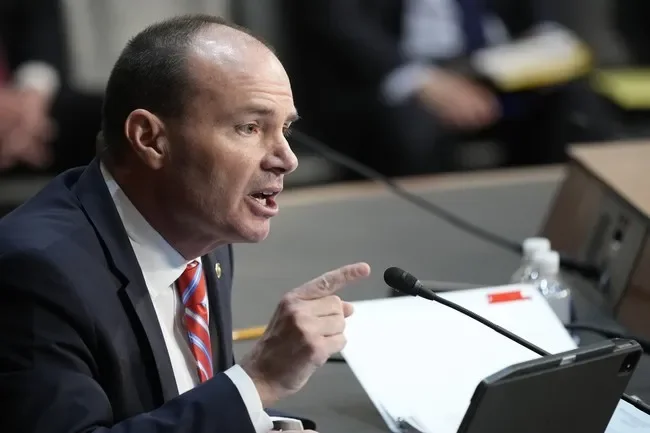
Senate Republicans recently pressed Democrats on their stance regarding voter identification, particularly in relation to the proposed SAVE America Act. During Senate debates, Senator Mike Lee (R-UT) argued that requiring voters to present a valid ID is not an unconstitutional barrier to voting. This assertion followed a Senate vote where a standalone version of the SAVE America Act, which included provisions for voter ID, ultimately failed.
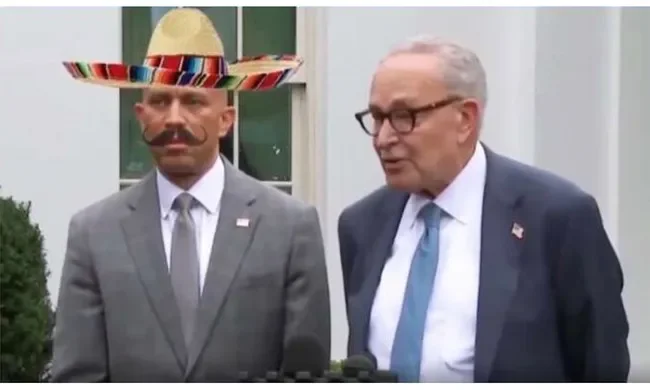
Republicans contend that Democrats have previously supported voter ID requirements, citing a bill from two years prior where all Senate Democrats reportedly backed legislation containing such a measure. This past support is being used to challenge current Democratic opposition, with Republicans offering an opportunity to reaffirm their previous position through a direct vote on the SAVE America Act's voter ID component.

Historical Context of Voter ID Debate
The debate over voter identification laws has become a recurring point of contention. While proponents argue that such measures enhance election security and prevent fraud, opponents often raise concerns about potential disenfranchisement, particularly among marginalized communities. The specific legislation in question, the SAVE America Act, aimed to introduce what Republicans describe as "common sense safeguards" for voting rights, with voter identification being a central element.
Read More: Canada Police Find No Foreign Government Links in Interference Probe, Ex-Envoy Says

Senator Lee's Constitutional Argument
Senator Lee, in particular, has been vocal in his critique of Democratic arguments against voter ID mandates. He suggests that the Democratic position is not a "rational conclusion" and attempts to expose what he perceives as an inconsistency in their stance. His arguments often pivot on the idea that ensuring the legitimacy of votes, by verifying voter identity, ultimately protects the constitutional right to vote for eligible citizens by preventing fraudulent ballots from diluting their impact.
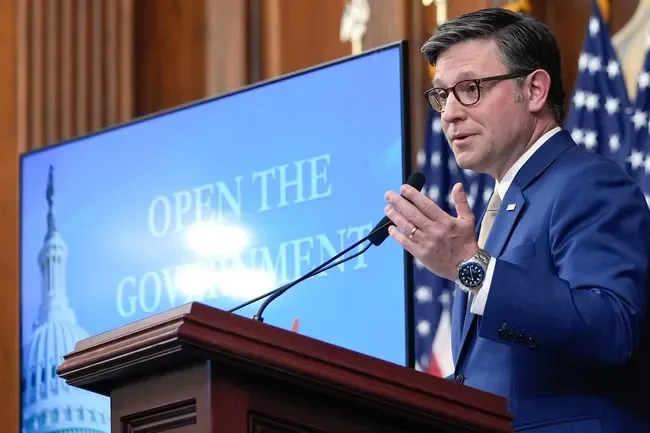
"The Democrats harp on over and over again is requiring an official photo ID to register, and to show up to vote at the polls." - Article 1
"Our objection, as Democrats, is not to a photo ID." - Article 2
Broader Political Landscape and Ideological Divides
The discussions around the SAVE America Act and voter ID laws occur against a backdrop of broader political debates concerning the nature of American governance and the interpretation of constitutional principles. Senator Lee has previously engaged in public discourse regarding the United States as a constitutional republic rather than a pure democracy, a distinction that has drawn significant attention and criticism.
Read More: Artemis 2 mission April 1st sends astronauts around Moon
"Rank democracy can thwart that." - Senator Mike Lee, as reported in multiple articles.
This distinction, Lee and supporters argue, emphasizes the importance of checks and balances and the protection of individual rights over unchecked majority rule. Critics, however, view such statements as an attempt to undermine democratic principles, particularly when occurring during periods of heightened political polarization and concerns about election integrity.
The political discourse also reflects a deeper ideological divide on issues of election access versus security. While Republicans advocate for measures like voter ID as essential for preventing fraud, Democrats and other groups often highlight concerns about voter suppression and ensuring that all eligible citizens can cast their ballots without undue burdens. The pushback against Senator Lee's past comments on democracy has also been framed as a reaction to a perceived rightward shift within the Republican party and its approach to electoral processes.
Read More: Iran Leader's Long Absence Fuels Stability Doubts Amidst Strikes and Unrest
Further complicating the legislative landscape, reports indicate that House Republicans have expressed dissatisfaction with the Senate's focus, particularly in light of their own efforts regarding border security and funding. This suggests a multi-faceted set of priorities and disagreements influencing legislative action in Washington.