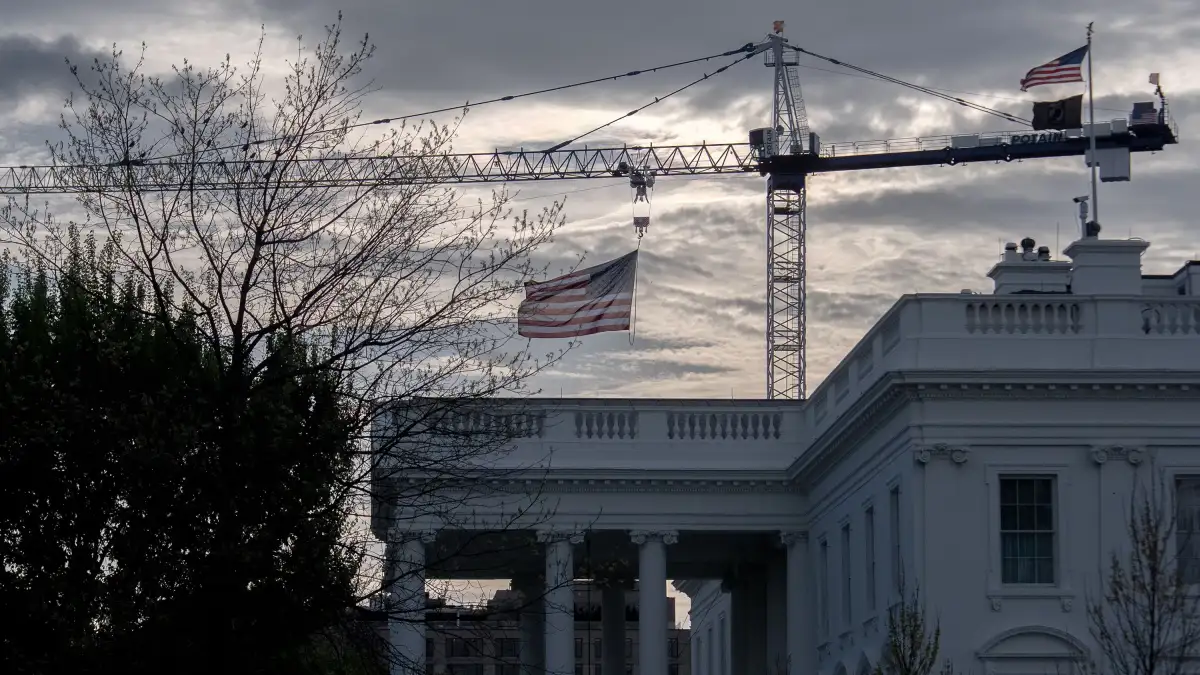
Republican lawmakers are moving to allocate $1 billion in taxpayer funds toward security measures associated with the White House ballroom, a construction project President Donald Trump previously insisted would rely entirely on private donations. The proposal, emerging through the Senate Judiciary Committee, follows a pattern of shifting financial narratives regarding the East Wing renovation.

The transition from private funding to federal subsidization marks a distinct pivot in the administration's stated policy.

Financial Discrepancy: While President Trump originally marketed the project as a gift to the nation funded by patriotic donors, the current legislative effort frames federal spending as a necessity for structural and security requirements.
Security Justification: The pivot gained legislative momentum following a violent incident at the White House Correspondents' Association dinner last month. Proponents, including Sen. Rand Paul, argue that moving high-profile events inside a controlled White House environment is essential for executive protection.
Donor Base: Reports indicate the project has already gathered hundreds of millions in anonymous contributions, with donors reportedly including major technology corporations.
Congressional Friction: Critics describe the ballroom as a vanity project, citing skepticism regarding both the ballooning costs and the administration’s earlier, unfulfilled assurances that the original East Wing structure would remain intact.
Legislative Framing
The legislative effort, spearheaded by the Senate, utilizes language focused on "security and law enforcement" to justify the federal appropriation. Internal signals from the Office of Management and Budget suggest that previous renovation budgets—already exceeding $400 million—have been insufficient, necessitating this call for public assistance.

Historical Context and Project Scope
The East Wing Modernization Project was announced in July 2025. What began as a plan for a 90,000-square-foot ballroom has expanded into a complex series of structural overhauls.
Read More: Louisiana closed primary system on May 16 causes voter confusion
| Phase / Project | Status | Funding Source |
|---|---|---|
| Initial Ballroom Plan | In Progress | Private Donations |
| Security Enhancements | Proposed | Taxpayer Funds ($1B) |
| Additional Renovations | Underway | Private/Mixed |
While some Republican lawmakers remain wary of using federal funds, citing the national debt, the project is moving toward a potential floor vote. The executive branch has not provided a definitive clarification on why private donor funds are insufficient to cover the expanded scope of the White House ballroom security requirements.