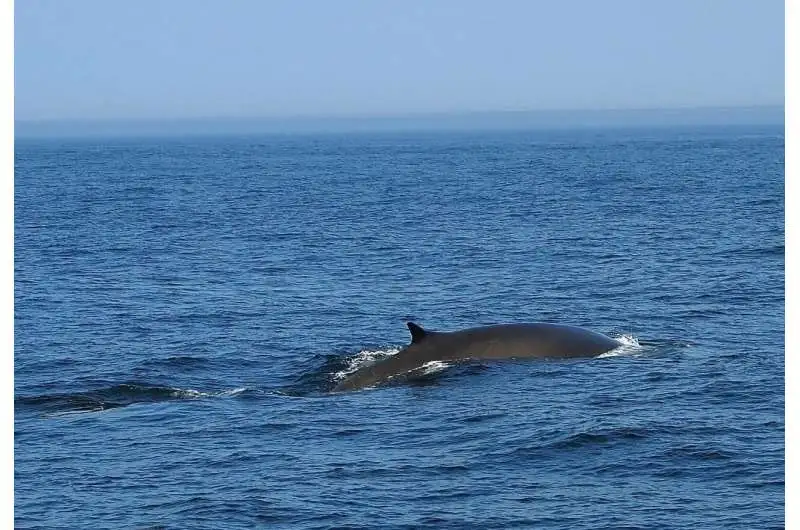
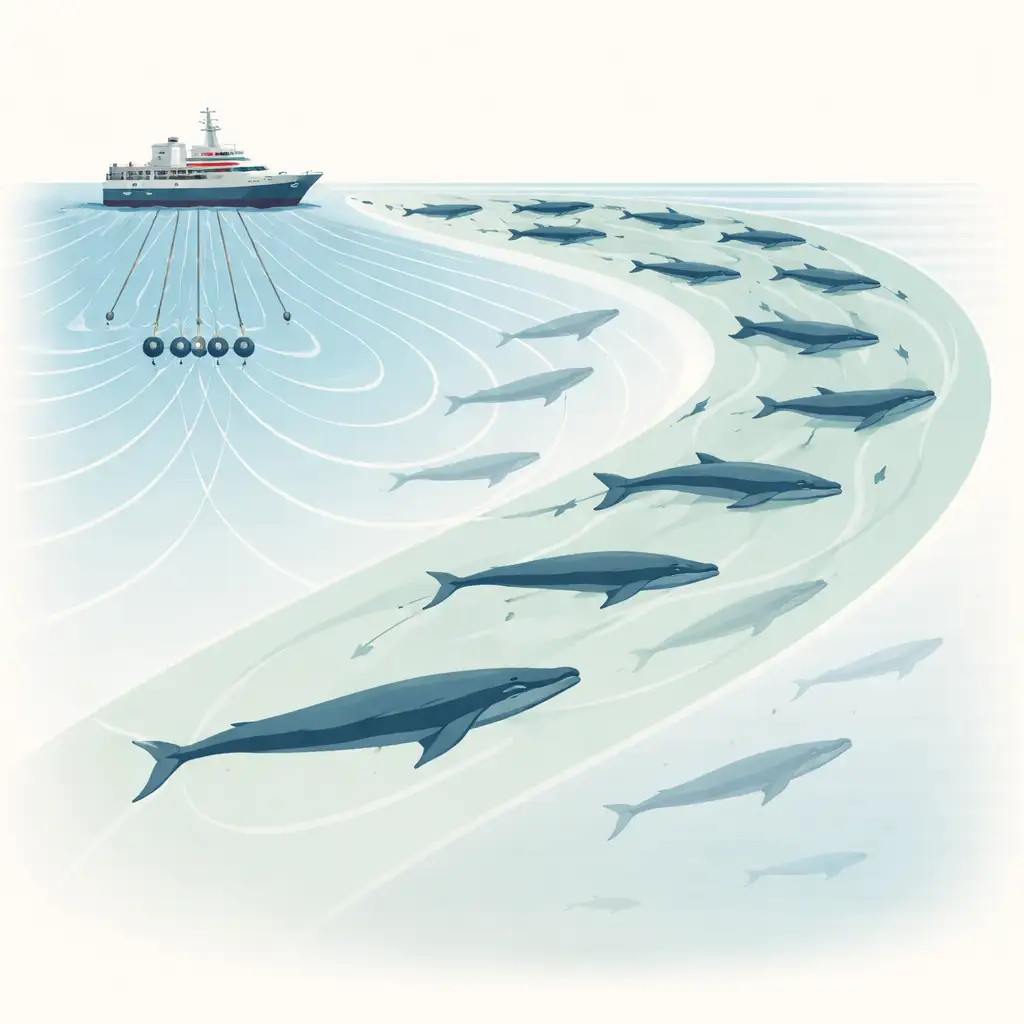
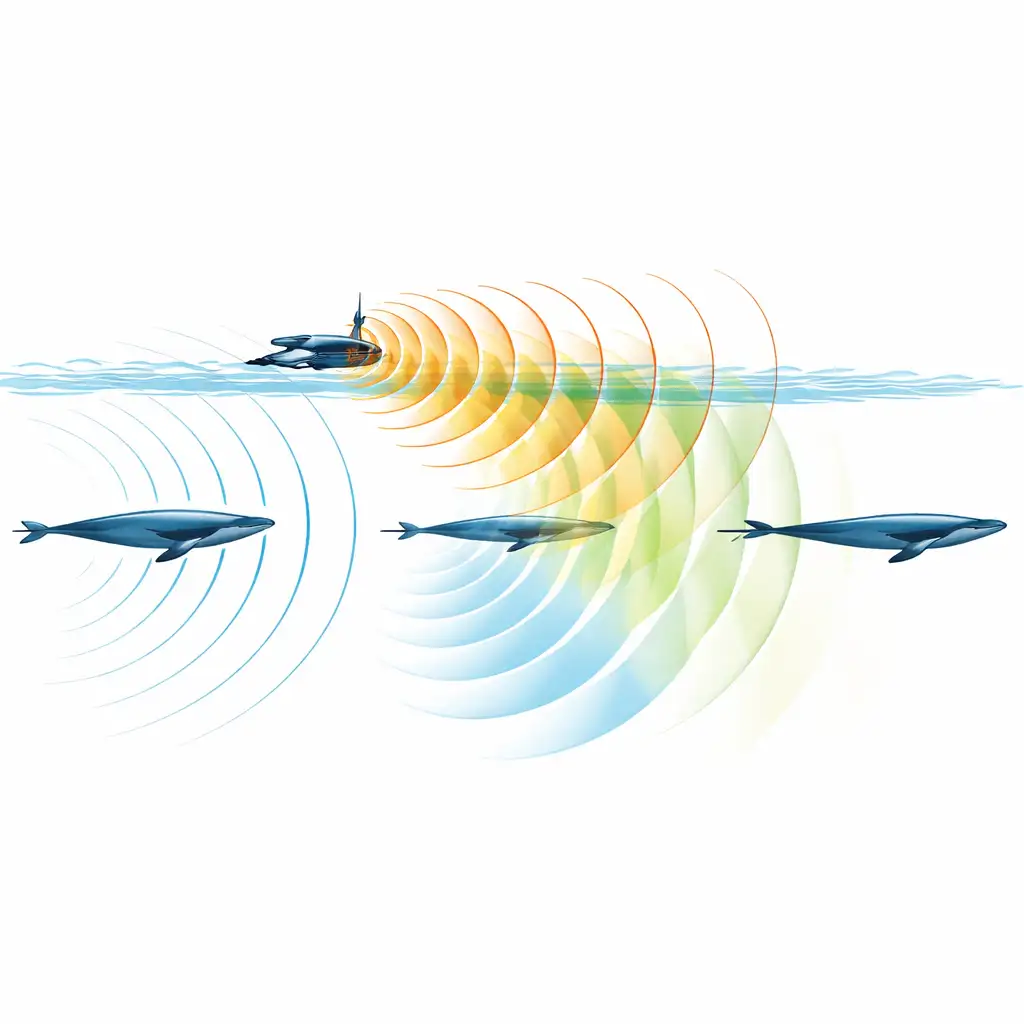
The pervasive roar of underwater seismic surveys appears to be effectively silencing whale communication, with recent findings indicating a sharp drop in vocalizations when powerful airguns blast sound into the ocean. These jarring bursts, one of the loudest human-made noises, can travel thousands of kilometers, fundamentally altering the acoustic environment where whales depend on sound for critical life functions. Studies observed fin whales, renowned for their complex calls linked to mating and social interaction, reducing their "talking" significantly during these noisy periods.
Research published in the last year and a half highlights this direct correlation. Offshore northwestern Spain, powerful sound blasts regularly fired to map the seafloor coincided with a marked reduction in fin whale calls. This suggests that the marine giants, despite their size, are not indifferent to the industrial cacophony. The implication is stark: when the ocean is filled with intense noise, the very sounds whales use to navigate, find mates, and maintain social bonds are diminished.
Read More: Amazon Land Use Changes Cause Disease Clusters in Brazil
The Sound of Silence
The implications of this enforced quietude are far-reaching. Whales rely on sound as their primary mode of perception and interaction with their environment. Human-produced noise, like that from seismic exploration, directly challenges their acoustic sensitivity, impacting everything from social structures to survival strategies. Beyond mere communication, whales may alter their movement patterns in response to this sonic disruption, further complicating their existence.
While the exact long-term consequences are still being unraveled, scientists are employing sophisticated methods to track these changes. Acoustic monitoring networks are becoming vital tools, helping researchers identify species, map migrations, and assess the impact of this growing underwater noise pollution. This scientific push aims to understand and mitigate the threat of human-generated sound on marine life and their habitats.
A Longstanding Concern
The disruptive nature of seismic surveys has been a subject of scientific scrutiny for some time. Data collection and analysis methods have been refined to evaluate potential impacts on baleen whales, with a particular focus on behavioral disturbance. While direct effects on whale sightings during active versus inactive seismic periods have yielded mixed results in some analyses, the suppression of vocalizations points to a more fundamental interference with their acoustic world.
Read More: Barcelona may target Harry Kane amid transfer market changes
The growing intensity of human-caused ocean noise, a trend acknowledged by agencies like NOAA, underscores the urgency of addressing this issue. Strategies are being developed and implemented to reduce underwater noise and, hopefully, restore a semblance of health to the marine soundscape. The science of acoustic oceanography, using sound to understand the oceans, is now critically focused on deciphering how this overwhelming human-made noise is silencing the very creatures that define the deep.