Charities are accelerating plans to release beavers into the wild across England and Scotland, marking a significant shift following a change in UK government policy that now permits such reintroductions. Dorset Wildlife Trust has submitted an expression of interest to Natural England for a phased release of beavers across approximately ten sites in the River Hooke and River Frome catchment, with a public consultation open until May 31st. This move by Dorset Wildlife Trust directly follows the government's decision to allow wild populations of these semi-aquatic mammals to return to English rivers and wetlands.

Elsewhere, the National Trust, in collaboration with organisations like Beaver Trust, is undertaking substantial reintroduction projects. On the Holnicote Estate in Somerset, the Trust plans to release beavers as part of a 5,000-hectare landscape-scale nature recovery program. This initiative aims to engineer new wetlands, manage flood peaks, and enhance biodiversity, with some beavers being placed at the UK's first 'Stage 0' site specifically designed for their habitat-creation activities. These efforts are supported by various funders, including the Green Recovery Challenge Fund 2, Species Survival Funding, Interreg 2 Seas Co-Adapt, Somerset River Authority, and The Environment Agency.
Read More: Orangutan Mothers Plan Playdates for Babies in Borneo

Further north, NatureScot has approved beaver releases in the Glen Affric National Nature Reserve in Scotland, indicating a parallel momentum in that nation. Collectively, approximately 100 beavers are slated for wild release in the UK this year, with expectations of more to follow. This surge in reintroductions comes centuries after beavers were eradicated from the UK, and it represents a broadening of approaches beyond previously contained projects.

The narrative around these releases highlights the potential for beavers to act as 'nature's engineers'. Their dam-building and wetland creation are credited with creating diverse habitats, attracting a wider array of wildlife, including invertebrates and birds, and contributing to water storage and flood mitigation. The National Trust specifically mentions the positive impact on its Somerset estate, aiming to develop a climate-resilient landscape that benefits wildlife, water, carbon, and communities. The ambition extends to establishing robust and genetically diverse local beaver populations.
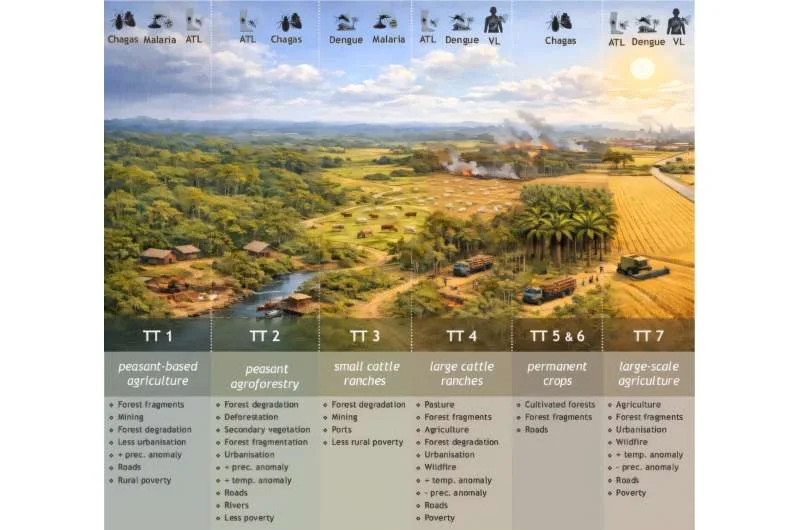
Read More: Amazon Land Use Changes Cause Disease Clusters in Brazil

While recent releases are being framed as the "first truly wild" in certain areas, it's worth noting distinctions in previous projects. Some earlier introductions, like those on the National Trust's Purbeck Estate last year, involved beavers contained within specific peninsulas, preventing natural dispersal through river systems. The current trend signals a move towards greater freedom and natural integration of these animals into the wider landscape.