


Actress Samantha Ruth Prabhu has articulated a clear stance on managing online criticism, commonly known as trolling. Her approach centers on maintaining a personal boundary and recognizing that external negativity does not define her internal experience or achievements. Prabhu states that while she acknowledges praise, she is not swayed by it, just as she is not overly affected by negative comments.
The actress recently shared her perspective during an Instagram Q&A session. She explained that the act of blocking someone online is not an admission of being impacted by their words. Instead, it signifies a decision to protect her online space from what she perceives as detrimental input. Prabhu equates this action to maintaining a clean living environment, extending the same principle to her social media presence. This indicates a deliberate effort to curate her digital surroundings and limit exposure to harmful content.
Read More: Prime Video's 'Off Campus' Series Focuses on College Hockey Romance

Public Scrutiny and Personal Boundaries
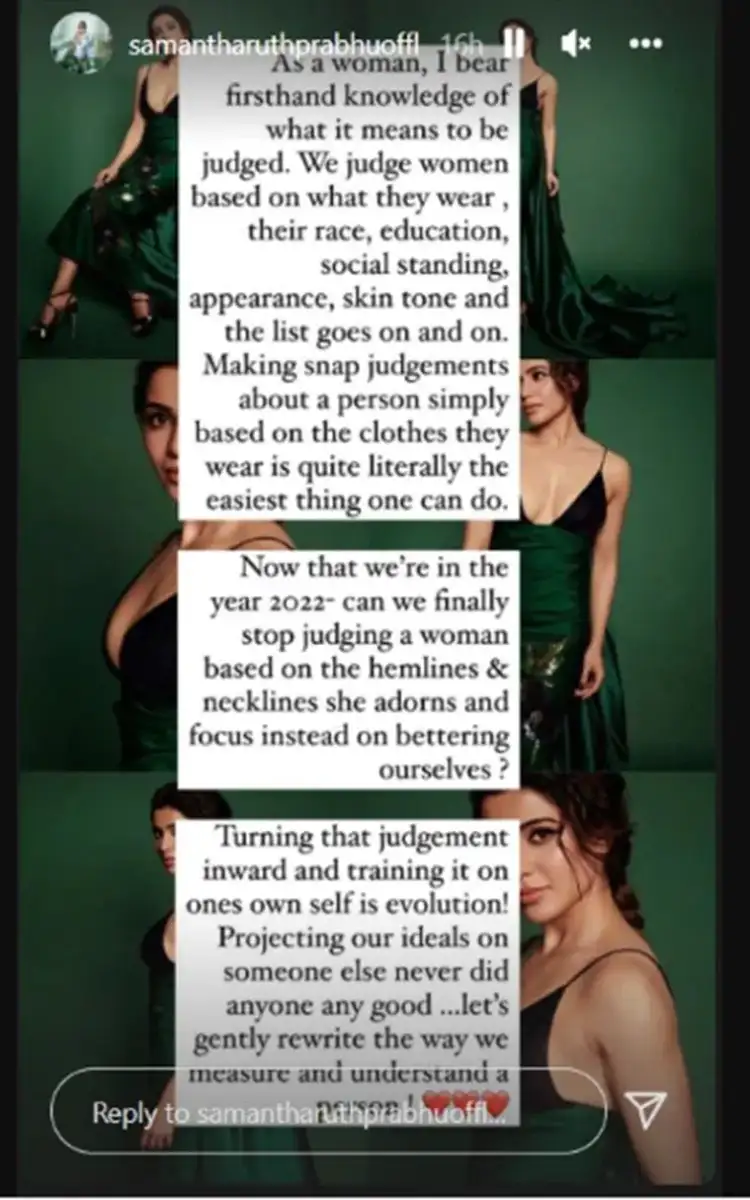
Samantha Ruth Prabhu has openly discussed the public nature of her life, including personal struggles and career choices. She notes that her journey has frequently been under intense observation, leading to constant judgment. Prabhu has voiced that showing vulnerability has often resulted in being trolled. This experience has prompted her to develop a framework for interacting with public opinion while safeguarding her well-being.
Prabhu's personal life, including her separation and health issues, has been widely publicized.
She has expressed that being vulnerable online often leads to negative commentary.
This public scrutiny has led her to develop strategies for managing online interactions.
The Nuance of Blocking and Impact
Prabhu has clarified that blocking users is not a reaction to being emotionally affected. Rather, it is a proactive measure to preserve her mental space and online environment. She articulated this during an Instagram Q&A, stating:

"Being blocked doesn't mean you affected me. But if you bring negativity into my home, I will block you. The same way I keep my space clean, I keep this page clean."
This statement highlights a distinction between external validation or criticism and internal emotional response. It suggests that while she can acknowledge comments, the decision to block is about maintaining a desired environment rather than a reaction to personal hurt.
Read More: Instagram Instants App: Unedited Photos Vanish After Viewing
Past Experiences and Evolving Resilience
In earlier instances, online criticism had a more pronounced effect on Prabhu. Reports from 2019 suggest that trolls used to cause her "sleepless nights" and led her to question her own sanity. However, her more recent statements indicate a development in her resilience and coping mechanisms. This evolution suggests a conscious effort to detach her sense of self-worth from online commentary.
Past Impact: Reports indicate that online trolls previously caused significant distress.
Present Strategy: Current approach focuses on environmental control (blocking) rather than emotional reaction.
Observed Change: A shift from being deeply affected to proactively managing online interactions.
The Symbiotic Relationship Between Praise and Criticism
Prabhu has suggested that navigating social media involves accepting both positive and negative feedback. Her perspective is that if one chooses to embrace the acclaim and positive attention received online, they must also be prepared to accept the criticism and negativity that accompanies it. This suggests an understanding of social media as a platform where both extremes coexist.
Social media presents a dual nature: offering praise and generating criticism.
Accepting positive feedback implies an acceptance of negative feedback.
This balanced view frames online engagement as an unavoidable aspect of public presence.
Expert Analysis
Social media analysts suggest that public figures often develop distinct strategies for managing online interactions to protect their mental well-being. Dr. Anya Sharma, a media psychologist, notes:
Read More: Prime Video Adds More TVF Shows and New Vertical Video Clips

"The act of blocking, as described by Prabhu, can be viewed as a form of digital boundary-setting. It's not necessarily about avoiding confrontation, but about curating an environment that supports one's psychological state. This is a common adaptive strategy for individuals in the public eye who are subject to constant digital commentary."
This perspective frames Prabhu's actions as a rational and deliberate choice to manage her online environment, rather than a sign of being unaffected or overly sensitive.
Conclusion and Implications
Samantha Ruth Prabhu's publicly stated approach to trolls emphasizes a firm boundary between external comments and her internal sense of self. Her strategy, particularly the distinction she draws between blocking and being affected, highlights a deliberate effort to control her digital environment. This approach allows her to engage with her audience while simultaneously protecting her mental space from what she deems harmful negativity.
The evolution from experiencing significant distress to developing a proactive management system indicates a maturing response to public scrutiny. Her views also suggest a pragmatic understanding of social media, where both positive and negative feedback are integral to online engagement. The effectiveness of this strategy lies in its focus on personal boundary maintenance rather than emotional reactivity to external commentary.
Read More: Alix Earle and Alex Cooper Public Fight Over Social Media
Sources
Moneycontrol: https://www.moneycontrol.com/entertainment/regional/samantha-ruth-prabhu-opens-up-on-handling-social-media-trolls-praise-doesn-t-move-me-trolls-don-t-either-article-13838725.html
Free Press Journal: https://www.freepressjournal.in/entertainment/samantha-ruth-prabhu-reveals-if-trolls-bother-her-on-social-media-if-you-bring-negativity-into-my-home
News18: https://www.news18.com/movies/i-will-block-you-samantha-ruth-prabhu-shuts-down-trolls-with-bold-reply-9923114.html
Siasat: https://www.siasat.com/samantha-ruth-prabhu-opens-up-on-facing-judgment-and-trolls-3284503/
Morung Express: https://morungexpress.com/samantha-ruth-prabhu-on-facing-judgment-and-trolls-my-personal-struggles-have-been-very-public
NDTV: https://www.ndtv.com/entertainment/trolls-used-to-give-samantha-ruth-prabhu-sleepless-nights-but-now-2358693
India Today: https://www.indiatoday.in/movies/regional-cinema/story/samantha-on-trolls-says-no-snarky-comment-is-going-to-devalue-my-experience-of-last-8-months-exclusive-2352851-2023-03-29
India Today (August 2025): https://www.indiatoday.in/movies/celebrities/story/samantha-ruth-prabhu-opens-up-on-social-media-pressure-and-negativity-online-2774210-2025-08-20
News18 (August 2025): https://www.news18.com/movies/telugu-cinema/samantha-ruth-prabhu-on-being-authentic-on-social-media-you-have-to-accept-the-trolling-ws-kl-9516619.html
IDiva: https://www.idiva.com/entertainment/bollywood/samantha-ruth-prabhu-on-trolling-and-life-lessons/18093297


