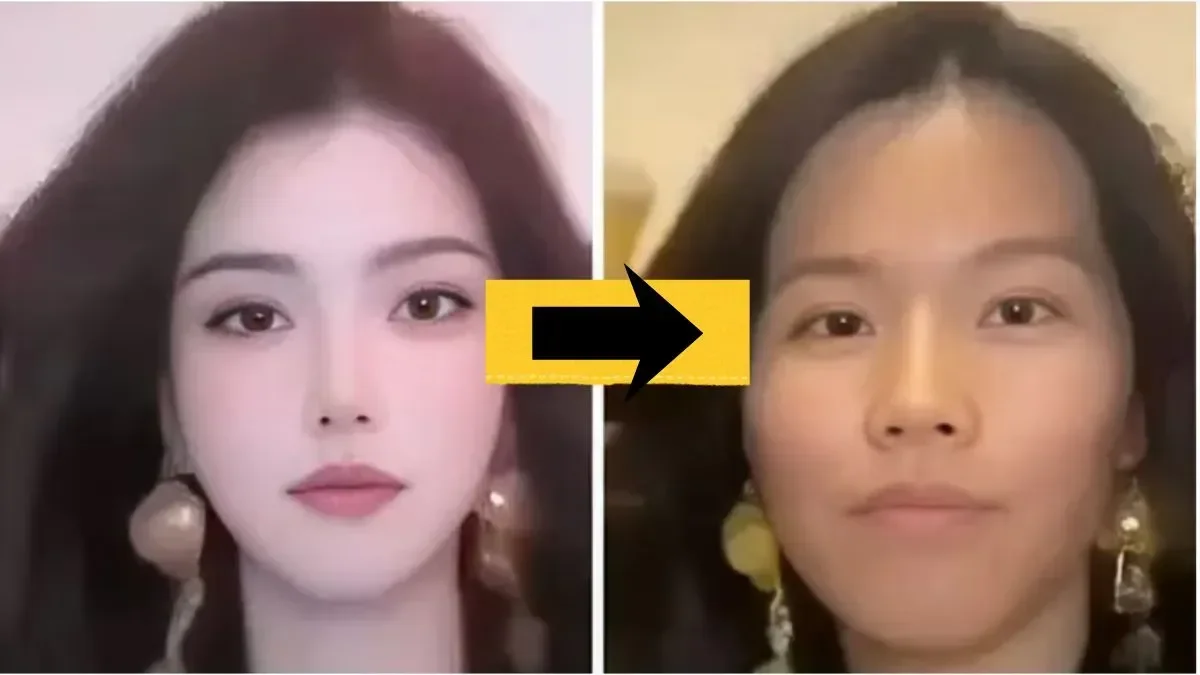
A viral incident involving a Chinese livestreamer has sparked widespread discussion, after a momentary beauty filter malfunction allegedly caused a loss of 140,000 followers. The unverified reports, circulating widely on social media platforms since mid-February 2026, claim that the filter's failure revealed the streamer's natural skin texture and warmer complexion, a stark contrast to the smoothed, pale, doll-like visage often presented to her audience.
The unconfirmed follower drop, a key detail in the viral narrative, highlights the precarious nature of online fame built on carefully curated digital appearances. While the exact numbers remain unverified, the widespread circulation of the clip and accompanying claims underscore a growing public fascination with, and perhaps disillusionment regarding, the gap between online personas and reality. The incident has consequently reignited broader conversations about authenticity, trust, and the pervasive use of digital enhancements in influencer culture.
Read More: Trump Uses Taylor Swift Wedding Buzz For Campaign
REALITY'S SUDDEN APPEARANCE
During a livestream, a beauty filter that typically smoothed the streamer's skin, refined her jawline, and enlarged her eyes reportedly failed for several seconds. This glitch briefly exposed a more mature face with visible skin texture, a departure from the idealized digital mask. The footage, which quickly went viral, showed the streamer calmly continuing her broadcast after the filter reappeared, touching her hair and offering a subtle smile as if nothing had happened.
The unverified reports of a 140,000-follower loss originated from social media posts, particularly on platforms like X (formerly Twitter) and Instagram, and within China's equivalent of TikTok, Douyin. However, no official platform data has been provided to confirm this specific figure.
ONLINE BACKLASH AND DEFENSE
The incident has generated a mixed public reaction. While some social media users expressed disappointment or a sense of deception, a notable contingent defended the streamer, with comments suggesting she was "prettier without the filter" and that her unfiltered appearance was "beautiful." This dichotomy points to a complex and often contradictory audience perception of digital alterations in online content.
Read More: Chrome mimeHandler API lets extensions handle file types
DEEPER QUESTIONS OF DIGITAL STANDARDS
Industry observers note that this event taps into a larger trend, particularly with the increasing sophistication of AI-powered filters. The blurring line between digital enhancement and outright reconstruction prompts calls for greater transparency, with some suggesting mandated labels for filtered live content. The incident serves as a potent reminder that livestreaming, predicated on immediacy and perceived authenticity, can be disrupted by the very technologies that enable its illusions.
BACKGROUND
The phenomenon of beauty filters and their impact on audience perception has been a recurring theme in online discourse. Filters that alter facial features, skin tone, and texture are commonplace across various social media platforms, contributing to the creation of highly polished and often unattainable digital aesthetics. This latest viral moment, occurring in mid-February 2026, underscores a continued societal negotiation with the amplified reality presented by digital media. The debate is not new, but the scale and speed of digital dissemination amplify its immediate impact.
Read More: WhatsApp adds usernames to hide phone numbers from April 7, 2026