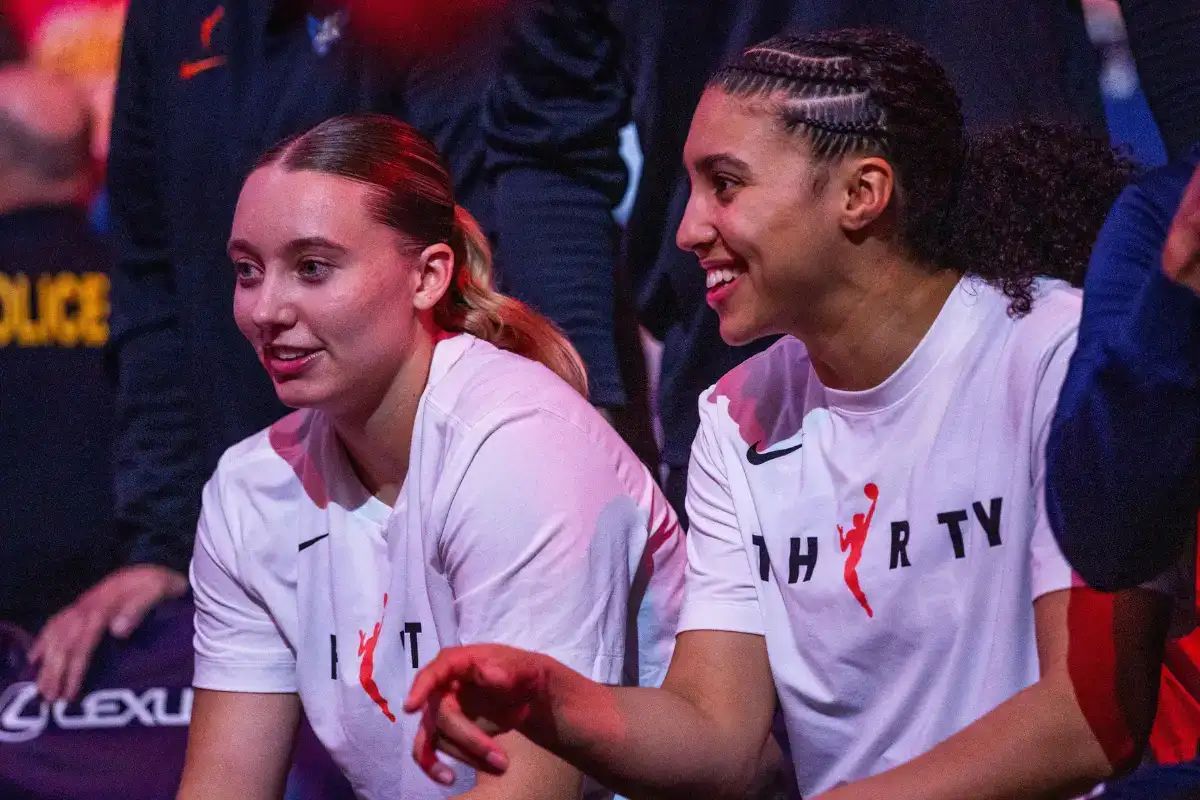
The landscape of the 2026 WNBA Most Valuable Player award is shaping up as a complex negotiation between established dominance and a burgeoning crop of contenders. While names like A'ja Wilson and Breanna Stewart have repeatedly occupied the conversation, this season introduces a dynamic where team success, individual scoring efficiency, and a player's overall impact on the game's tempo are emerging as critical factors in voters' calculus. Betting markets and analyses point towards a fierce competition, with several players presenting compelling arguments for the league's highest individual accolade.
Established Stars and Their Continued Ascent
"The WNBA MVP award should be renamed the A'ja Wilson-Breanna Stewart MVP Trophy, because the two seem to have a stranglehold on the award."
The persistent reign of A'ja Wilson and Breanna Stewart continues to cast a long shadow over MVP discussions. Their consistent all-around production, versatility, and leadership are frequently cited as hallmarks of legitimate MVP candidates. The assumption is that they will once again be formidable forces, particularly if their respective teams achieve significant regular-season success. For Stewart, questions linger around whether her efficiency can climb even higher, potentially solidifying her numbers beyond last season's third-place finish. Wilson, meanwhile, is noted for her undeniable value, though her pursuit of an MVP might still hinge on voters prioritizing an elite scoring punch over other contributions.
Read More: Florida AG Subpoenas NFL Over Rooney Rule Diversity Hiring
The Next Tier: Rising Stars and Consistent Performers
Emerging as significant contenders, players like Naphessa Collier are demonstrating a capacity to challenge the established order. Collier, who finished as runner-up last season, received substantial first-place votes, underscoring the weight placed on leading her team to a top seed. Her "incalculable" value to her team is recognized, but the narrative suggests that elevated scoring might be necessary to sway voters in her favor, especially when compared to rivals who more readily put up points.
Read More: NBA Playoff Foul Calls Increase 11% This Year

Another name frequently mentioned is Caitlin Clark. Despite a rookie season that saw her ranked tenth in Player Impact Estimate and first among guards in that metric, her popularity alone doesn't solely account for her strong MVP odds. Clark's high usage rate, second only to Wilson in an injury-shortened campaign, positions her to generate significant statistical volume. With a full, healthy season anticipated, her potential to influence the game's tempo and drive her team's success places her firmly in the MVP conversation.
Bueckers enters her second professional season with considerable buzz. After a Rookie of the Year campaign, her current odds are viewed as potentially "low" if she experiences a significant leap. Her MVP stock is expected to rise in tandem with the Dallas Wings' contention status, though questions about her durability remain.
Read More: Ex-Red Sox pitchers sign minor league deals with new teams
Dark Horses and Deep Sleepers
Beyond the prominent names, a constellation of players are being positioned as "dark horses" and "sleepers." Alyssa Thomas is consistently on the periphery of MVP consideration, having "consistently come[s] up just short." Her ability to be an "effective lead scorer" is now being highlighted after years of a shared role. Thomas's path to an MVP award appears to be through solidifying her offensive output and continuing her all-around impact.

Paige Bueckers is also discussed as a player with significant sleeper potential. Entering her second year, her odds are seen as attractive if she makes a notable improvement. The historical precedent of repeat MVP winners offers a backdrop for her aspirations.
Other players, such as Allisha Gray, are mentioned as potential disruptors, though specific details regarding their MVP cases remain less defined in the available information.
Read More: Michigan and UConn Play Again November 6, 2026 in Boston
The Metrics of MVP
Analysis of past MVP awards reveals a strong correlation between individual performance and team success. Historically, championship teams have boasted elite regular-season records, with 17 of the last 19 title-winners finishing in the top two of the standings. Similarly, nine of the past ten MVPs have ranked within the top five in points per game, top ten in net rating and plus/minus, and played for a team that secured a top-three seed. These statistical benchmarks provide a framework for evaluating candidates, suggesting that elite scoring, efficiency, and a demonstrable positive impact on team outcomes will be critical for any contender.